If your business has more than a couple of employees, payroll stops being a five-minute task and quietly becomes a minefield. Tax tables shift, states want their filings on time, a single misclassified worker can trigger penalties, and benefits, garnishments and year-end tax forms pile on top of it all. That growing administrative weight is exactly the problem ADP has been solving for decades. ADP — short for Automatic Data Processing — is the largest payroll and human capital management (HCM) company in the world, processing pay for roughly 1 in 6 American workers and serving more than 1.1 million clients across 140+ countries. With over 75 years in the business, $20.6 billion in fiscal-2025 revenue, a near-record client retention rate above 92%, and a new generative-AI layer called ADP Assist now woven across its platforms, ADP has reinvented itself from a check-processing service into an AI-powered system of record that runs payroll, HR, benefits and compliance for everyone from solo founders to global enterprises.
For small business owners, startup founders, freelancers paying contractors, HR teams at growing companies, and operations leaders at multinationals, the appeal is the same: hand the riskiest, most repetitive parts of running a workforce to a provider that has seen it all. But ADP is also famous for opaque, quote-only pricing and a product lineup that can be genuinely confusing to navigate. This 2026 review walks through ADP’s entire ecosystem — every major product tier, the ADP Assist AI features, real pricing ranges and what they actually cost, head-to-head comparisons with Gusto, Paychex and Rippling, honest limitations, and exactly who should (and shouldn’t) sign up.
ADP Review 2026: The Payroll & HR Giant — Now AI-Powered — for Businesses of Every Size
Overview and Background
ADP is a global technology company that provides payroll processing, HR software, benefits administration, time and attendance tracking, talent management, compliance services, and professional employer organization (PEO) outsourcing. Founded in 1949 as a small payroll-processing operation and now trading publicly on the NASDAQ under the ticker ADP, the company employs roughly 67,000 people worldwide and reported $20.6 billion in revenue for fiscal 2025. Its core promise has stayed remarkably consistent across that history: take the parts of running a workforce that are tedious, error-prone and legally risky — paying people correctly, filing the right taxes, staying compliant in every jurisdiction — and make them someone else’s full-time job.
What separates ADP from a simple payroll app is the sheer depth of what sits underneath it. The company maintains one of the largest workforce datasets in existence — drawn from over 40 million wage earners — which powers its benchmarking, analytics and, increasingly, its AI. ADP doesn’t sell a single product; it sells a ladder of platforms sized to your headcount, from a phone-first app for a one-person business all the way up to a configurable enterprise HCM suite running payroll across dozens of countries. That breadth is the reason ADP can keep a client from their first hire through to thousands of employees without ever forcing a switch to a different vendor.
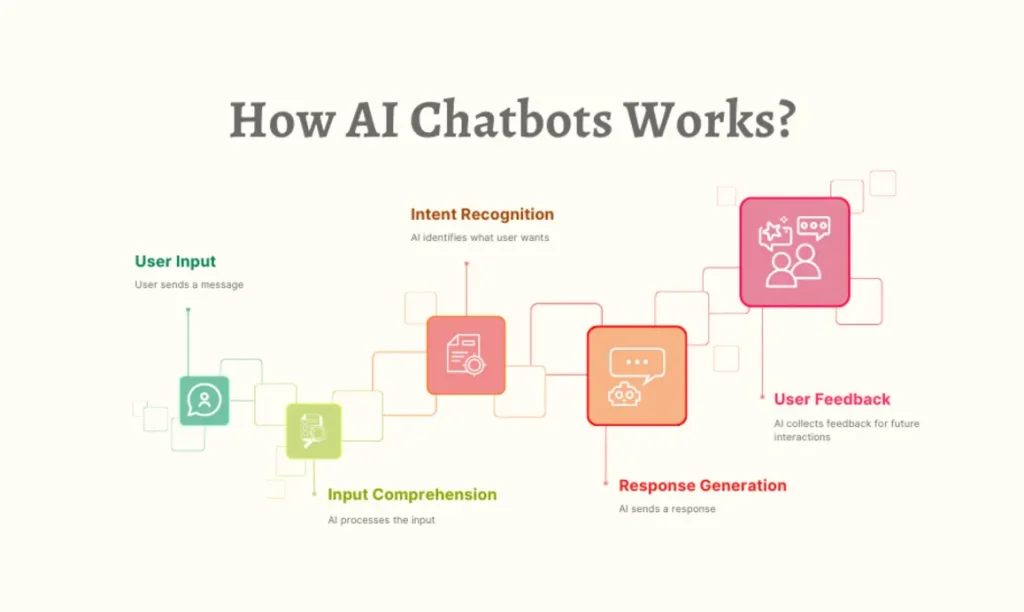
ADP has also moved decisively into artificial intelligence. Its generative-AI assistant, ADP Assist, now runs across RUN, Workforce Now and the next-generation Lyric HCM platform, and the company has begun rolling out persona-based AI agents in 2026, reporting roughly four million interactions on ADP Assist as adoption scales. This is genuinely useful context for anyone researching AI tools for their business: ADP is one of the clearest examples of a legacy enterprise embedding real AI into everyday operational work rather than bolting a chatbot onto an old interface.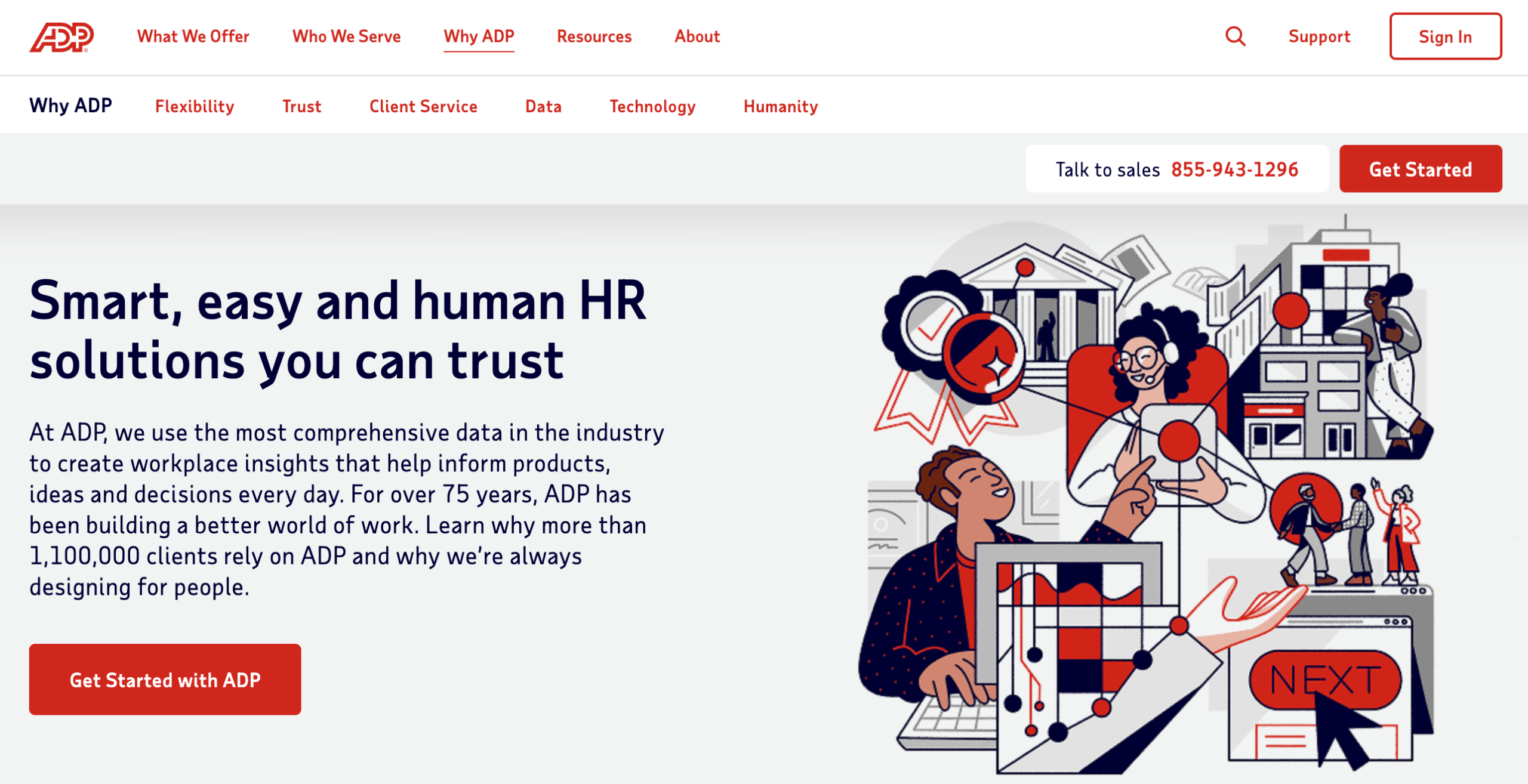
Why ADP Stands Out in 2026
A best-in-class tax and compliance engine: This is ADP’s single greatest strength. Its SmartCompliance suite handles employment tax filing, wage garnishments, new-hire reporting, ACA reporting, unemployment claims and more across every US state and 140+ countries — and ADP backs its full-service payroll with a tax-penalty guarantee. For businesses that fear a costly filing mistake more than they care about a slick interface, this reliability is the whole reason to choose ADP. Customers routinely describe years of error-free filings as worth the premium on its own.
Scale and reliability you can’t easily replicate: Paying roughly one in six US workers and retaining clients at above 92% annually is not an accident. ADP’s infrastructure is battle-tested at a volume almost no competitor can match, which is exactly what you want from the system that decides whether your people get paid on Friday. Reviewers and analysts consistently describe ADP’s core payroll as “bulletproof,” and for many buyers that dependability outweighs every other consideration.
ADP Assist — real generative AI across the platform: This is where ADP intersects directly with the AI-tools landscape. ADP Assist is a GenAI layer that lets you ask HR and payroll questions in plain language and get instant answers, charts and presentation-ready reports. It flags payroll anomalies before they become errors — early adopters report saving up to 30 minutes per payroll cycle — surfaces turnover risk through predictive analytics, monitors compliance changes, and delivers personalized learning recommendations to employees. Crucially, ADP runs these models on dedicated, privacy-minded instances rather than feeding sensitive payroll data into public tools.
DataCloud benchmarking nobody else can match: Because ADP sits on anonymized data from tens of millions of employee records, it can tell you how your pay, turnover, overtime and diversity metrics compare to similar companies in your industry and region. Few vendors can offer real, live salary benchmarks by job title and level the way ADP can — turning raw payroll data into genuine strategic insight for compensation and retention decisions.
A complete product ladder, not a single app: Few providers span the full range ADP does. A one-person business can start on the Roll app for a few dollars a month; a 30-person company runs RUN; a 500-person company runs Workforce Now; a global enterprise runs Vantage HCM or the AI-native Lyric HCM. That ladder means you never outgrow the brand — you simply move up a tier, keeping your data and your provider relationship intact.
A deep integration ecosystem: ADP’s Marketplace offers 700+ third-party apps, and Workforce Now connects to 900+ insurance carriers and the accounting and business tools companies actually use — QuickBooks, Xero, SAP, Oracle, Salesforce, BambooHR and more — with RESTful API access on higher tiers. Your payroll doesn’t live on an island; it syncs with the rest of your stack.
Global payroll under one roof: Through GlobalView and ADP Global Payroll, the company can run fully localized payroll across more than 140 countries in local currencies and tax regimes. For any business hiring internationally, consolidating multi-country payroll with a single provider is a powerful simplification that few competitors can deliver at ADP’s depth.
Extras most rivals charge more for: ADP includes background checks on every RUN plan — even the entry tier — where many competitors reserve that for premium packages. Add a top-rated mobile app for both employers and employees, 24/7 payroll support, and free tools like Accountant Connect for accounting partners, and the value proposition broadens well beyond just cutting checks.
Key Features and Technology
ADP’s catalog maps cleanly to company size and complexity. Here is how the ecosystem breaks down, from the AI layer that now spans all of it to the individual platforms underneath.
The Product Ladder — One Brand From Solo to Global
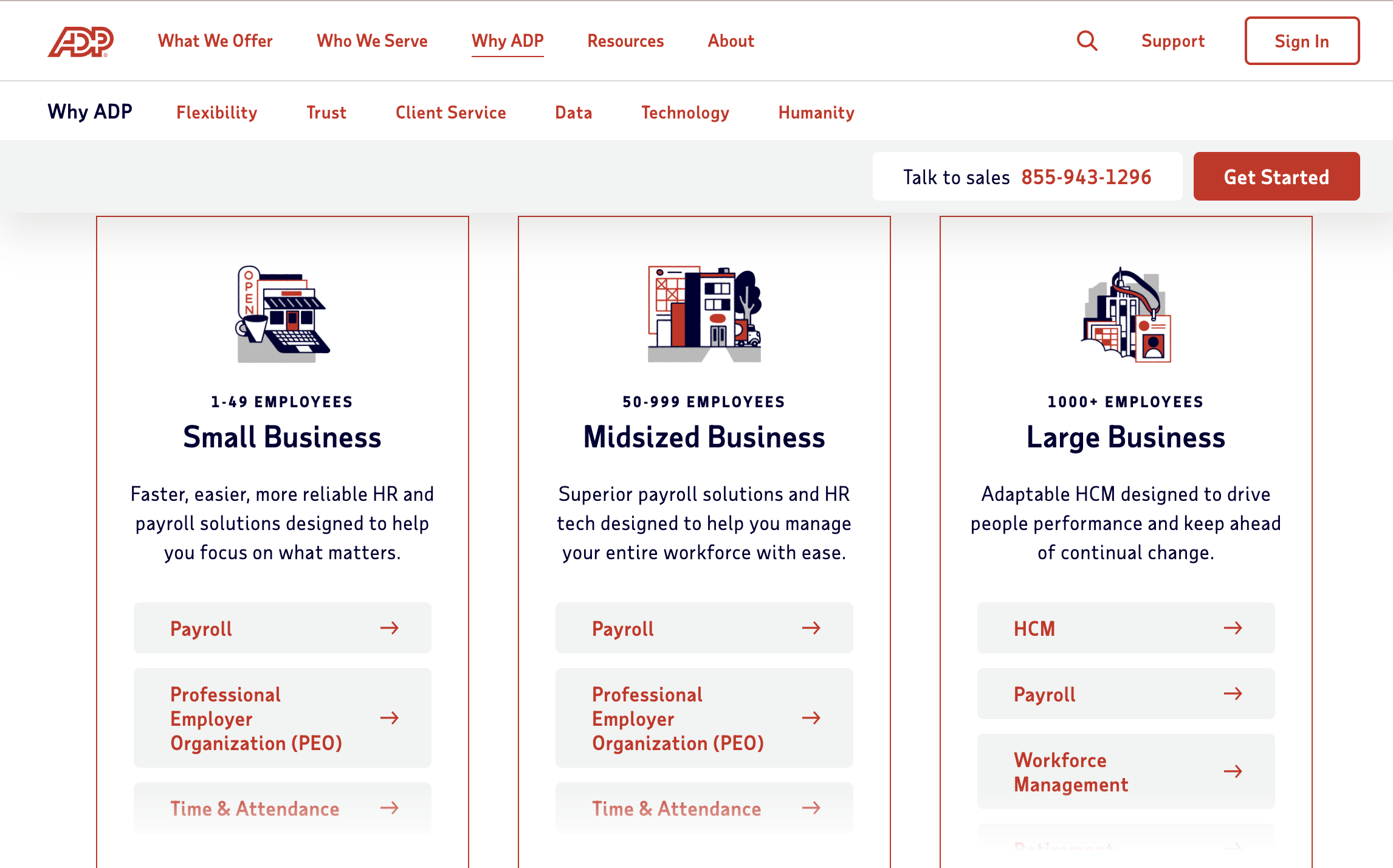
At the bottom sits Roll by ADP, a chat-based mobile payroll app built for very small and single-employee businesses — you run payroll by typing a command, and it handles tax withholding and filings automatically. A step up is RUN Powered by ADP, the small-business workhorse for companies with 1–49 employees, offered in four tiers (Essential, Enhanced, Complete and HR Pro) that layer on progressively more HR support, hiring tools and compliance help. For mid-sized organizations of roughly 50–1,000 employees, ADP Workforce Now is the unified cloud HCM suite covering payroll, benefits, time, talent and analytics. At the top are the enterprise platforms: the long-standing Vantage HCM for very large employers, and the newer, AI-native Lyric HCM, plus ADP TotalSource, a PEO that effectively outsources your entire HR, benefits and compliance function to ADP’s co-employment model.
ADP Assist and the AI Layer
ADP Assist is the connective AI tissue across payroll, time, talent, benefits, recruitment, analytics, reporting and compliance. Its anomaly detection scans payroll data before processing and flags inconsistencies — odd time punches, missing approvals, deviations from norms — then suggests fixes for a human to approve. Its natural-language analytics turn a question like “how are our overtime costs trending?” into instant charts and reports. Its predictive tools surface turnover risk, its compliance monitoring tracks shifting local and national regulations, and ADP Learning tailors development recommendations to each employee’s role and goals. The newest Lyric platform takes this furthest with a single conversational search bar and “Smart Actions,” plus a nudge engine that proactively reminds users of tasks they need to complete.
Compliance, Tax and Benefits
The SmartCompliance engine is the backbone here: automated multi-state tax filing, wage garnishment handling, certified payroll, new-hire reporting, ACA reporting and unemployment claim management, all underwritten by a tax-penalty guarantee on full-service plans. On the benefits side, Workforce Now connects to 900+ insurance carriers and supports health insurance, 401(k), FSA, HSA, workers’ comp and more, with benefits deductions syncing automatically back into payroll. For companies that would otherwise juggle separate vendors for payroll, benefits and compliance, consolidating them inside ADP removes a significant amount of manual reconciliation and risk.
Integrations, Mobile and Support
ADP’s Marketplace hosts 700+ apps, and key integrations cover QuickBooks, Xero, SAP, Oracle, Salesforce and BambooHR, with RESTful API endpoints available on Premium and Custom plans. Employees get a well-regarded mobile app for viewing pay stubs, requesting time off, managing benefits, approving timecards and accessing tax documents. Payroll support runs 24/7, though dedicated HR help-desk hours are narrower, and reaching a live human can occasionally take patience — a recurring theme in user feedback that’s worth setting expectations around.
Pricing, Plans, and Package Structure
ADP charges a recurring monthly fee plus a per-employee-per-month (PEPM) rate, and most plans require a custom quote — the company deliberately keeps pricing off its website for everything beyond Roll. Third-party reviews and reported quotes give us workable ranges, but your actual figure depends on headcount, the tier you choose, and which add-ons you bundle (time and attendance, for example, is only included on higher RUN tiers and otherwise costs extra). A 3-month free trial is commonly available on RUN. Because pricing is negotiable, the table below should be read as approximate, research-based estimates — always confirm the live quote for your business.
| Product | Approx. Price | Best For | Notes |
|---|---|---|---|
| Roll by ADP | ~$29/mo + ~$5/employee | Solopreneurs & micro-businesses | Chat-based app; the only transparently priced ADP product |
| RUN — Essential | ~$79/mo base + ~$4 PEPM | Small businesses (1–49 employees) | Core payroll + tax filing; background checks included |
| RUN — Enhanced / Complete / HR Pro | Custom quote (higher PEPM) | Small businesses wanting added HR | Layer on HR support, hiring tools, time tracking (higher tiers) |
| Workforce Now | ~$23–$30 PEPM (custom quote) | Mid-market (50–1,000 employees) | Full HCM: payroll, benefits, time, talent, analytics |
| Vantage HCM / Lyric HCM | Custom enterprise quote | Large enterprises (1,000+) | Lyric is the AI-native, person-based next-gen platform |
| TotalSource (PEO) | Custom quote (% of payroll or PEPM) | SMBs wanting full HR outsourcing | Co-employment; access to enterprise-grade benefits |
How ADP Compares to Alternatives
| Provider | Best For | Pricing | Edge |
|---|---|---|---|
| ADP | Compliance, scale, global payroll, any size | Quote-based, negotiable | Unmatched tax/compliance, AI, benchmarking, 140+ countries |
| Gusto | Small US-based teams | Transparent flat pricing | Modern UX, easy self-serve setup, friendly for non-HR owners |
| Paychex | SMB to mid-market | Quote-based | ADP’s closest rival; strong support and dedicated reps |
| Rippling | Tech-forward, fast-growing companies | Modular, per-feature | Unifies HR, IT and payroll; sleek, highly automated workflows |
| In-house / DIY | Tiny budgets, very few employees | Cheapest upfront | Full control — but high time cost and compliance risk |
vs. Gusto: Gusto is the favorite among small businesses that want transparent, flat pricing and a modern, friendly interface they can set up themselves without a sales call. For a domestic team under about 20 people, Gusto is often easier and cheaper. ADP pulls ahead when you need deeper compliance, multi-state or international payroll, background checks on every plan, or a clear upgrade path to enterprise software you won’t outgrow.
vs. Paychex: Paychex is ADP’s most direct competitor and the two are genuinely close, both offering quote-based pricing, strong compliance and dedicated support across the SMB-to-mid-market range. The decision often comes down to the specific quotes you receive and which rep earns your trust — which is exactly why getting both quotes side by side is the smart move.
vs. Rippling, Workday and the modern HCM crowd: Rippling wins on sleek, unified HR-IT-payroll automation for tech-forward companies, and enterprise suites like Workday, Oracle and SAP compete hard at the top. ADP’s interface on its legacy products can feel dated next to these, and implementation can be lengthy. But ADP counters with unrivaled payroll depth, the new AI-native Lyric platform, and a compliance track record measured in decades — a trade most reliability-first buyers are happy to make.
Pros and Cons
What Businesses Love
Bulletproof payroll and tax compliance: The most common praise by far. Years of error-free filings, a tax-penalty guarantee, and deep multi-state and multi-country expertise give finance teams a level of peace of mind that’s hard to put a price on — and worth the premium for many.
Scales from your first hire to thousands: One provider covers a one-person business and a 10,000-employee multinational. As you grow, you move up a tier instead of ripping out your system and starting over — a genuine strategic advantage for ambitious companies.
Genuinely useful AI and benchmarking: ADP Assist’s anomaly detection and natural-language reporting save real time, and the DataCloud benchmarks — built on tens of millions of records — give companies pay and turnover context no smaller vendor can offer.
Extras included that rivals upcharge for: Background checks on every RUN plan, a strong mobile app, 24/7 payroll support, and free accountant tools broaden the value well beyond basic check-cutting.
Deep integrations and a huge marketplace: 700+ Marketplace apps and connections to the accounting, benefits and HR tools businesses already run mean ADP fits into your existing stack rather than forcing you to rebuild it.
Limitations Worth Knowing
Opaque, quote-only pricing: This is the number-one frustration. Outside the Roll app, you can’t see prices online or forecast costs easily — you have to engage a salesperson and request a custom quote. Buyers who want transparent, self-serve pricing will find the process slower and more sales-heavy than competitors.
More expensive for very small teams: For businesses under roughly 20 employees, ADP is generally pricier and more complex than Gusto, SurePayroll or Patriot. If you just need simple payroll for a handful of people, you may be paying for capability you won’t use.
A dated interface on legacy products: ADP’s heritage shows. Workforce Now and older tools can feel clunky next to Gusto or Rippling, and younger employees in particular sometimes find the self-service portal less intuitive than they expect. The new Lyric platform addresses this, but it’s aimed at enterprise.
Implementation and product lineup can be confusing: Onboarding larger plans takes time, and navigating ADP’s sprawling catalog — RUN, Workforce Now, Vantage, Lyric, TotalSource, GlobalView — is genuinely bewildering for first-time buyers trying to figure out which product they actually need.
Add-on fees and support friction: Features like time and attendance aren’t bundled into lower tiers and cost extra, so the real total can climb above the headline figure. And while 24/7 payroll support exists, several users report it can be hard to reach a live person quickly. Clarify what’s included and budget for the extras up front.
Who Should Use ADP
Small business owners who want to grow without switching: If you’re running payroll for a handful of employees but plan to scale, RUN gives you enterprise-grade tax compliance and background checks now, with a clean path up to Workforce Now later. Start on RUN Essential and take advantage of the 3-month free trial.
Solopreneurs and freelancers paying contractors: If you mostly need to pay yourself or a few contractors and want taxes handled automatically without fuss, the Roll by ADP app is the low-cost, transparently priced entry point — run payroll from your phone with a text command.
Growing and mid-market companies: For organizations of 50–1,000 employees that need payroll, benefits, time and talent in one place — especially across multiple states — Workforce Now is the sweet spot, consolidating vendors and adding the AI and benchmarking layer that smaller tools lack.
Large and multinational enterprises: If you operate across dozens of countries or need a configurable, AI-native core system of record, Vantage HCM, the newer Lyric HCM, and GlobalView deliver cross-border payroll and compliance at a scale almost no rival can match.
Businesses that value reliability over everything else: If a single tax-filing error or a missed payroll would cost you far more than a slightly higher monthly fee or a less trendy interface, ADP is built for you. For compliance-first, scale-conscious teams, Workforce Now (or RUN for smaller shops) is the dependable choice.
Who should look elsewhere: If you’re a micro-business that wants the cheapest, simplest, fully self-serve payroll with transparent flat pricing and a modern interface, a tool like Gusto will likely serve you better than ADP’s quote-based, capability-rich approach.
Getting Started: Step by Step
- Match a product to your size. Use Roll for a one-person or micro-business, RUN for 1–49 employees, Workforce Now for 50–1,000, and Vantage or Lyric for enterprise. Knowing your headcount and which features you need (payroll only, or payroll plus HR, time and benefits) narrows it quickly.
- Request pricing. On the ADP site, choose your plan and click “Get Pricing.” You’ll answer a few questions about your business — location, employee count, services wanted — to generate a custom quote.
- Talk to a specialist and negotiate. An ADP representative will follow up to finalize the package. This is the moment to bring a competing Gusto or Paychex quote and negotiate — and to confirm exactly which features are included versus billed as add-ons.
- Migrate your data and set up. Provide your company, employee and prior-payroll details so ADP can configure the system, set up direct deposit, and import tax information. For larger plans, assign an internal point person to manage the rollout.
- Run your first payroll. Preview the account debit, review the highlighted “things to do,” and process pay. ADP handles the tax withholding and filings automatically from here.
- Lean on ADP Assist and integrations. Connect your accounting software, enable the mobile app for employees, and start using ADP Assist to catch anomalies, pull reports in plain language, and surface workforce insights as you go.
Tips for Getting Maximum Value
Treat ADP’s price as a starting offer, not a fixed rate — get a competing quote from Gusto or Paychex and use it as leverage, because reps routinely sharpen the deal to win your business. Choose the lowest tier that genuinely covers your needs and resist paying for HR modules or time tracking you won’t use; you can always upgrade later. Pin down in writing which features are bundled versus add-ons before signing, since that’s where unexpected costs accumulate. If you’re a small business, use the 3-month free trial on RUN to validate the fit before committing, and consider whether the Roll app covers you if you’re truly tiny. Once you’re live, get real return on the platform by actually using ADP Assist for anomaly checks and natural-language reporting, tapping the DataCloud benchmarks for compensation decisions, and connecting your accounting tools so payroll data flows automatically instead of being re-keyed by hand.
Future Outlook and Final Assessment
The tailwinds favor ADP. Compliance is only getting more complex as tax rules, hybrid work and global hiring multiply the ways a workforce can go wrong — and complexity is precisely what ADP is built to absorb. Its aggressive AI push, with ADP Assist now spanning every platform and persona-based AI agents rolling out in 2026, positions it well for a future where HR teams expect to ask questions in plain language and let intelligent systems flag problems before they happen. The AI-native Lyric HCM, built on a flexible person-based architecture, signals that ADP intends to lead the next generation of HCM rather than merely defend its legacy base.
The honest caveats remain: the pricing is opaque and you’ll have to negotiate, the legacy interfaces can feel dated, implementation takes effort, and very small teams may find it more than they need. But within those boundaries, ADP delivers something few competitors can — payroll and compliance you can genuinely trust at any scale, a deep and growing AI layer, and benchmarking insight drawn from one of the largest workforce datasets on earth.
Conclusion
ADP has done something rare: stayed the default choice in payroll and HR for over 75 years while genuinely reinventing itself for the AI era. It’s not the cheapest option, the most transparent on pricing, or the flashiest interface on the market — and it doesn’t need to be. What it offers is dependability at a scale and depth no rival matches, now paired with a real generative-AI layer and benchmarking that turn payroll from a chore into a source of insight. Confirm your live quote, negotiate hard, pick the tier that fits how your business actually runs, and ADP will take the most stressful part of managing people off your plate — making everything easy, every pay cycle.
Ready to take payroll and compliance off your plate?
Explore more honest reviews, tutorials and tool comparisons to find the right tech for the way you work and live — at AI Solutes, where we make everything easy.
👉 Start Your Free Trial: https://www.adp.com/
👉 Our YouTube Channel: youtube.com/@ai-solutes
👉 Our Facebook Fanpage: Facebook
👉 Our X (Twitter): @AISolutes
- Does Rawpixel Revolutionize Access to Public Domain Art? A Closer Look at Rawpixel’s Vintage Curation Framework
- Discover Oakstone Publishing CME in 2026: Practical Reviews, Board Prep, and Modern Online Learning
- Will MindManager Master the Art of Information Organization? A Deeper Look at Its Dynamic Flowchart Features
- Master Higgsfield AI in 2026: Generate Cinematic Videos with Sora 2, Veo 3.1 and Kling 3.0
- Spokeo Free vs Premium 2025: Unlock the Best Plan for Deep Background Checks