Every knowledge worker knows the specific misery of the deliverable pipeline: you research a topic across thirty browser tabs, draft a document, then rebuild the same material as a slide deck, then pull the numbers into a spreadsheet, then write the summary email. The thinking took two hours; the reformatting took six. Skywork.ai was built to collapse that pipeline into a single prompt. Launched globally in May 2025 by Singapore-registered Skywork AI PTE. LTD., it offers a “5+1” architecture of specialized Super Agents — Documents, Slides, Sheets, Webpages and Podcasts, plus a general agent — sitting on top of a DeepResearch engine that the company says scans up to 600 sources per task and attaches inline, traceable citations to every claim. Skywork reports a score of 82.42% on the GAIA benchmark for general AI assistants, and its output exports cleanly to DOCX, PPTX, XLSX and PDF.
That’s a genuinely appealing pitch for consultants, analysts, marketers and freelancers who ship client-facing material every week. But Skywork is also one of the most polarizing tools we’ve researched: independent reviewers who tested it report real capability, while its public customer-review score sits near the bottom of the category on billing and transparency grounds. This 2026 review covers both sides properly — what the agents actually do well, how the credit system works and why it has changed three times, the full pricing picture including what you can’t see without logging in, honest comparisons against Manus, Genspark and Gemini, the specific complaints you should understand before entering a card number, and exactly how to test it safely.
Skywork.ai Review 2026: A Powerful Multi-Agent Workspace With Real Capability and Real Caveats
Overview and Background
Skywork.ai is an AI workspace platform that turns a single brief into finished, multi-format deliverables. Rather than positioning itself as another chatbot, it markets an “AI office suite” in which each agent is specialized for one output type — a Documents agent that produces cited reports and papers, a Slides agent for presentations, a Sheets agent for data analysis and charts, a Webpages agent that builds live pages, a Podcasts agent for audio, and a general agent for broader multimodal work including images, video and posters.
The corporate story is unusual. The operating entity is Skywork AI PTE. LTD., registered in Singapore, which previously traded as Star Shine Entertainment PTE. LTD. and built Android entertainment apps before pivoting entirely to AI between 2021 and 2024. Multiple industry sources attribute the platform’s development to Kunlun Tech, a large Chinese internet company, working with Singularity AI. Worth noting fairly: the company does not prominently surface its founders, parent company or funding on its public pages, which some reviewers flag as a transparency gap. The engineering side is more open — Skywork has released model work publicly on GitHub, including the Skywork-R1V2 reasoning series trained with large-scale reinforcement learning.
Development pace in 2026 has been rapid. Within roughly a month in mid-2026 the company shipped a standalone Design product, a significant Website builder upgrade, interactive Slides, and a Poster social-publishing flow. If you value a platform that is visibly investing, that’s a genuine positive. If you value stability and predictable pricing, a product moving this fast in this many directions is something to weigh — and as the pricing section explains, the commercial model has moved just as quickly.
Why Skywork.ai Stands Out in 2026
Set the commercial questions aside for a moment, because the underlying product does things most competitors don’t. Here’s where it genuinely differentiates.
Research depth with traceable sourcing: DeepResearch is the platform’s real technical claim. Instead of answering from pre-trained knowledge, it runs live multi-source research — the company cites up to 600 sources per task — and returns output with inline citations you can click back to the original. For anyone producing work that will be scrutinized by a client, a supervisor or a regulator, being able to trace a claim to its source is the difference between usable and unusable.
One brief, many deliverables: This is the workflow advantage that reviewers who tested it consistently praise. Ask for a competitor analysis and you can turn the same researched foundation into a cited document, a six-slide executive summary, a comparison spreadsheet and a shareable webpage without re-briefing the model each time. The document-to-slide pipeline in particular is described by independent testers as smooth and genuinely time-saving.
Specialized agents rather than one generalist: The argument for vertical specialization is that a model tuned for slide construction understands visual hierarchy and narrative pacing in a way a general chatbot doesn’t. In practice the Documents and Slides agents are the strongest, and the platform’s ability to hold formatting discipline across long outputs is better than asking a general assistant to “make this a deck.”
Editable, exportable output in real formats: Deliverables come out as DOCX, PPTX, XLSX and PDF — genuinely editable files, not screenshots or locked previews. That matters enormously in practice, because AI output almost always needs a human pass before it goes to a client, and a format you can’t open in Word or PowerPoint is a format you can’t finish.
Strong benchmark positioning: Skywork reports 82.42% on GAIA, the benchmark designed to test general assistants on multi-step reasoning tasks requiring tool use — a figure that would place it competitively against other agentic platforms. Treat vendor-reported benchmarks with normal caution, but the number is at least consistent with what testers describe.
A free tier that lets you test properly: New users receive a daily credit allowance during the first month, dropping to a weekly allowance afterwards, with no payment method required for free access alone. Given everything else in this review, the fact that you can evaluate the product’s actual output quality without entering card details is arguably its most important feature.
Open engineering and security certifications: The company publishes model research openly on GitHub, and the platform advertises end-to-end encryption, GDPR compliance and SOC 2 certification — meaningful if you’re evaluating it for business use rather than personal experimentation.
Key Features and Technology
The platform organizes around the agents, with a research engine underneath and an expanding set of creative surfaces on top.
The DeepResearch Engine
This is the layer everything else sits on. Given a research question, it performs live retrieval across a wide source set, synthesizes findings, separates what it found from what it inferred, and attaches citations in standard academic formats. The practical benefit is that output arrives with its evidence attached rather than requiring you to reverse-engineer where a claim came from. The practical limit — and reviewers are clear about this — is that citation presence is not the same as citation accuracy. Verify the sources behind anything important before it leaves your desk.
Documents, Slides and Sheets
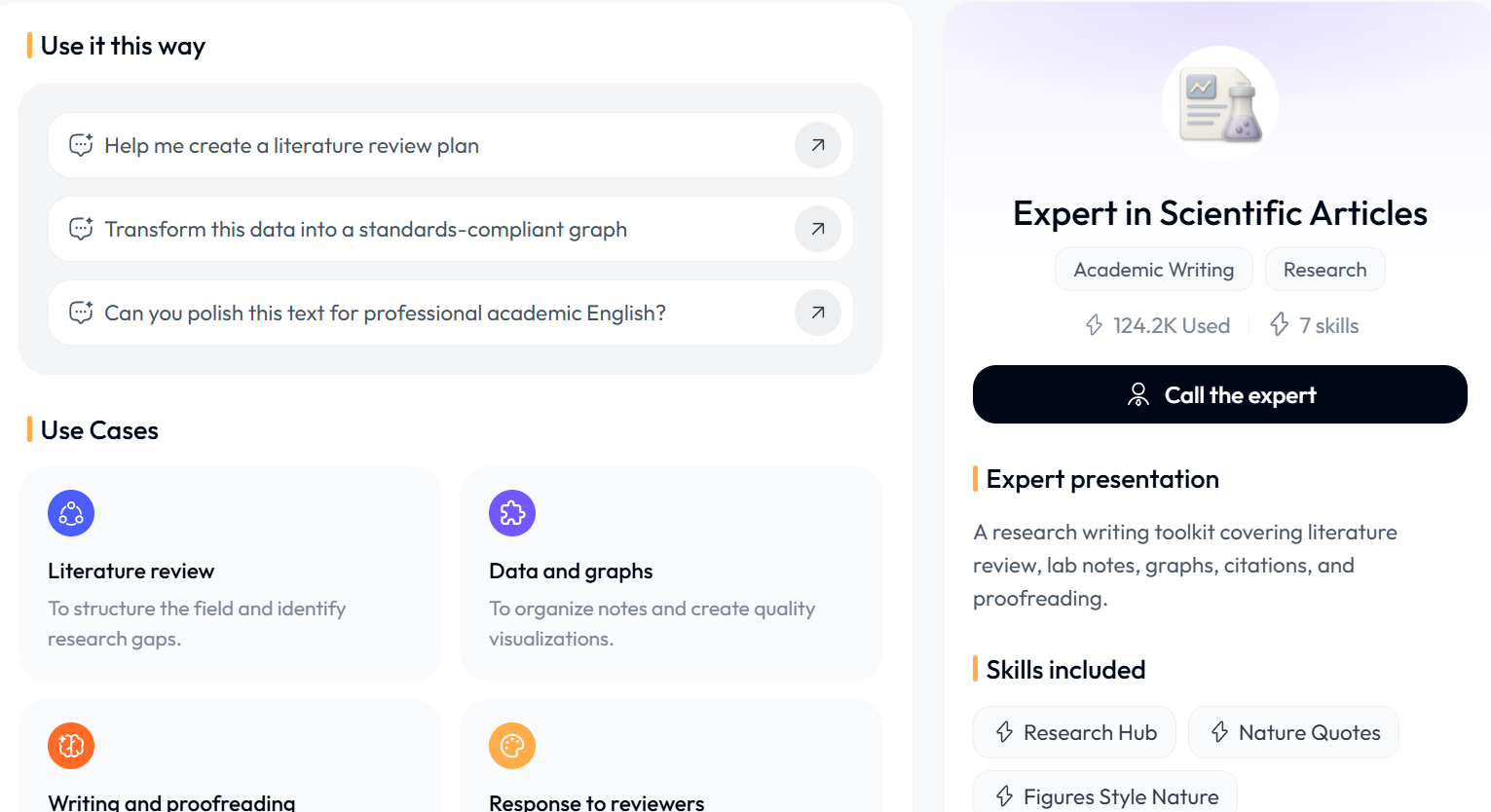
The Documents agent handles reports, papers, briefs, proposals and marketing copy with structural discipline across long pieces. The Slides agent converts research into presentations, and 2026 brought interactive slide capabilities alongside standard PPTX export. The Sheets agent processes datasets into charts, tables and analytical summaries. Of the three, user feedback on Slides is the most mixed — some testers rate the deck output as impressive, others describe it as needing substantial cleanup — so if presentations are your primary use case, test that specific workflow before committing.
Webpages, Podcasts and the Creative Surfaces
The Webpages agent builds live, shareable pages from a brief — useful for campaign landing pages, internal microsites or research summaries you want to send as a link rather than an attachment. The Podcasts agent produces audio from written material. The general agent extends into images, video, music and picture books. Newer additions include a standalone Design product and a Poster flow aimed at social publishing, with an editing canvas that independent testers have singled out as legitimately good.
Pricing, Plans, and Package Structure
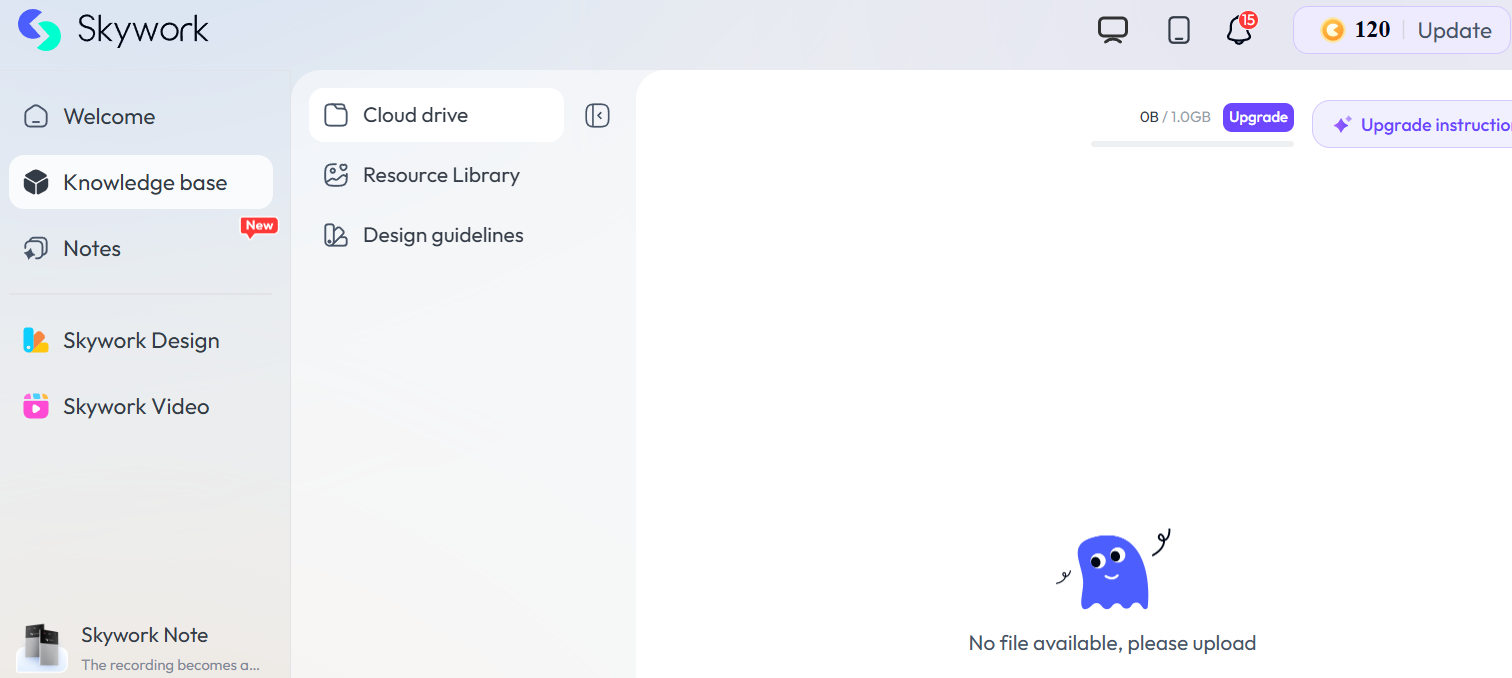
Skywork’s pricing is the single hardest thing to report accurately about it, and that is itself a finding. The commercial model has changed repeatedly: an earlier generation offered effectively unlimited use, a later version moved to credits — drawing significant backlash from users who felt the terms changed underneath them — and a 2026 app release announced the removal of the credit system again while introducing higher membership tiers. Third-party trackers list wildly different figures, separate products carry separate prices, and the live plan grid sits behind a login wall. The ranges below reflect widely reported 2026 figures and should be treated as orientation only.
| Plan | Reported Price | What’s Reported to Be Included | Best For |
|---|---|---|---|
| Free | $0 — no card required | Daily credit allowance in month one, then a smaller weekly allowance; access to the agents | Everyone should start here — enough to judge output quality on a real task |
| Monthly Pro | ~$17–20 / month | Monthly credit allowance commonly cited at 7,000, full agent access, commercial rights, premium exports | Individuals testing a real monthly workload before any longer commitment |
| Annual Pro | ~$150 / year (~$12.50/mo) | Same features plus priority processing, collaboration tools and early feature access | Only after you’ve measured a full month of real usage — annual charges are the most disputed |
| Higher tiers (Plus / Ultra / Premium) | Varies widely by listing | Larger or removed credit caps, premium models, longer context, team workspaces | Heavy users — but confirm the live tier structure yourself, as it has changed repeatedly |
| Enterprise | Custom quote | Zero-training-data policy, SOC 2 compliance, custom integrations and controls | Organizations with procurement and data-governance requirements |
Two things are worth stating plainly. First, the platform has not published a per-task credit cost for every workflow type, so a headline credit allowance tells you very little until you measure your own usage — and users report heavy consumption on media-rich tasks, with one reviewer claiming individual slides consumed over a thousand credits each. Second, some capabilities are sold as separate products with their own subscriptions, so “the price” may not be one number. Measure before you commit.
How Skywork.ai Compares to Alternatives
The agentic workspace category is now genuinely competitive, and the alternatives differ in architecture rather than just price.
| Option | Approx. Entry Price | Core Strength | Main Trade-Off |
|---|---|---|---|
| Skywork.ai | Free / ~$17–20 per month | Deep cited research converted into many deliverable formats from one brief | Opaque, frequently-changing pricing and a poor public billing reputation |
| Manus | Free tier / paid plans | Genuinely asynchronous execution — set a goal, come back to a finished artifact | Less structured around fixed deliverable formats; heavy tasks consume allowance fast |
| Genspark | ~$20/mo, higher tiers extra | Autonomous task execution across external apps, with dedicated cloud environments | The strongest capabilities sit on a separate, more expensive tier |
| Google Gemini | Free, then ~$8–20/mo | Deep research plus native Workspace integration — output lands in Docs and Sheets directly | Much of the value evaporates if you’re not in the Google ecosystem |
| ChatGPT / Claude + manual formatting | ~$20/mo | Best-in-class reasoning and writing, transparent flat pricing, easy cancellation | You do the format conversion yourself — the exact work Skywork automates |
vs. Manus: Manus is the better choice if what you want is genuine autonomy — hand it an open-ended goal and let it work unattended. Skywork is the better choice if you know exactly which artifacts you need and want them in specific business formats with citations attached. Manus is more agent; Skywork is more office suite.
vs. Genspark: Genspark’s differentiator is acting on the outside world — running tasks across external applications from a dedicated cloud environment. Skywork’s is producing verified internal deliverables. If your bottleneck is “someone needs to do this in twelve different tools,” Genspark. If it’s “someone needs to research this and turn it into a deck,” Skywork.
vs. Gemini and the mainstream assistants: This is the comparison most readers should weigh most carefully. Gemini, ChatGPT and Claude offer deep research, transparent flat pricing, trivially easy cancellation and — in Gemini’s case — output that lands directly inside Google Docs and Sheets. What they don’t do is generate a finished PPTX, XLSX and webpage from one research pass. If that multi-format conversion is genuinely your bottleneck, Skywork earns consideration. If it isn’t, the mainstream assistants are the lower-risk purchase, and honestly so.
Pros and Cons
What Users Love
The document-to-slide pipeline genuinely works: Independent testers consistently single this out. Research once, then produce both the written brief and the deck without rebuilding anything. For people who live in that loop, it removes hours per project.
Citations you can actually follow: Output arrives with sources attached and traceable. Compared with a general chatbot that asserts confidently and sources nothing, this is a meaningful upgrade for professional work.
Real editable exports: DOCX, PPTX, XLSX and PDF that open properly and can be finished by hand. Simple, but many competitors get it wrong.
Breadth that can consolidate a toolstack: Research, writing, decks, spreadsheets, sites, audio, images and posters in one place. At around $20 a month, the value case against paying for four separate tools is defensible on paper.
A card-free free tier: You can evaluate output quality on a real task without any payment method on file. Use this fully.
Visible, fast development: New surfaces shipped throughout 2026, and the poster and design canvas in particular have drawn praise from testers who expected less.
Limitations Worth Knowing
Billing and cancellation complaints dominate public feedback: This is the headline caveat and it deserves the emphasis. Public review platforms show a heavily negative pattern centred on charges arriving after a free period ended without warning, cancellation controls users struggled to find, and refunds not granted — including reports of large annual charges disputed after minimal use. The sample is small and skewed, and some anger clearly comes from users who liked the product and felt the terms shifted. But it is consistent enough that anyone subscribing should document everything and know their payment provider’s dispute process.
Pricing is not transparently published: The live plan grid sits behind a login wall, per-task credit costs aren’t published for every workflow, and separate products carry separate subscriptions. In a category where competitors publish a simple public pricing page, this is a real disadvantage — you cannot fully price the product before creating an account.
The commercial model keeps changing: Unlimited, then credits, then credits reportedly removed again with new higher tiers added. Each shift generated its own wave of frustrated users. Whatever terms you agree to, do not assume they’ll be the terms next year.
Credits can drain much faster than expected: Media-rich and presentation-heavy tasks are the reported offenders, with some users describing allowances vanishing within days. Because there is no published universal per-task cost, you genuinely cannot budget this in advance — you have to measure it.
Output still needs verification and cleanup: Reviewers report hallucinations despite the research architecture, and mixed results on slide quality specifically. Citations being present is not the same as citations being correct. Budget a human verification pass on anything that leaves your organization.
Corporate transparency is thin: Founders, ownership and funding are not prominently disclosed on public pages, and attribution to a parent company comes from third-party reporting rather than the company’s own site. For personal use that may not matter; for business procurement it will.
Mobile experience and stability lag the web app: Testers describe the mobile experience as needing work, and a product shipping this many features this quickly carries the usual bug surface.
Who Should Use Skywork.ai
Consultants and analysts producing research-backed deliverables: If your week involves turning one research question into a report and a deck for a client, this is the workflow the platform was designed for, and the citation trail is genuinely valuable. Start free, measure one full project, then move to Monthly Pro if the credit maths holds.
Freelancers juggling several content formats: Writers who also need decks, one-pagers and landing pages get the clearest consolidation benefit. The commercial rights on paid plans matter here — confirm the current terms cover your client work before relying on it.
Marketing teams producing volume content: The platform demonstrably produces publication-ready long-form content at scale. If that’s your need, the free tier will show you within a day whether the quality clears your bar. Just apply an editorial pass — volume without verification is how brands publish errors.
Students and researchers on a budget: The free tier is meaningful and the citation architecture suits academic work. Stay free unless a specific deadline justifies upgrading, and always verify sources yourself — no AI citation is a substitute for reading the paper.
Who should skip it: Anyone who needs predictable, transparent billing above all else — the pricing volatility and complaint pattern make this a poor fit for organizations with strict procurement rules. Anyone whose need is served by a single format is better off with ChatGPT, Claude or Gemini at similar cost with far simpler terms. And if you’re not willing to run a controlled free-tier test first, don’t subscribe at all.
Getting Started: Step by Step
- Sign up for the free tier only. No payment method is required for free access. Do not add a card during this phase — you are evaluating, not buying.
- Note your starting credit balance. Write it down. This number is the baseline for the only measurement that actually matters.
- Run one complete, realistic job — not a sampler. A strong test is a researched 800-word brief using five named recent sources, plus a six-slide executive summary built from it. That single task exercises research, sourcing, structure, visuals, exports and editing effort at once.
- Check the credit cost immediately. Compare your balance before and after. Multiply by how many such jobs you’d run monthly. That figure — not the advertised allowance — tells you which plan you actually need, or whether the product is viable for you at all.
- Verify the output properly. Open the cited sources and confirm they say what the document claims. Assess how much editing the deck needed. Polished wording is not the same as verified accuracy.
- If you subscribe, locate cancellation first. Find the cancel control in account settings and screenshot it, along with the plan terms shown at checkout. Choose monthly billing over annual for your first cycle regardless of the discount.
- Set a renewal reminder the same day. Put a calendar alert several days before the renewal date so a charge never arrives as a surprise. This one step prevents the most common complaint about this platform.
Tips for Getting Maximum Value
Write briefs that specify the outcome, not the topic — naming your audience, required length, source recency and output format produces dramatically better first drafts and wastes fewer credits on regeneration. Batch related deliverables from a single research pass rather than starting fresh for each artifact; that reuse is where the platform’s real economics live. Explicitly instruct it to label anything it cannot verify, which surfaces weak claims instead of burying them in confident prose. Test your highest-value workflow before your most interesting one — if slides are your bottleneck, prove the Slides agent works for you before falling in love with the podcast feature. Keep credit-hungry media generation for tasks that genuinely need it. Treat every citation as a lead to check rather than a fact to trust, particularly for anything client-facing or published. And on the commercial side: stay monthly until you have real usage data, re-read the terms whenever the product announces a pricing change, and keep your own record of what you agreed to. The people who report the worst experiences with this platform are overwhelmingly those who committed before measuring.
Future Outlook and Final Assessment
The category Skywork operates in is expanding quickly — industry estimates put the AI workspace market in the low tens of billions of dollars and growing at a strong double-digit rate — and the underlying thesis is sound. Knowledge work really is bottlenecked on format conversion rather than thinking, and multi-agent systems that produce finished artifacts rather than chat responses are clearly where the category is heading. Skywork was early to that insight and has built genuine technical depth around research and citation that many better-funded competitors haven’t matched.
The open question is commercial maturity rather than capability. A platform can ship impressive features and still lose users faster than it wins them if pricing changes repeatedly, plan terms sit behind a login, and a meaningful number of customers feel they were charged without warning. Those are fixable problems — publish a public pricing page, publish per-task credit costs, make cancellation obvious, notify before charging — and if Skywork fixes them, its product strengths would speak for themselves. Until it does, the friction is real and it belongs in your evaluation.
Our honest position: this is a capable tool wrapped in a commercial experience that requires more caution than most. That’s not a reason to dismiss it, but it is a reason to test it on the free tier, measure your real costs, and commit slowly rather than taking the annual discount on faith.
Conclusion
Skywork.ai is a genuinely interesting product with a genuinely complicated reputation, and pretending otherwise would do you no favours. The technology is real: deep research with traceable citations, specialized agents that produce editable business documents, and a document-to-deliverable pipeline that removes hours of reformatting from a knowledge worker’s week. Testers who put it through actual professional workflows come away impressed by the core, and at around $20 a month the value case against a stack of separate subscriptions holds up.
The commercial side needs your attention in a way the product side doesn’t. Pricing that changes repeatedly, plan details behind a login, credits that drain unpredictably, and a public complaint pattern about surprise charges are all real and all worth respecting. So use the free tier first, measure one complete job, stay monthly until you have evidence, and set the renewal reminder on day one. Do that and you get the upside without the risk — which is the whole point of researching a tool properly before you buy it, and exactly the kind of clear-eyed guidance we aim to give you at AI Solutes, where we make everything easy.
Try the free tier first — test one real deliverable before you spend a cent.
Explore more honest reviews, tutorials and tool comparisons to find the right tech for the way you work and live — at AI Solutes, where we make everything easy.
👉 Open Free Account: https://ai-solutes.com/skywork.ai
👉 Our YouTube Channel: youtube.com/@ai-solutes
👉 Our Facebook Fanpage: Facebook
👉 Our X (Twitter): @AISolutes
- How Does Hostinger’s Built-In AI Website Builder Transform a Simple Business Idea Into a Fully Functioning WordPress Site?
- Master Weebly in 2026: Explore Features, Pricing, Pros, Cons, and SEO Strategies
- Does Medo AI Revolutionize Software Development? Evaluating the Medo AI Next-Gen Coding Framework
- Choose the Best Keto Bread in 2026: Zero Net Carb, High-Protein, and Keto Sourdough Top Picks
- Discover Sonos Era 100: Best Entry-Level Smart Speaker for 2026 with WiFi 6, AI Voice, and Superior Stereo Sound