Before diving into the detailed strategies and technical breakdown, it’s important to set the stage. Local SEO has rapidly become one of the most competitive and high-impact areas in digital marketing, especially with Google’s evolving algorithms continuing to prioritize proximity and relevance. Consistently ranking in the local 3-pack or Maps can generate exponential growth, while being invisible means losing customers to competitors you may never see coming. This guide is built to look beyond theory—delivering a roadmap filled with case studies, automation strategies, and cutting-edge tracking methods that can directly elevate rankings in 2025 and beyond.
Mastering Local SEO Keyword Tracking and Google Business Profile Rank Tracking in 2025
Local SEO and Google Business Profile Rank Tracking: Why It Matters
Let’s be honest—local SEO isn’t just fancy jargon. It’s now a make-or-break factor for digital growth. Picture this: your cafe or fitness center shows up first when someone Googles “best latte near me” or “yoga studio in [your city]”. That’s local SEO in action, and for small businesses, local service pros, and agencies with a portfolio full of regional clients, understanding your real-time visibility for tightly targeted keywords is the golden ticket. It literally means seeing who finds you—and who doesn’t—as they navigate their neighborhood with a smartphone.
The Core: Location-Based Rank Tracking
Old-school keyword trackers are like looking at your business through a blurry lens—sure, you see the big picture, but the details are lost. You get a general sense of where you’re ranking nationally or globally. But local SEO keyword tracking? That’s like zooming in on a street-level map and seeing exactly which neighborhoods are your strongholds, and which zones still need some SEO love.
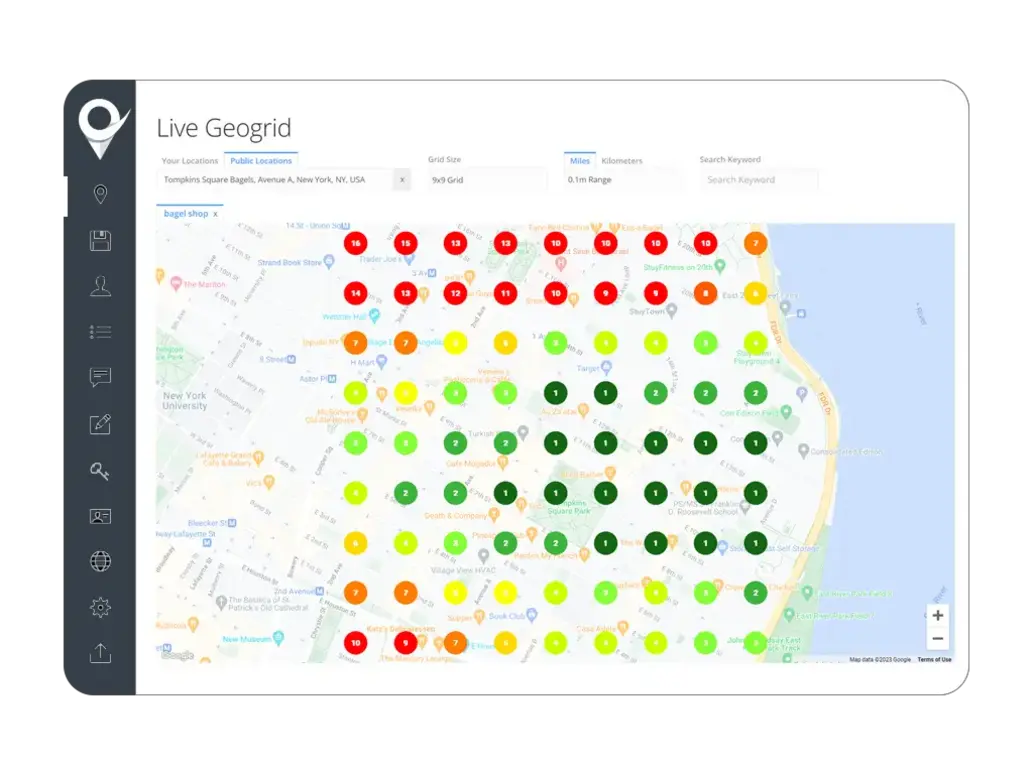
Imagine this: Using super-accurate geo grids, you get a color-coded visual that spells out your Google Business Profile performance down to the block. Where are you winning? Where are you invisible? With this info, planning your next content push or citation update gets crazy strategic.
How Local SEO Grid Tracking Works
Let’s break down why this kind of tracking is a must-have:
- Geo-specific tracking: You’re not just ranking for “plumber” nationally. You know your exact spot on the leaderboard in each city, suburb, or zip code. Want to know how you rank in SoHo vs. Brooklyn Heights? Boom—you’ve got the numbers.
- Google Business Profile integration: You find out where your business pops up in that all-important Local Pack, Google Maps, and regular search results.
- Visual heatmaps: Imagine a map dotted with green for your SEO wins and red for pain points. No more guesswork—just instant clarity.
Key Value: Agencies and SMBs get the ability to pinpoint search gaps, make smarter optimization decisions, and accurately measure the impact of local SEO tweaks—all by looking at actual, hard data instead of gut feelings.
Step-by-Step: Setting Up Local Rank Tracking
It’s simpler than you think. Here’s how the pros do it:
- Get your Google Business Profile registered and connect it to your chosen SEO tool.
- Define your regions—is it by city, zip code, neighborhoods, or custom GPS grids?
- Enter your critical local keywords (“vegan bakery Greenwich Village,” “emergency plumber Dallas”).
- Track rankings daily, watch Map Pack movements, and spy on competitors at a micro-local level.
- Use your SEO map grid to tweak website content, local listings, and outreach strategies for each weak zone.
Expert Insight: “Local map grid tracking is the single most insightful way to surface SEO wins and pain points that raw ranking numbers can’t reveal. If you care about dominating hyper-local search, you need this view.” — Olivia Crane, Local SEO Strategist
Let’s be real: Raw numbers alone tell you nothing about where opportunity hides. Map grids are like X-ray glasses for agencies—see what your competitors don’t want you to notice!
Automated Reporting and Bulk Keyword Management: Scaling SEO Success
If you’ve ever been buried under endless spreadsheets or spent hours hand-building client SEO reports, you know the pain. As agencies and multi-location SMBs ramp up, speed and precision become critical. Manual methods don’t cut it—they’re a recipe for missed opportunities and reporting mistakes that can crater relationships. Enter: automation and bulk management.
The Role of Automation in 2025
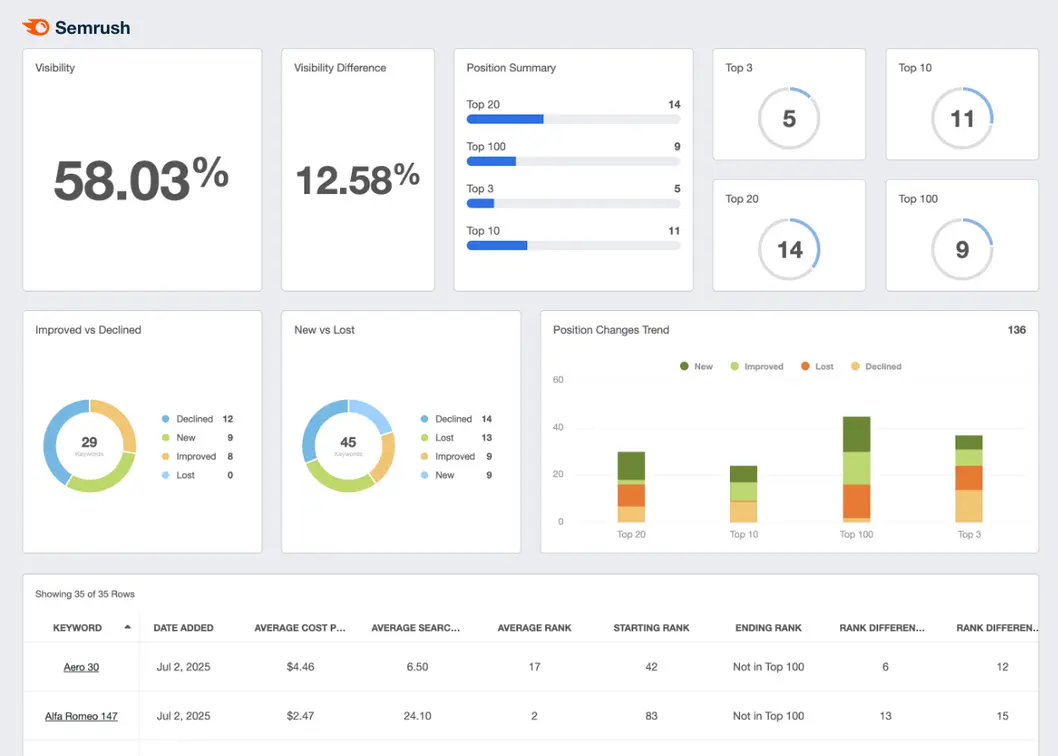
Today’s top SEO rank tracking platforms (like Pro Rank Tracker and its competitors) make old-school grunt work a thing of the past. Say goodbye to copy-pasting rank data and chasing up-to-date reports.
Here’s what’s changed:
- Automated report scheduling: You set the schedule (daily, weekly, monthly); branded PDF reports hit client inboxes automatically. Less time chasing, more time strategizing.
- Bulk keyword uploads: Got hundreds (or thousands) of keywords across different cities or clients? Upload once via CSV or API, and you’re off to the races.
- Notifications & smart alerts: You’ll know instantly if rankings slip, new keywords join the top 3/10, or a competitor leaps ahead.
- Integrations: Sync with Google Analytics, Google Search Console, Slack notifications, and more—no more tedious manual data transfer.
Actionable Setup: Automated Workflows
Ready to streamline? Here’s a blueprint:
- Link your client sites and Google Business Profiles.
- Import large keyword lists by region, service, or campaign.
- Build reporting templates—schedule sends so everyone stays updated.
- Set up smart alerts for sudden changes, opportunities, or problems.
- Integrate with your CRM/dashboard for one-click marketing moves.
Main Value: With automation, you reduce error risks, save hours every month, and seriously improve client engagement. No agency wants to waste time on repetitive reporting when they could be building campaigns that move the needle.
Real-World Example: How Automation Protects Growth
Let’s say you’re running a digital agency with 50+ clients. Each pays for individualized attention, lightning-fast updates, and total transparency. Automate your reporting, keyword upload, and alerts, and you’ve suddenly scaled your workflow without hiring extra staff or risking accuracy.
Fact check: Agencies using automation tools report up to a 40% increase in operational efficiency—according to a 2024 Moz survey—and client retention soars when mistakes vanish and attention shifts to ROI-driven advice.
Case Studies: Real-World SEO Improvements & ROI Breakthroughs
Ready to see how theoretical best practices become real results? Here’s how leading agencies and SMBs have transformed their operations—and turbocharged their local search rankings—by combining precision tracking and automation.
Case Study 1: Local Franchise Skyrockets Map Pack Rankings
The Challenge:
A national home services franchise wanted better visibility in Google Maps for dozens of local territories. Despite solid reviews and a decent web presence, they struggled to break into the coveted top 3 spots—the “Map Pack”—where most local customers click first.
Tactics Deployed:
They rolled out grid-based local keyword tracking, spotting suburbs where rankings lagged on “air conditioner repair near me.” By combining targeted reputation pushes and building super-local landing pages, those weak areas got bespoke attention.
The Results:
Sixty days later, 14 new locations burst into the top 3 Map Pack. Phone calls doubled—a staggering 1.8x increase. Franchisees now use heatmaps as a playbook for new market launches.
Case Study 2: E-commerce Agency Automates Success
The Challenge:
Imagine stewarding SEO for 80+ e-commerce brands, each demanding fresh reporting. Previously, the agency chewed through over 15 hours a month cobbling keyword lists and hand-scraping data—leading to mistakes and client frustration.
Tactics Deployed:
Bulk keyword management (via CSV/API), automated reporting, and instant alert setup. Suddenly, manual input was slashed, and staff could actually focus on proactivity.
The Results:
Retention zoomed up by 38%. Not one reporting error in six months. Client feedback scores rocketed as insights reached inboxes faster than ever.
Case Study 3: Multi-Location SMB Outranks Rivals
The Challenge:
A regional law firm with 10 offices needed precise tracking—not just for themselves, but for direct competitors in every city. Blanket rankings were useless; they wanted to know who ruled “personal injury attorney [city]” in each market.
Tactics Deployed:
Custom geo-grid setup for each location, overlaying their own and competitors’ rankings. Campaigns became micro-targeted, channeling resources only where rivals led.
The Results:
Top 2 rankings in eight out of ten city packs. Marketing spend was optimized (and justified), with ROI tracking finally realistic.
Emotional Impact: Before/After Visualization
Maybe the most inspiring part? Teams often see a “light bulb moment” when comparing old vs. new grid heatmaps. Watching red squares slowly turn green—signaling new top 3 rankings—makes the effect tangible and motivates everyone to push harder.
Keyword Rank Tracking Comparison Table 2025
Choosing the right tool isn’t just about shiny features. In 2025, accuracy, scalability, and specific local SEO capabilities can make or break your search strategy. Here’s how Pro Rank Tracker measures up against heavy hitters like SEMrush, AccuRanker, and a few up-and-comers:
| Feature | Pro Rank Tracker | SEMrush | AccuRanker | Other Tools |
|---|---|---|---|---|
| Localized Grid Rank Tracking | Yes | Limited | No | No |
| Google Business Profile Integration | Yes | Yes | Partial | Limited |
| Automation & Bulk Keyword Upload | Yes | Yes | Yes | Partial |
| Price Range (per month) | $13 – $165+ | $129+ | $116+ | Varies |
| White Label Reporting | Yes | Yes | Yes | Limited |
| API/Integrations | Broad | Moderate | Good | Limited |
| Mobile App Monitoring | Yes | Partial | No | No |
| Competitor Keyword Tracking | Yes | Yes | Partial | Varies |
| Historical Data & Charting | Yes (unlimited) | Yes | Yes | Varies |
Decision Tool: If grid-based local SEO, precise Google Business Profile tracking, and agency-friendly automation matter most, Pro Rank Tracker is a 2025 standout in both value and features.
What About AI Platforms?
Curious about how AI-enhanced platforms stack up? Read our Watch more deep dive for candid insights on GrowthBar’s unique agency-first SEO features.
Local SEO Implementation: Direct Steps to Maximize Google Business Profile Rank Tracking
Let’s talk strategy—not just software. Winning at local SEO means consistent execution. Here’s your 2025 step-by-step for optimizing geo-targeted keyword tracking:
- Audit Your Google Business Profile:
Make sure all locations are fully verified. Double-check that your business categories and NAP (Name, Address, Phone) details are identical everywhere. - Define Clear Geo-Targets:
Use grid-based map overlays to carve up operational zones—sometimes down to the street or block. - Assign Keywords by Location:
Be detailed. Instead of “best pizza New York,” go hyperlocal: “best pizza Brooklyn Heights,” “vegan pizza Williamsburg.” - Enable Rank Tracker Map Grid:
Layer your tracked keywords onto your map grid. Compare how you fare against nearby competitors. - Fine-Tune Based on Data:
Deploy new GMB posts, collect fresh reviews, tailor landing pages, and build local backlinks—especially in low-ranking neighborhoods. - Monitor, Report, Adjust:
Let automation handle reporting. Use instant alerts to react fast when rankings shift.
Pro Tip: Neighborhood wins don’t always spill over. Ranking #1 in SoHo may not help you in Chelsea. Rely on grids to stay precise!
Advanced Tactics: Real-Life Example
Suppose you’re a multi-city yoga studio owner. Your Castle Hill branch keeps hitting the top 3 spots, but your Darlinghurst studio lags. The grid reveals low review count and few local backlinks for Darlinghurst. Time for action: run a review contest, host pop-up events, and reach out to local wellness bloggers. Watch the grid transform from red to green in weeks!
Advanced Features Shaping Local SEO Tracking in 2025
SEO never stands still. The best rank trackers now leverage AI-driven insights, real-time competitor moves, and slick integrations for even better visibility. Let’s peek at the 2025 innovations:
- AI-Powered Keyword Discovery:
Get auto-suggestions for emerging “near me” terms as local demand shifts. Example: A spike in “keto bakery [city]” prompts new landing page launches. - Real-Time Competitor Alerts:
Instantly see when a rival claims the top spot for your money keywords—helping you pivot campaigns or invest in new PPC pushes. - Zapier/Slack Notifications:
Automated ranking alerts drop straight into your agency group chat—so everyone reacts in minutes, not days. - Unlimited Historical Data:
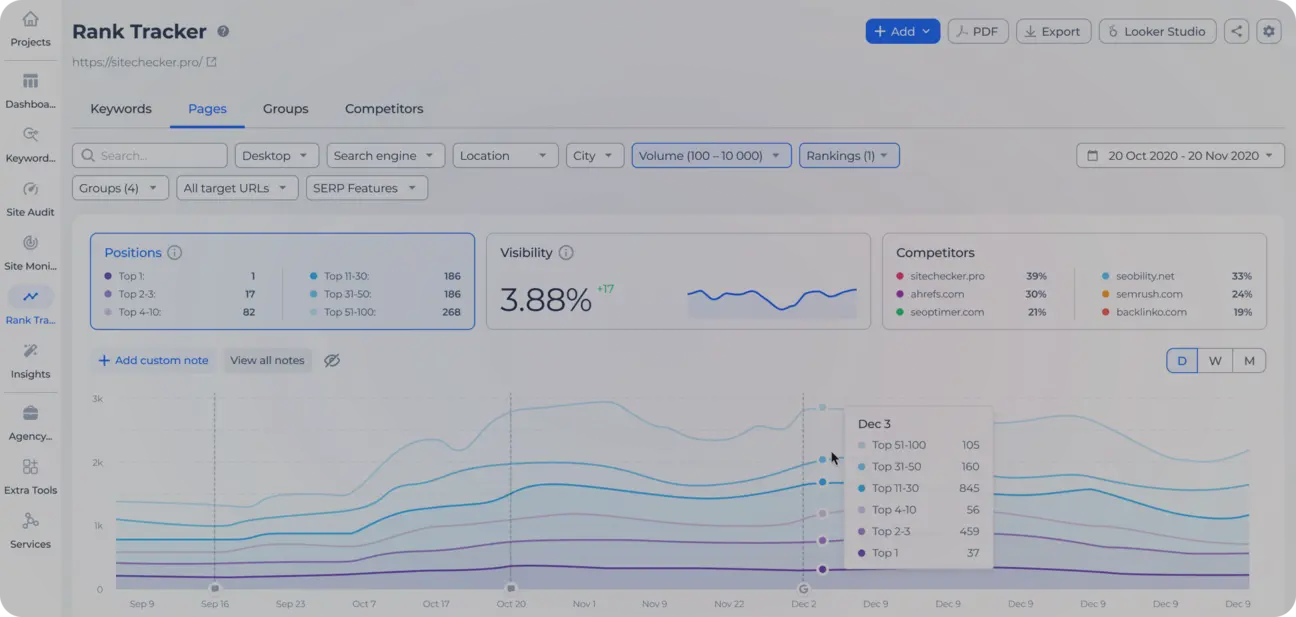
Chart wins and losses over years, spot seasonal dips, justify budget increases, and wow clients during quarterly reviews.
Why Does This Matter?
Digital transformation means every second counts. AI-driven personalized SEO recommendations save time, boost accuracy, and prime you to outrank slower-moving competitors. In 2024, over 75% of top-performing agencies (source: HubSpot State of Marketing) credited automation and smart integrations for year-on-year growth.
Pulling It All Together: Your Roadmap to Winning Local SEO
Success in local SEO is never just luck. It’s planned, data-driven, and executed with precision. Let’s wrap up with a strategic checklist you can steal for instant results:
- Perform regular grid-based audits to pinpoint which locations lag—and see why.
- Automate everything that doesn’t require human touch, from reporting to keyword uploads.
- Set up competitor tracking to keep tabs on rivals, especially in your most valuable zones.
- Lean into AI and integrations—so you get insights (and alerts) before others even notice shifts on the search map.
- Motivate your team with heatmap wins—visualizing progress keeps everyone pushing for more.
And remember: the playbook isn’t static. Google updates, market trends, and new technologies mean local SEO mastery is an ongoing journey, not a one-off project.
For extra inspiration, check out our guide on digital marketing stack automation—with omnichannel personalization and AI at its heart: Watch more.
Conclusion: Future-Proof Your SEO With Targeted Keyword Rank Tracking
Let’s face it. Local SEO keyword tracking and Google Business Profile rank insights are now non-negotiable for ambitious agencies, businesses, and digital entrepreneurs. Gone are the days of generic, one-size-fits-all rank checks. With advanced visualization (hello, map grids!), slick automation, and actionable case studies, you finally get the clarity to win—and the freedom to grow.
In 2025, your selection of rank tracking tools—and your commitment to robust local execution—will decide your digital destiny. Excellence in local search means more eyeballs, more foot traffic, higher sales, and a community of loyal fans discovering you first.
Ready to level up your local SEO with cutting-edge, automated ranking insights?
👉 Our Website: https://ai-solutes.com/
👉 Our YouTube Channel: http://www.youtube.com/@ai-solutes
👉 Our Facebook Fanpage: https://www.facebook.com/profile.php?id=61576606911341
👉 Our X (Twitter): https://x.com/AISolutes
- DeepFiction AI
- Discover the Biggest Technology Trends of 2026: AI, Quantum Computing, Green Tech and 6G
- Could Popai Accelerate Workflow? Understanding the Popai AI Presentation Assistant
- How Can Webflow’s Visual Canvas Empower Creators to Build Highly Customized Websites Without a Developer?
- Master Personal Loans in Vietnam 2025: Compare Rates, HELOC vs Unsecured, and Apply Fast with AI