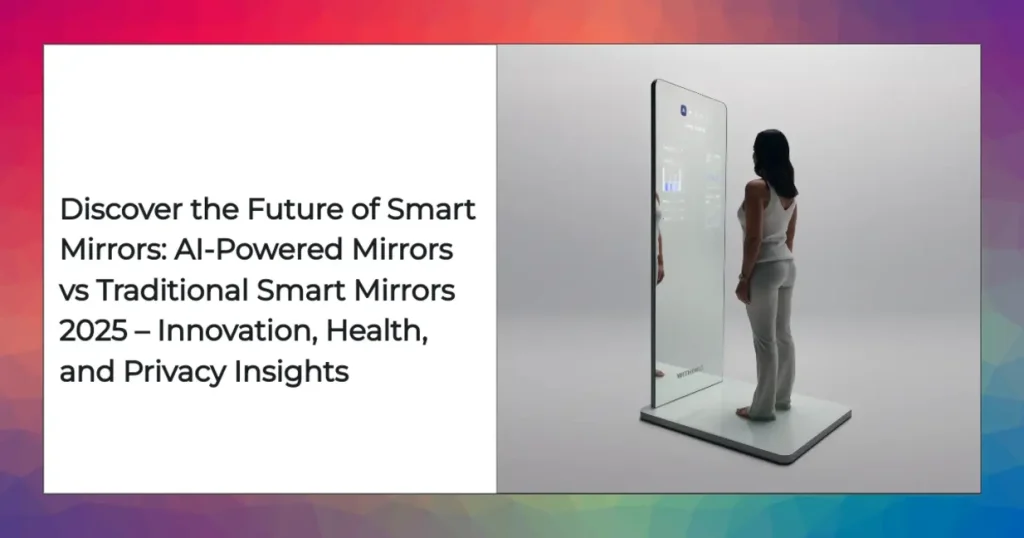
In this deep-dive, we’ll guide you through the futuristic landscape of AI-powered mirrors versus traditional smart mirrors as of 2025. Get ready to explore how your daily reflection is being transformed by next-gen technology—from health analytics to smart home orchestration. Whether you’re a tech enthusiast, a wellness warrior, or simply curious about the future of personal spaces, you’ll find practical feature comparisons, real product showcases, ethical considerations, and eye-opening market trends. Let’s help you visually compare and better understand how these innovations might impact your home, privacy, and routine before you decide what side of the mirror you’ll be on.
AI Mirror vs Traditional Smart Mirror: 2025 Feature Comparison, Innovation, and Ethics
AI Mirror vs Traditional Smart Mirror Comparison
Let’s be real—mirrors haven’t changed much for, well, centuries. But over the last ten years, they’ve started getting a heck of a lot smarter. First came the “smart mirror”—basically, your standard reflective surface given a digital facelift with widgets, a touch of connectivity, and some voice control by way of Alexa or Google Assistant. But now, in 2025, a new contender has emerged: the AI-powered mirror.
So, what’s the real difference between standing in front of a traditional smart mirror and an AI-enhanced one? Why are so many tech enthusiasts, health-conscious Gen Zers, and even luxury hotels making the switch to AI? The answer is that while both types light up your morning routine, AI mirrors have crossed into entirely new territory. Think: proactive coaching, deep health analytics, and environments that evolve with you, not just for you.
Here’s a side-by-side breakdown that will give you the full picture:
Core Differences at a Glance
| Feature | Traditional Smart Mirror | AI-Powered Mirror (2025) |
|---|---|---|
| Reflective Display | Standard LED/LCD overlay | Next-gen, high-resolution, ambient-compatible |
| Customizable Widgets | Yes (weather, calendar, news) | Yes + dynamic, AI-curated modules |
| Voice Control | Limited (basic commands, Alexa, Google) | Contextual AI assistants (GPT-4, proprietary AI) |
| Health Tracking | Optional (weight, BMI via third-party devices) | Seamless, integrated sensors, multi-metric |
| Data Intelligence | Minimal (set routines, basic notifications) | Predictive, context-aware suggestions, automation |
| Personalization | Manual configuration | Adaptive, learning user preferences continuously |
| Smart Home Link | Basic (IFTTT, HomeKit, Bluetooth) | Deep integration: device orchestration, routines |
| Surveillance/Ethics | Low risk, few data points collected | High risk, extensive data—requires strong privacy |
Summary:
AI mirrors are not simply a souped-up version of the smart mirrors you’re used to. Instead, they introduce whole new layers of digital intelligence, interactivity, and anticipation. Your traditional smart mirror? Still useful, still cool for dashboards and daily briefings. But when it comes to adaptability, deep learning, and context awareness, the AI mirror leaves its predecessor in the dust. It doesn’t just react—it evolves with you.
Imagine This:
You’re getting ready for work. A smart mirror might show your agenda, the weather, maybe a news headline. An AI mirror, on the other hand, recognizes you, analyzes your recent sleep (maybe syncing with your Oura ring or Fitbit), notices your skin hydration is low, checks humidity in the room, then adjusts lighting, suggests a skincare routine, and recommends a hydration goal—all before you’ve even sipped your morning coffee.
Latest AI Mirror Display Technology 2025
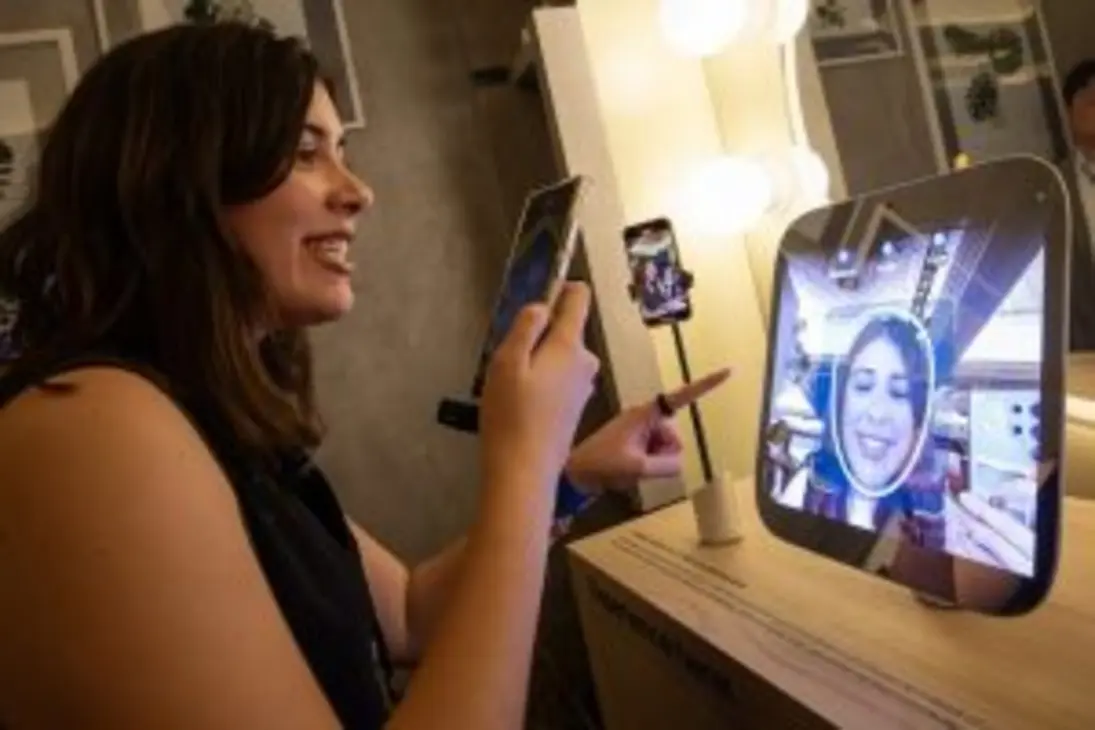
Let’s talk about what’s actually inside the mirror. The rise of AI mirrors wasn’t conjured out of thin air—it’s built on serious engineering, with display and sensor tech that’s basically science fiction made real.
Advanced Display Innovations
- 4K/8K Reflective OLED Touch Panels: Imagine your morning news briefing crisp as a Netflix show, colors true to life, and absolutely zero glare—even in direct sunlight. That’s the new standard, thanks to advancements in OLED and QLED panels layered directly into the mirror glass.
- Adaptive Brightness & Anti-Glare Layers: Whether it’s a sunny day or you’re holed up with the lights low, the mirror adjusts seamlessly. No more squinting at widgets lost to backlighting.
- 3D Cameras & Depth Sensors: Integrated in such a stealthy way you’ll forget they exist… until they start mapping your face for custom lighting, tracking your posture, or letting you “try on” new make-up and hairstyles using AR.
- Multi-Modal Microphones & Directional Audio: It can hear you over shower noise, busy kids, or a blaring playlist—then respond like a calm, focused friend.
Intelligence and Interactivity
The key leap? Today’s AI mirrors push much of the heavy computing to the edge:
- On-Device AI: Plenty of operations (like facial recognition, gesture controls, and health tracking) happen locally, not in some opaque data center in the cloud. This means faster response, higher privacy, and fewer worries about lag or leaks.
- Continuous Health Monitoring: The future is now—tiny sensors can monitor your heart rate, breathing, skin moisture, and even stress markers. Yes, your mirror notices if you look tired, and yes, it might gently suggest you try to go to bed earlier tonight.
- AI-Driven Suggestions: “Don’t forget your 2pm presentation!” “Looks like your hydration is low—want to hear hydration tips?” “Here’s an outfit suggestion based on the weather and your last Zoom meeting feedback.”
Real-World Example
Picture it:
You shuffle into your bathroom after a poor night’s sleep. As you stand before your AI mirror, it not only auto-adjusts the lighting (goodbye, “awful fluorescent” look), it recognizes who you are, pulls data from your sleep tracker, analyzes your skin, and—here’s the wild part—offers a tailored wellness briefing. Maybe it recommends a stress-reducing meditation and cues up your favorite playlist for brushing your teeth. All hands-free, all personalized. Laziness has never felt so productive!
Integration with Home Ecosystem
Of course, a smart or AI mirror really comes alive when it becomes the digital conductor of your home symphony.
- Full Compatibility: Whether your world revolves around Alexa, Google, Apple HomeKit, or Samsung SmartThings, the best AI mirrors plug seamlessly into existing routines.
- Automated Routines: It’s 10 pm. You say, “Goodnight.” The mirror detects your winding-down mood, dims the lights, arms your security, and prompts a 5-minute sleep meditation playlist—all in sync with just one command.
Want to dig even deeper into the integration trends that are sweeping enterprise and home automation? Here’s some further analysis, complete with stats and forecasts: Watch more.
Withings Omnia AI Mirror Product Showcase
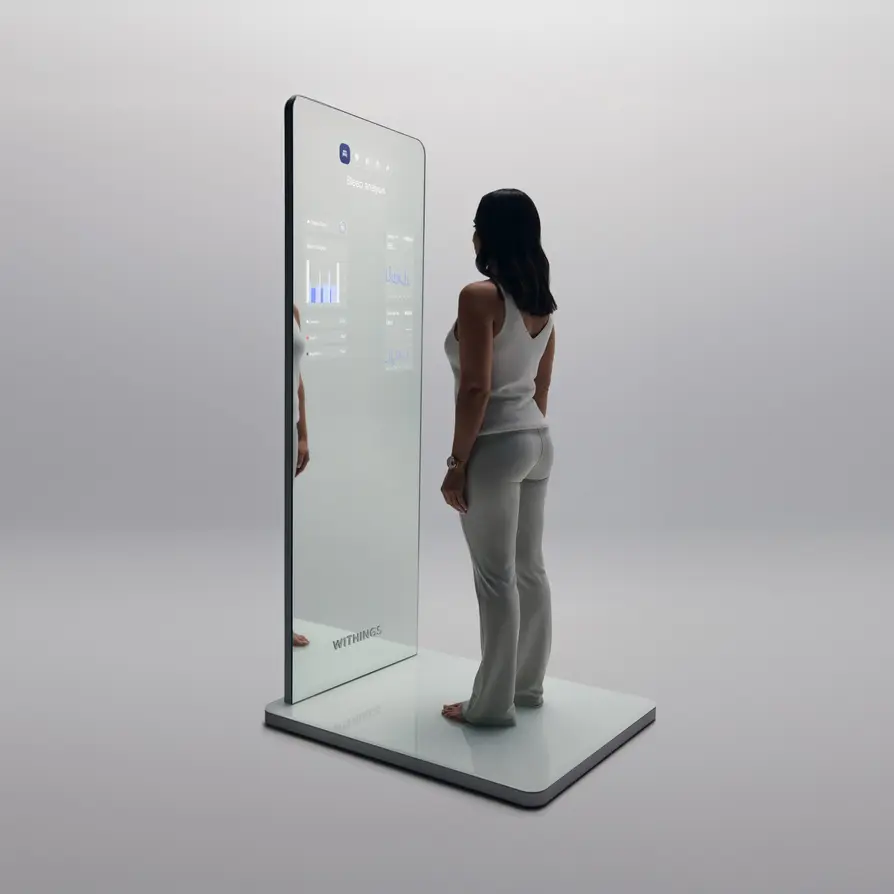
Enough theory—let’s look at where all this comes together in the real world. Say hello to the Withings Omnia AI Mirror 2025, one of this year’s standout models in the AI-powered mirror space.
What Sets Omnia Apart?
1. Comprehensive Health Monitoring
Withings Omnia doesn’t just track steps. Its AI-enhanced sensors and algorithms pull together a holistic picture:
- Body Composition: It can estimate muscle mass, fat percentage, hydration levels—all by reading subtle shifts in your skin and posture as you brush your teeth.
- Vitals: Heart rate, oxygen saturation, breathing patterns—without strapping on a single device.
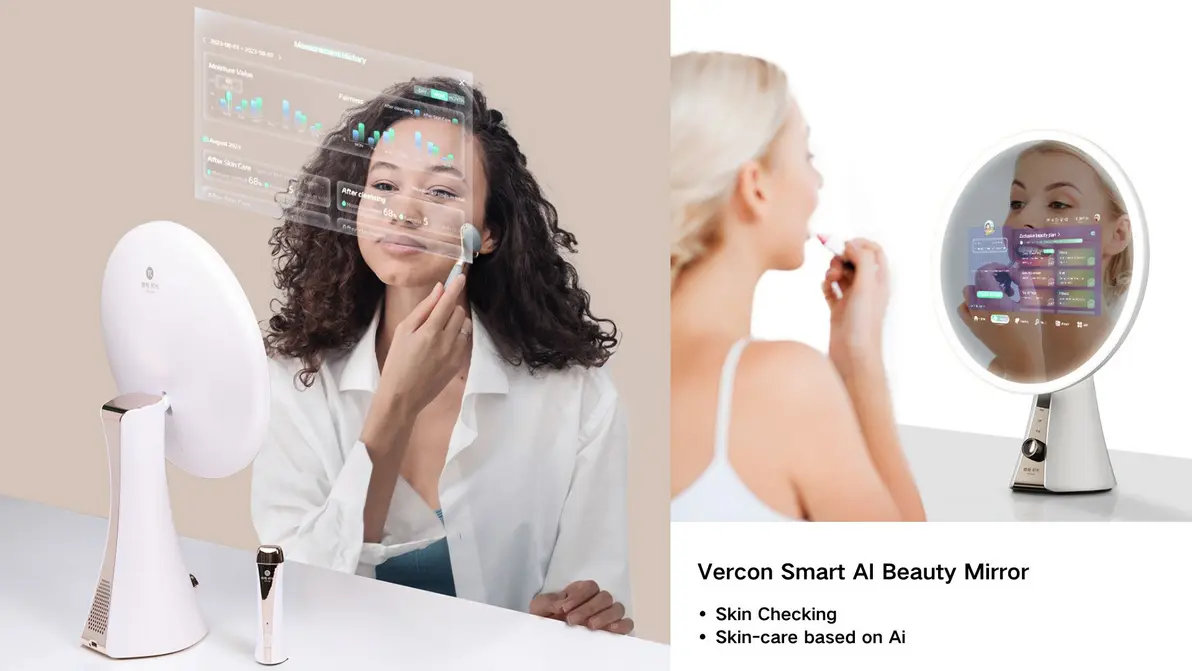
- Skin Diagnostics: Can pinpoint hydration, pigmentation, and even warn you if it “sees” signs of skin irritation—all using computer vision and trained machine learning models.
- Posture and Sleep: Tracks your stance and records posture over time, analyzing how well you’re sleeping with the help of AI-driven insights synced from your wearables or bed sensors.
2. Seamless Smart Home Control
Want to switch on the “focus” lighting, stream your latest Spotify playlist, or check a security camera—all while shaving? Omnia’s context-aware voice assistant has you covered. The AI interprets your mood, predicts your likely routines, and makes smart suggestions as part of the flow.
3. True Personalization
The Omnia mirror learns over weeks and months, noting everything from your preferred lighting or morning podcast to which skin treatments you use most.
Running low on moisturizer? It’ll remind you—maybe even add it to your Amazon shopping list.
4. Privacy First
With privacy being a top concern, Withings designed the Omnia with on-device data processing, physical switches for cameras/mics, and a crystal-clear dashboard for user privacy preferences. If you want, none of your health data ever leaves your home. And any cloud syncing is always opt-in, never assumed.
Live Demo Scenario
How does this translate to a real morning? Here’s a snapshot:
- Personal Wellness Snapshot: “Good morning, Jamie. Your sleep score was 84—below your average. Heart rate variability suggests mild fatigue. Try 3 minutes of deep breathing before your first meeting?”
- Environmental Check: Displays air quality and humidity levels—helpful for anyone with allergies or sensitive skin.
- Style Advice: “Rain is expected and you’ve got an important Zoom call—choose a crisp shirt and consider moisturizer with SPF.”
- IoT Control: Activates your “wake-up” light routine, starts your coffee maker, and streams your favorite playlist—all from a single voice command.
Does this sound like overkill? Maybe to some. But if you’re juggling a career, a family, and a desire to squeeze every drop of value from your day, these features can genuinely make life smoother—and wellness more achievable.
Consumer Trends and Market Adoption of AI-Powered Mirrors
Let’s step back and look at what’s happening in the wild. Why this sudden buzz around AI mirrors? Turns out, it’s not just a tech fad—there’s serious momentum, fueled by massive shifts in how we value our health, productivity, and digital lifestyles.
Research from Grand View puts the smart mirror market on track to top $6.9 billion by 2026, with the AI-driven segment capturing a whopping 65% of new premium sales in 2025. Why? Because these mirrors do far more than simply reflect—they analyze, assist, and connect.
What’s Driving Adoption?
-
Health and Wellness Gold Rush:
People everywhere are becoming more health-literate and proactive. Mirrors that track real-time biometrics and deliver actionable feedback are naturally catching eyes—literally and figuratively. -
Remote Work Revolution:
With so much work moving to home offices, there’s a spike in desire for devices that help manage stress, enhance focus, and even guide posture. Smart mirrors fit the bill—blending seamlessly into everyday routines. -
Home Automation Explosion:
Smart mirrors are now control stations, tying together security, lights, sound, and even ambiance controls. Forget hunting for your phone—your mirror is the new dashboard. -
Gen Z & Millennial Demand:
If you grew up online, devices that “just sit there” feel lazy. AI mirrors, on the other hand, offer TikTok-worthy daily insights, adapt in real time, and look stunning on the ‘gram.
Barriers to Watch
-
Privacy Concerns:
Top of mind for many. Who wants to feel watched in their bathroom? The fear of surveillance—whether justified or not—remains a stumbling block. -
Cost:
Let’s be honest: Not everyone has $1,000+ to drop on a wellness mirror, even with all the bells and whistles. Expect more affordable options in the near future, especially as economies of scale kick in. -
Setup and Complexity:
We’re all busy. Users demand plug-and-play simplicity, not a weekend lost to confusing wiring or daunting privacy policies. -
Interoperability Woes:
Early devices locked users into proprietary ecosystems. In 2025, open standards and modularity are trending, giving consumers more freedom to build an ecosystem that really works for them.
Emerging Market Trend
Entry-level AI mirrors are getting smarter about privacy and cost. We’re seeing modular units—think: cameras and sensors you can add or detach—making it easy to tailor tech to your comfort (and your wallet).
Adoption Stats for 2025
Let’s really put numbers to these trends:
- 35% of new smart mirrors ship with robust AI health analytics—not just calendar and weather widgets.
- Over half of buyers cite “personalized health insights” as a top selling point for upgrading.
- About 28% of smart mirror buyers are still worried enough about privacy to hesitate or skip features—proof that ethical design truly matters.
Illustration: A Real Case Study
A leading Asia-Pacific hotel chain rolled out AI mirrors in 2,000 rooms. The result? Guest satisfaction jumped 11%, thanks to automatic personalized greetings, language adaptation, and health dashboard features. But about 20% of guests hit “pause” on facial recognition—still craving that sense of privacy, even with the added convenience.
Curious how AI adoption is exploding in creative and visual industries too? This review dives deep into cinematic AI and what’s next for video, art, and design.
Ethical, Privacy, and Social Considerations with AI Mirrors
Here’s where things get real. AI-powered mirrors aren’t just another cool toy—they occupy some of the most private spaces in our lives. As these devices get smarter and more integrated, the ethical stakes rise too.
Key Privacy and Security Risks
- Surveillance Fears:
Built-in cameras and microphones, if compromised, can become tools for spying. There’s well-documented proof that Internet of Things (IoT) devices are targeted by hackers—mirrors are no exception. - Algorithmic Bias:
If AI models aren’t carefully trained, they can deliver health or beauty feedback that reinforces harmful stereotypes—or simply get it wrong for anyone who doesn’t fit the “training set.” - Data Location and Sovereignty:
Where, exactly, is your biometric data stored? Local-only? In the EU? Or drifting aimlessly in some insecure cloud? Regulations like GDPR are pushing for transparency, but enforcement is still rocky. - User Consent:
Are you really in control of what your mirror collects, or is granular permission buried deep in a 30-page privacy policy? The difference between “opt-in” and “opt-out” has never loomed so large.
How to Get Privacy Right
Luckily, the industry is listening—and responding. Here’s what best-in-class privacy looks like for smart mirrors in 2025:
-
Transparent Privacy Dashboards:
Everything stored is visible in a user-friendly dashboard, with the option to wipe or correct data anytime. -
On-Device Processing by Default:
Any data that could really embarrass or harm (biometrics, health info, “creepy” facial scans) stays strictly local unless you ask for cloud sync. -
Physical Privacy Switches:
Old-school, but vital—a plastic cover for the camera, a physical button to disable mics, and a reassuring LED to show when sensors are active. -
Default Privacy in Bathrooms/Bedrooms:
The best platforms default advanced features OFF in private spaces, only activating when you deliberately turn them on. -
Open-Source and Third-Party Audits:
Some brands let security experts audit their code—improving the community’s trust and safety.
The Mirror as a Metaphor: Who’s Reflected?
Zoom way out, and you start to see why the AI mirror becomes such a powerful metaphor. Are these devices quietly shaping what “wellness” or “beauty” means—maybe even making us more anxious instead of healthy? When does helpful automation tip over into the creepy zone of surveillance capitalism? Who decides how much data is “helpful,” and how much is too much?
The rise of AI mirrors is really about more than shiny new toys. It’s about forcing us—as individuals and as a society—to think hard about what we value most: health? Privacy? Convenience? Agency?
Over the next decade, the challenge won’t just be about building cooler, smarter hardware. The real job will be making sure our reflective technology also reflects our diverse needs, values, and boundaries.
Expanding Perspectives: AI Mirrors in Public and Enterprise Spaces
Let’s widen the lens even further: AI mirrors are spreading beyond homes, popping up in gyms, luxury hotels, salons, and even retail stores. And the difference they’re making is tangible.
Gyms and Fitness Centers
Imagine walking into a gym where the wall-length mirror recognizes you, greets you, auto-loads your recent fitness stats, and gives real-time feedback on your exercise form. No personal trainer nearby? No problem—the AI analyzes your posture, corrects your squat form, and suggests when to slow down or hydrate. Brands like Tonal and Mirror (acquired by Lululemon) are leading the way, blending the benefits of connected fitness and smart reflection.
Hospitality Transformations
Hotels seeking to “wow” guests with luxury tech are installing AI mirrors that provide personalized greetings in your language, context-aware tips (like weather-based outfit recommendations), and local sightseeing data. Major chains in Asia-Pacific and boutique hotels in Europe report increased guest satisfaction and word-of-mouth recommendations.
Salons and Retail Stores
If you’ve ever tried on a virtual lipstick or different shades of foundation using AR at Sephora, you’ve already experienced a taste of AI-powered mirrors at work. The future? Mirrors that learn from your past purchases, track inventory in real time, and even suggest products when your skin looks dry or irritated—all while letting you snap and share a quick selfie for Instagram.
Retail Example:
A flagship apparel store in Tokyo introduced AI mirrors that help customers visualize outfits from different angles, compare sizes virtually, and get AI-powered style advice. The result? A 45% uptick in time spent trying clothes and a 28% boost in sales attributed directly to mirror-driven upselling.
The Numbers Don’t Lie: Research & Market Watch
A few more stats to bring the story home:
- According to Statista, over 42% of new high-end home builds in North America in 2025 will feature some form of smart-mirror technology—up from just 17% in 2020.
- A PwC survey found that 61% of surveyed luxury hotel guests in Europe now expect some AI-driven touchpoint in their room, up from 28% in 2022.
- According to the Harvard Business Review, businesses deploying AI mirrors in retail and wellness claim an average 13%+ uplift in customer engagement.
These numbers make one thing clear: whether you’re upgrading your bathroom or running a fitness studio, the reflective intelligence revolution has arrived and isn’t going anywhere soon.
Conclusion
Step in front of a mirror today, and you’re not just checking your hair anymore—you’re interacting with a living interface. The leap from conventional smart mirrors to AI-powered reflective intelligence is more than a tech upgrade: it’s a profound change in how we relate to ourselves, our spaces, and our data.
In 2025, AI mirrors have redefined what’s possible, offering tailored health tips, automating home experiences, and becoming essential partners in wellness and productivity. Yet, as with any powerful new tool, this tech calls for a double-take: robust privacy controls, ethical by design, and absolute respect for your agency aren’t extras anymore—they’re essentials.
As you consider the next big leap in your home, business, or creative venture, don’t just ask what your mirror can do for you. Ask what kind of relationship you want with your technology—and how it can best serve you, your values, and your vision of a healthy, empowered, and connected life.
Want to keep your finger firmly on the pulse of tech’s next wave? Dive deeper here: Watch more
Stay sharp and stay inspired with the latest on AI tech and smart living:
👉 Our Website
👉 Our YouTube Channel
👉 Our Facebook Fanpage
👉 Our X (Twitter)
- Easy YouTube Transcript Maker
- Can Nomad eSIM Empower Frequent Flyers? Assessing the Nomad Multi-Country Architecture
- Could Gitmind Improve Productivity? Exploring the Gitmind Mind Mapping Tool
- Will Accio Work Enhance Productivity? Investigating the Accio Work Collaboration Features
- Unlock Retail Transformation with Modern SaaS Architecture and Increff Solutions for 2025