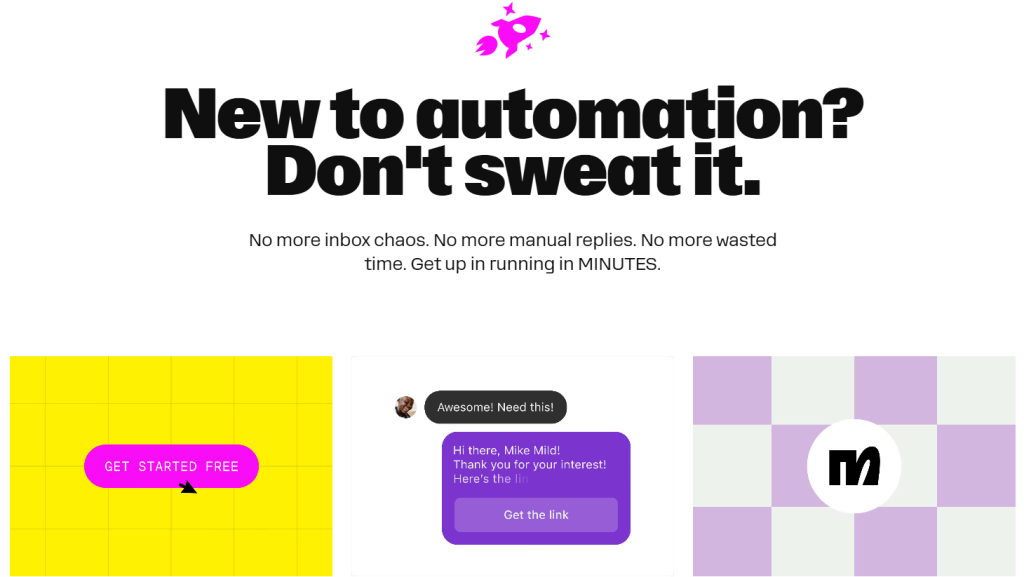
Comment “LINK” on an Instagram Reel and watch a DM land in your inbox within seconds, complete with the exact product, discount code, or booking link you were after — that single interaction is the feature that put Manychat on the map, and it's still the reason more than 1 million businesses use the platform today. Founded in 2015 by Mikael Yang as a simple Facebook Messenger bot builder, Manychat has grown into a full multi-channel chat marketing platform spanning Instagram, WhatsApp, Facebook Messenger, TikTok, SMS, and email — all built around one core idea: turn the comments and DMs your content already generates into automated leads and sales. With a free plan, paid tiers starting around $17 a month, and a visual flow builder that genuinely doesn't require code, Manychat remains the default recommendation for creators and ecommerce brands automating social conversations. But a major pricing overhaul in March 2026 changed the math for almost every user, and it's the single most important thing to understand before you sign up.
For creators, coaches, ecommerce brands, and agencies running comment-to-DM funnels or WhatsApp customer support at scale, Manychat still does more than almost anyone else in the category — but the real cost and the real limitations aren't always obvious from the pricing page. This 2026 review walks through what Manychat actually does, its automation and AI capabilities, the new five-tier pricing structure and its hidden costs, how it compares to Chatfuel and Tidio, the honest complaints reviewers keep raising, and exactly who should — and shouldn't — build their chat marketing on it.
Manychat Review 2026: The Instagram & WhatsApp Automation Platform After the Pricing Overhaul
Overview and Background
Manychat launched in 2015 as a Facebook Messenger bot builder and has methodically expanded ever since: the visual, drag-and-drop Flow Builder arrived in 2017, SMS and email joined in 2019, native Instagram automation launched in 2021, and WhatsApp support followed in 2022. By 2024 the platform had added GPT-powered AI features and action-based segmentation, and it now operates as an official Meta and TikTok Business Partner from its San Francisco headquarters, serving a publicly cited user base of over 1 million creators, marketers, and brands.
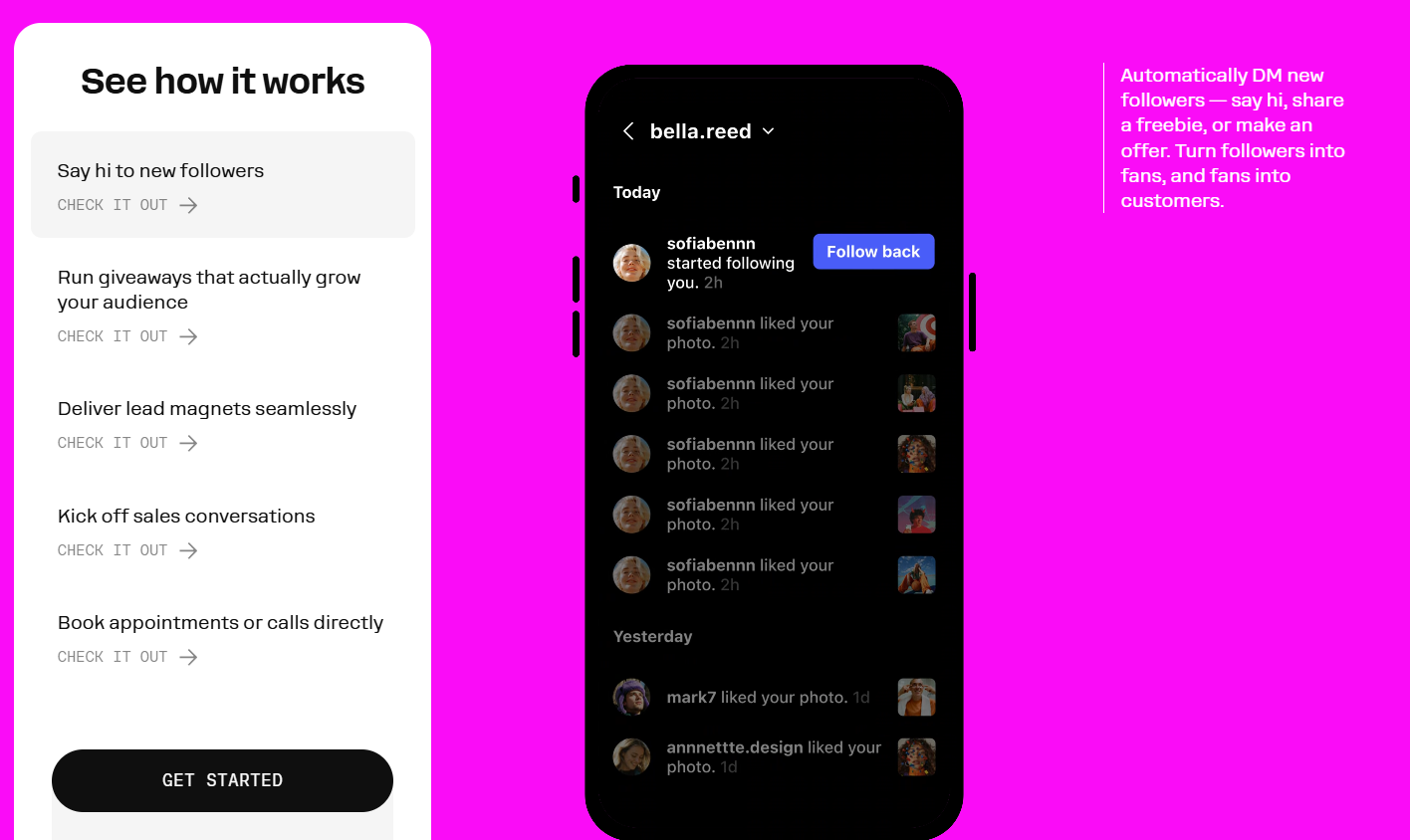
The platform's signature move is still comment-to-DM automation: a keyword left in the comments of an Instagram post or Reel triggers an instant, automated direct message containing a link, discount code, or lead magnet, all without the business owner lifting a finger. That single workflow, combined with a genuinely low-friction visual builder (most reviewers report a 1–2 hour learning curve for basic flows), is why Manychat became the category-defining tool for creator-led commerce and remains especially strong in markets where WhatsApp and Instagram DMs are the primary sales channel, like Latin America and Southeast Asia.
Why Manychat Stands Out in 2026
The comment-to-DM trigger is still unmatched: turning a keyword comment on a Reel or post into an instant, personalized DM remains Manychat's killer feature, and it's the workflow creator-led ecommerce brands consistently build their funnel around.
Genuinely broad multi-channel coverage: Instagram, Facebook Messenger, WhatsApp, TikTok, SMS, and email all run from a single dashboard, so a business reaching customers across several platforms doesn't need separate tools with separate logins for each.
A genuinely low barrier to entry: the visual Flow Builder needs no code, Quick Automations offer guided templates for beginners, and a new AI Onboarding Buddy (launched April 2026) walks first-time users through setup — most reviewers report building a working basic flow within an hour or two.
WhatsApp Flows unlock real in-chat transactions: businesses can now pop up native app-like interfaces inside a WhatsApp conversation — booking a date, filling a form, selecting a product — without the customer ever leaving the chat, a meaningful upgrade from text-only automation.
Solid native integrations: Shopify, Zapier, Google Sheets, HubSpot, Klaviyo, PayPal, and Stripe all connect natively, which matters for ecommerce brands that need automated flows tied to real orders and customer records rather than a standalone chatbot.
Meta and TikTok Business Partner status: being an official partner on both platforms means Manychat's automation methods are built to stay compliant with platform policy changes, which matters given how often social platforms tighten automation rules.
Key Features and Technology
Manychat's feature set clusters around three areas: the automation and growth tools that capture and convert attention, the AI layer that personalizes conversations, and the integrations that connect chat activity to the rest of a business's stack.
Flow Builder and Growth Tools
The drag-and-drop Flow Builder lets you design multi-step conversation logic — conditional branches, delays, tags, and action-based segmentation — without writing code. Growth tools built specifically around how creators and brands actually use social platforms include comment-to-DM, follow-to-DM, link-in-DM triggers, and giveaway mechanics, each designed to convert a passive social interaction into an active conversation the business controls.
AI Step and AI Add-On
The AI Step feature uses GPT-4 inside a flow to generate dynamic, personalized responses rather than static scripted replies, and an AI Flow Builder assistant helps less technical users design more advanced automations. Worth noting: Manychat's default automation is largely rule-based, and unlocking the smarter, GPT-powered AI features typically requires a separate paid add-on priced from roughly $29/month on top of your plan — a friction point flagged consistently across independent reviews, since the AI capability that's often the reason someone chooses Manychat over a simpler tool isn't included in the base plan price.
WhatsApp Flows and Multi-Channel Messaging
WhatsApp Flows let a business embed a genuine app-like interface — forms, date pickers, product selection — directly inside the WhatsApp chat window, solving a real limitation of text-only conversational commerce. Messages and automations run across Instagram, Facebook Messenger, WhatsApp, TikTok, SMS, and email from one unified dashboard, with Inbox Pro available as an add-on for teams that need human agents to jump into live conversations alongside the bot.
Integrations and Analytics
Native integrations with Shopify, Klaviyo, HubSpot, Zapier, Google Sheets, PayPal, and Stripe let flow data sync directly with a business's existing ecommerce and CRM stack, and conversion analytics track how automations actually contribute to leads and sales rather than just message volume.
Pricing, Plans, and Package Structure
Manychat's new five-tier structure, effective since March 2026, prices around Active Contacts (anyone who interacts with your automation in a given month) rather than a flat seat count. Every figure below is an approximate base price before overages, the AI add-on, WhatsApp's per-message Meta fees, and extra Inbox seats — real-world monthly spend commonly runs two to four times the advertised plan price once those are added, so confirm your actual expected cost on manychat.com/pricing before committing.
| Plan | Approx. Price | Contacts / Limits | Best For |
|---|---|---|---|
| Free | $0 | 25 active contacts/mo, 2 channels, 4 live basic automations | Testing the platform only, not real business use |
| Essential | ~$17/mo | Entry contact tier, expanded channels | Small creators just past the testing phase |
| Pro | ~$39/mo | WhatsApp, SMS, email, AI automation, 250+ contacts | Most small-to-mid businesses; the practical starting point |
| Business | ~$99/mo | Advanced analytics, team routing, higher contact tiers | Teams needing routing visibility over solo operators |
| Advanced | ~$199/mo | Highest contact tier, full feature access | High-volume brands running complex multi-channel flows |
How Manychat Compares to Alternatives
| Tool | Focus | Starting Price | Best Fit |
|---|---|---|---|
| Manychat | Instagram + WhatsApp chat marketing, multi-channel | Free / ~$17/mo | Creators & ecommerce brands centered on social DMs |
| Chatfuel | Messenger-centric chatbot automation | Free / paid tiers | Businesses focused mainly on Facebook Messenger |
| Tidio | Website live chat + broader AI support | Free / paid tiers | Brands prioritizing website chat over social DMs |
| WATI | WhatsApp-first business messaging | Paid tiers from low monthly cost | Businesses whose primary channel is WhatsApp specifically |
vs. Chatfuel: Chatfuel competes most directly on Facebook Messenger specifically, with a comparable no-code builder, but Manychat's broader native coverage across Instagram, WhatsApp, TikTok, SMS, and email makes it the stronger choice for any business messaging across more than one platform rather than living primarily on Messenger.
vs. Tidio: Tidio leans harder into website-based live chat and broader AI customer support, while Manychat's strength is specifically social and messaging-app automation — Instagram comment-to-DM, WhatsApp flows, SMS. A business whose leads mostly arrive through a website contact widget is better served by Tidio; a business whose leads arrive through Instagram Reels and DMs is better served by Manychat.
vs. WATI: WATI specializes narrowly and deeply in WhatsApp business messaging, which can make it a stronger fit for a business whose entire customer relationship happens on WhatsApp specifically. Manychat's advantage is breadth — one platform covering WhatsApp alongside Instagram, Messenger, and SMS — which matters more for businesses actually running multi-channel campaigns rather than a single-channel operation.
Pros and Cons
What Users Love
Genuinely fast to learn: reviewers consistently describe building a first working comment-to-DM flow within an hour or two, even with no prior automation experience.
Best-in-class comment-to-DM reliability: the signature workflow that made Manychat famous still works as advertised and remains a standout across G2 and Capterra reviews.
Strong renewal sentiment among engaged users: SoftwareReviews data shows 96% of surveyed business users plan to renew, with strongly positive sentiment among those who invested time in setup and optimization.
Broad, genuinely useful integrations: native Shopify, Klaviyo, HubSpot, and Zapier connections make it straightforward to tie chat automation into an existing ecommerce or CRM workflow.
Limitations Worth Knowing
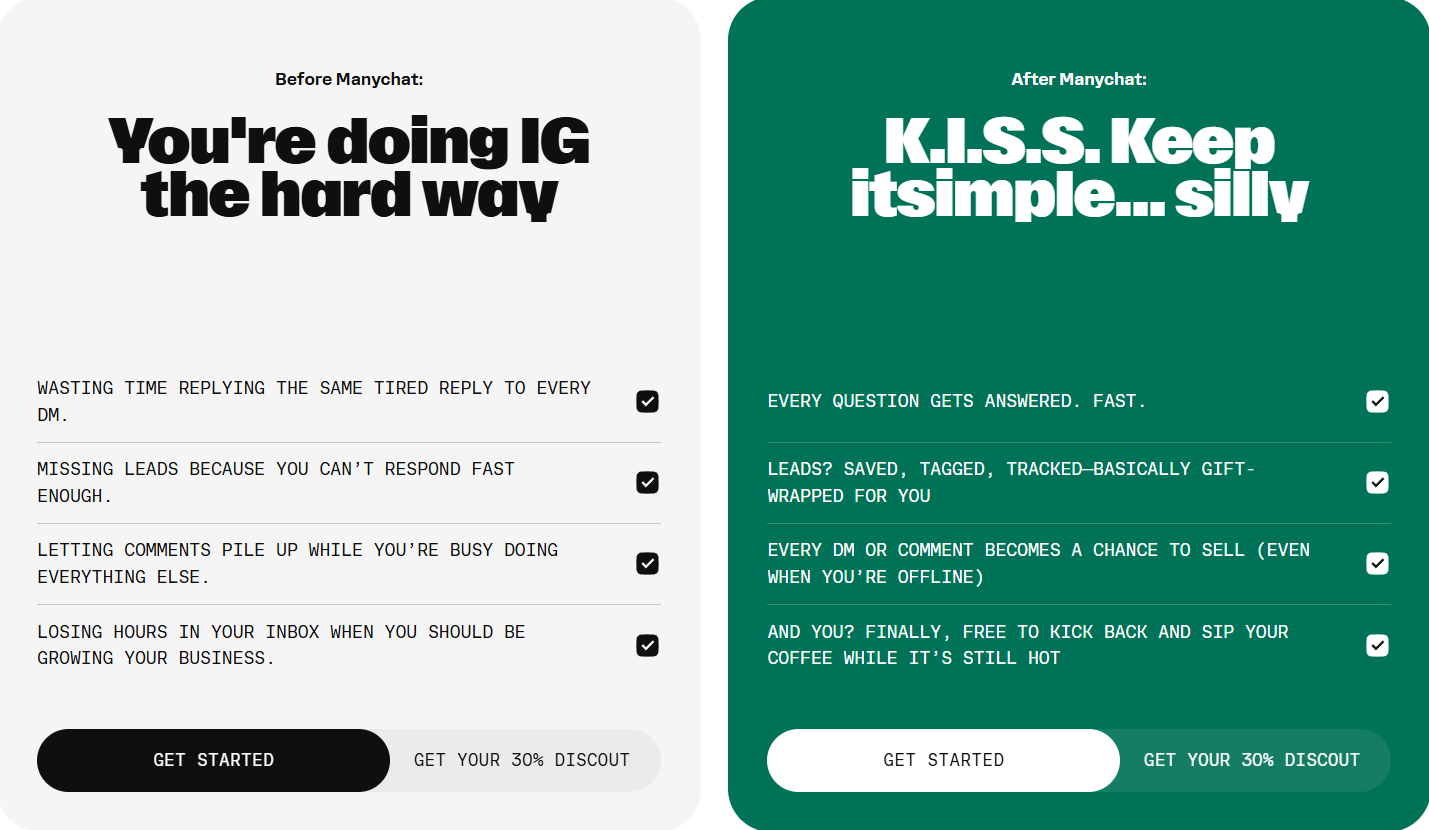
The March 2026 pricing overhaul cut the free tier by 97.5%: dropping from 1,000 to 25 active contacts turned the free plan from a real testing ground into little more than a demo, and it's the single most common source of recent negative reviews.
Real cost frequently runs 2–4x the advertised plan price: the AI add-on, WhatsApp's per-message Meta fees, contact overages, and extra Inbox seats are all billed on top of the base plan, and Reddit threads document bills growing 2–3x as contact lists expand.
Billing and cancellation complaints are a recurring theme: multiple Trustpilot reviewers report being charged after cancelling, and Manychat has been noted for not responding to negative reviews on the platform, which compounds the perception that billing disputes go unresolved without direct, persistent follow-up.
Support can be slow, especially by email: reviewers consistently flag support responsiveness as a weak point relative to feature depth, and free-tier users report particular difficulty reaching anyone at all.
Real AI capability requires a separate paid add-on: the default automation is largely rule-based, and the GPT-powered AI Step that provides genuinely dynamic responses typically costs roughly $29/month on top of your plan.
Who Should Use Manychat
Creators and coaches running comment-to-DM funnels: if your content already generates comments and DM interest, Manychat's core workflow converts that attention into leads more reliably than almost any competing tool — start on Essential or Pro depending on contact volume.
Ecommerce brands using Instagram and WhatsApp as sales channels: native Shopify integration plus WhatsApp Flows for in-chat transactions make Manychat a genuine sales tool, not just a support widget, particularly in markets where DM-based commerce is the norm.
Agencies managing multi-channel client campaigns: the breadth across Instagram, Messenger, WhatsApp, TikTok, SMS, and email from one dashboard reduces the tool sprawl that comes with running separate platforms for each channel.
Businesses that budget for the real total cost upfront: teams that model the plan price plus AI add-on plus WhatsApp fees plus overages before committing get real value; teams that budget only the sticker price are the ones who show up in the billing-complaint reviews.
Who should look elsewhere: businesses whose primary channel is exclusively website live chat, brands that need deep native AI without an add-on fee, and anyone who needs fast, reliable phone or live-chat support may be better served by Tidio or a WhatsApp-only specialist.
Getting Started: Step by Step
- Create a free Manychat account at manychat.com and connect your first channel — Instagram is the natural starting point for comment-to-DM automation.
- Use a Quick Automation template rather than building from scratch for your first flow, letting the guided setup handle the logic while you fill in your specific offer.
- Set up a comment-to-DM trigger on your next post or Reel with a clear keyword instruction (“comment LINK for the guide”), and test it yourself before publishing.
- Connect Shopify or your CRM if you're running ecommerce, so leads and orders sync automatically rather than requiring manual export.
- Model your real monthly cost before upgrading — add the plan price, expected WhatsApp message volume at Meta's per-message rate, and the AI add-on if you need it.
- Upgrade to Pro once you need WhatsApp, SMS, or more than roughly 250 active contacts, since that's the tier where the platform's core value actually unlocks.
- Set a calendar reminder to review your subscription before each renewal date, given the recurring billing complaints reported after cancellation.
Tips for Getting Maximum Value
Don't judge Manychat by the free plan's 25-contact limit — treat it strictly as a UI demo, and budget for Pro from the start if you're serious about running the platform for real business use, since the gap between what Free can show you and what a working funnel needs is too wide to bridge. Calculate your all-in cost before you commit to a tier: plan price, plus AI add-on if you want GPT-powered responses, plus WhatsApp's per-message Meta fees if that's a channel you'll use, plus a buffer for contact overages as your list grows. If you ever need to cancel, follow up directly through support and mark the request clearly rather than assuming a single cancellation click ends billing — multiple users report needing a second, explicit follow-up to actually stop charges. Lean into the comment-to-DM and WhatsApp Flows features specifically, since independent reviewers consistently rate these as the platform's strongest, most differentiated capabilities relative to competitors. And if AI-personalized responses are core to your strategy, budget for the add-on from day one rather than assuming it's bundled into your base plan.
Future Outlook and Final Assessment
Manychat's 2026 product direction — WhatsApp Flows, deeper AI integration, and its evolving role as what the company itself calls “middleware” between public social attention and private customer data — reflects real investment in staying ahead of a maturing chat-commerce category, and the platform's Meta and TikTok Business Partner status is a genuine moat against the platform-policy risk that plagues less compliant automation tools. The honest tension is between two very different pictures of the same product: business users who invest time in setup report strongly positive sentiment and high renewal intent, while a broader Trustpilot audience — often people who hit the March 2026 pricing change or billing friction head-on — reports a much rockier experience. Both pictures are true; which one you get largely depends on whether you go in with realistic cost expectations and a plan for the tiers above Free.
Conclusion
Manychat earns its position as the category-defining chat marketing platform in 2026 — the comment-to-DM trigger still works exactly as advertised, WhatsApp Flows are a genuine step forward for in-chat commerce, and the visual builder remains one of the fastest ways for a non-technical creator or business owner to turn social attention into automated leads. It isn't the tool for a business that wants to see real numbers on a genuinely free plan, and the March 2026 pricing overhaul plus a real pattern of billing and support complaints mean going in with clear eyes on total cost matters more than it used to. Used deliberately, with a realistic budget for the tiers and add-ons that actually deliver its best features, Manychat remains one of the strongest options in the category. Whichever platform you land on, the goal we chase with every review on this site stays the same: helping you make everything easy.
Ready to turn your comments and DMs into automated sales?
Explore more honest reviews, tutorials and tool comparisons to find the right tech for the way you work and live — at AI Solutes, where we make everything easy.
👉 Open Free Account: https://ai-solutes.com/manychat
👉 Our YouTube Channel: youtube.com/@ai-solutes
👉 Our Facebook Fanpage: Facebook
👉 Our X (Twitter): @AISolutes
- Unlock Puma’s 2026 Brand Strategy: Transformation, Innovations, and McLaren Racing Partnership Revealed
- Does UniPin Revolutionize Digital Tops? Reviewing the UniPin Entertainment Payment Technology
- Smodin AI Writer Review 2026: Master the Humanizer, Plagiarism Checker, Pricing and AI Detector Bypass
- Digital Transformation 2025: Harness AI Personalization and Omnichannel Commerce to Future-Proof Your Business
- Make 3D