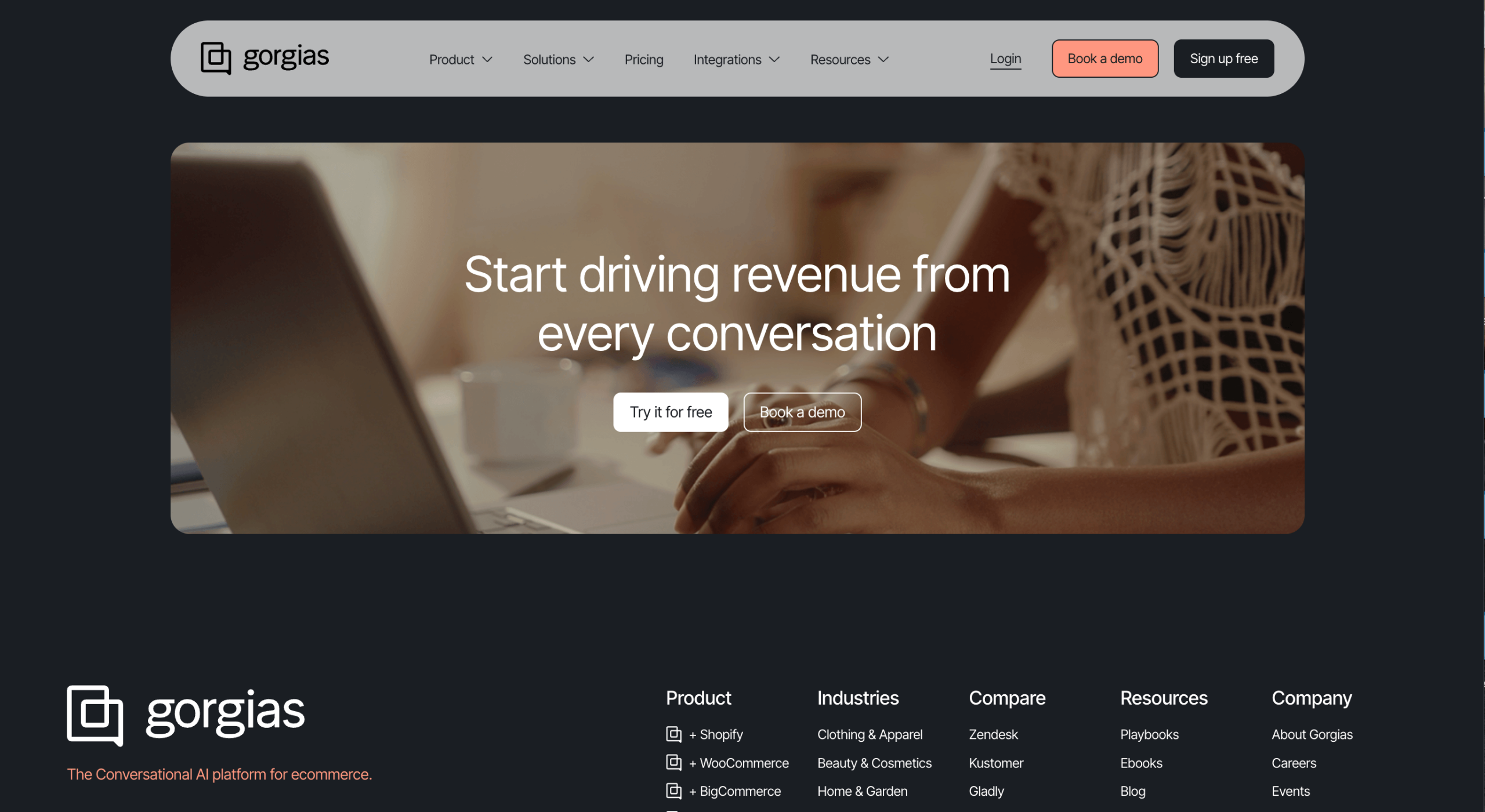
If you run an online store, you already know the feeling: a customer emails about a missing package, you open a new tab to find their order, copy the email into Shopify, scroll for the tracking number, switch back, and finally reply — and by then three more messages have landed. Gorgias was built to erase exactly that friction. It is a customer-experience platform engineered specifically for ecommerce, pulling email, live chat, social media, SMS, and voice into one inbox and wiring that inbox directly into your store so agents (and increasingly an AI Agent) can edit orders, issue refunds, and manage subscriptions without ever leaving the conversation. With a product ladder that starts around $10/month, adoption across roughly 15,000–17,000 ecommerce brands, status as Shopify’s only Premier CX partner, and a wireless-fast AI layer that can autonomously resolve a meaningful chunk of routine tickets, Gorgias has positioned itself as the default answer to a question almost every growing merchant eventually asks: how do we scale support during peak season without scaling headcount at the same rate?
For DTC founders, Shopify merchants, marketers, and lean support teams who treat customer service as a revenue channel rather than a cost center, the value proposition is immediate — but so are the trade-offs, especially around how the ticket-based pricing behaves when volume spikes. This 2026 review walks through Gorgias’s entire ecosystem: the unified inbox, the deep Shopify integration, the AI Agent and automation engine, the full pricing structure (including the add-on costs that catch teams off guard), head-to-head comparisons with Zendesk and Freshdesk, honest limitations, and exactly who should — and shouldn’t — buy in.
Gorgias Review 2026: The Ecommerce Helpdesk That Turns Customer Support Into a Revenue Engine
Overview and Background
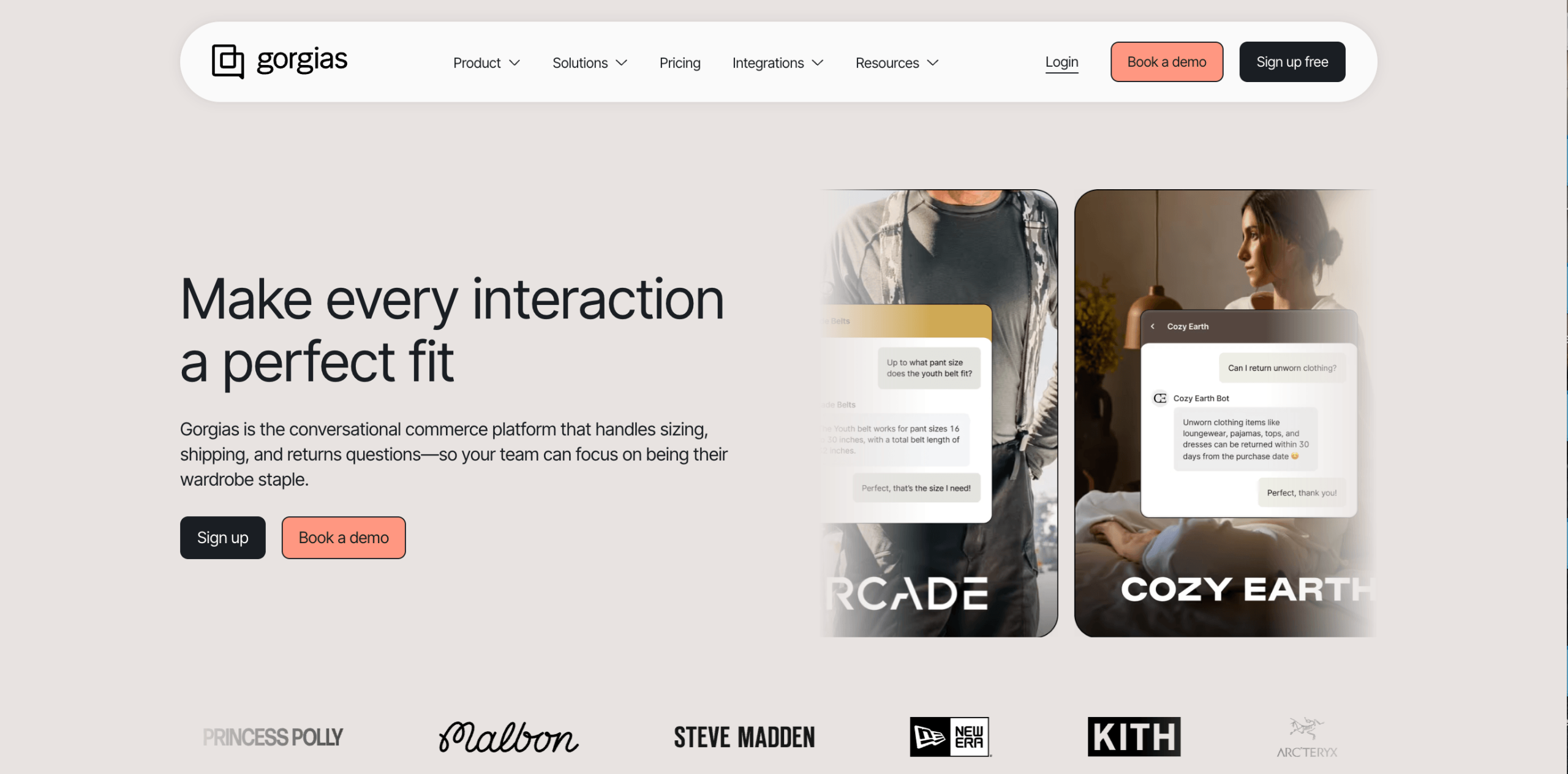
Gorgias is a customer-support and conversational-AI platform built from the ground up for online retail. It was founded in 2018 by Romain Lapeyre and Alex Plugaru on a deceptively simple insight: a support ticket in ecommerce is not a generic question with a subject line and a body — it is an extension of a transaction. Generalist helpdesks treat every message the same way; Gorgias treats every message as part of an order, a customer history, and a lifetime value. That single design decision is the reason the platform connects so tightly to your store’s backend instead of sitting beside it.
In the years since, Gorgias has become the most-referenced helpdesk in the Shopify ecosystem. It now serves somewhere in the range of 15,000 to 17,000 ecommerce brands, is repeatedly cited as Shopify’s only Premier customer-experience partner, and carries strong third-party marks — roughly 4.6 out of 5 on G2 across more than 550 reviews and about 4.3 on the Shopify App Store. The company frames its mission around “conversational commerce,” the idea that support conversations themselves drive sales, and it publishes aggregate figures suggesting it has influenced hundreds of millions of dollars in merchant revenue through those conversations. Treat vendor-reported ROI numbers as directional rather than guaranteed, but the scale of adoption is real and verifiable. 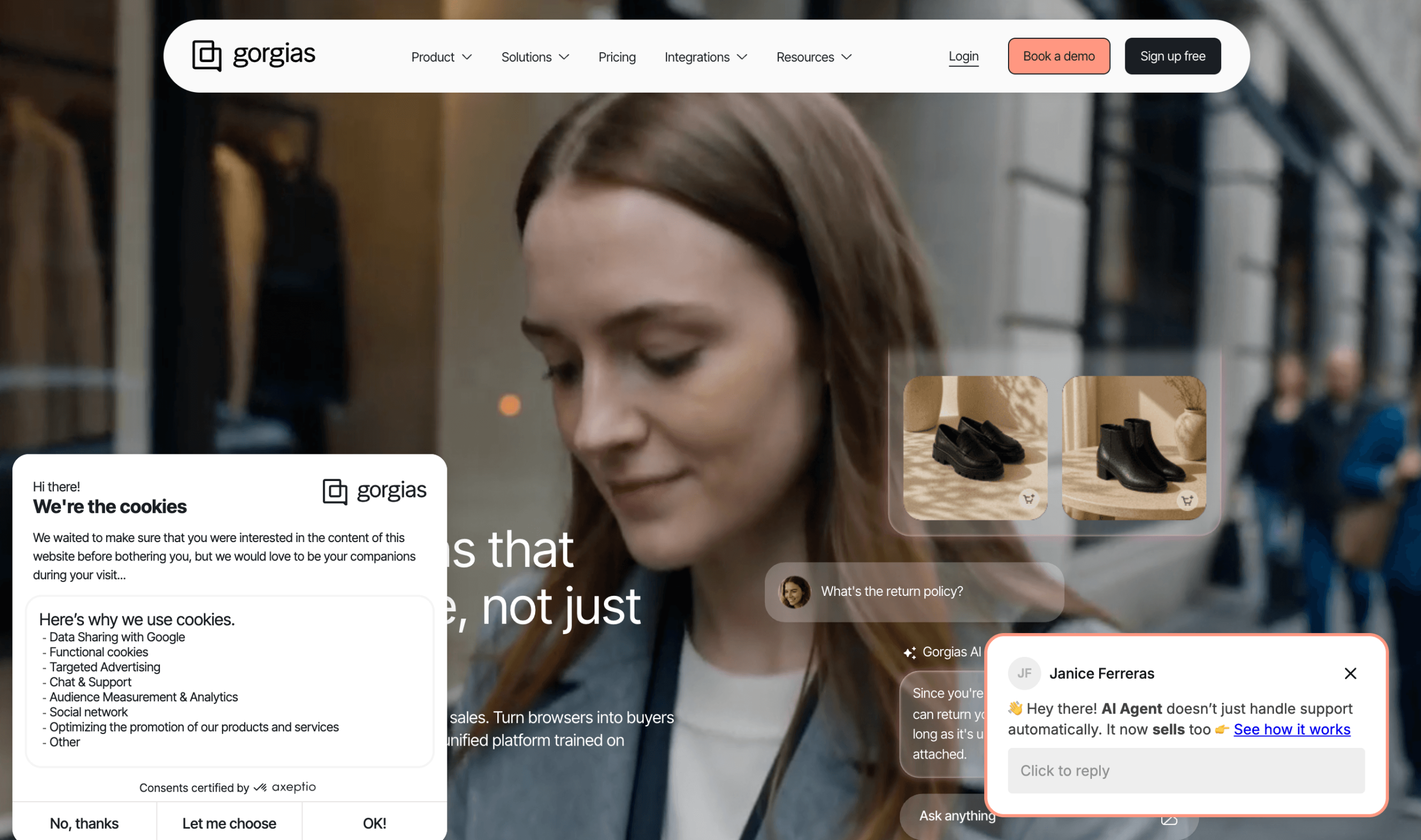
Why Gorgias Stands Out in 2026
Plenty of tools can collect tickets. What separates Gorgias is how much of the daily ecommerce support workflow it collapses into a single screen, and how that translates into measurable time saved per ticket. Here are the differentiators that matter most this year.
Deepest Shopify integration on the market: This is the headline, and it earns the billing. When a ticket arrives, an agent sees the customer’s full order history, lifetime value, subscription status, and tracking details in a side panel without switching tabs. More importantly, they can act — issue a partial refund, edit or cancel an order, apply a discount code, or manage a Recharge subscription — directly inside the ticket. Community estimates put the time saved at roughly 30 to 45 seconds per ticket, which compounds fast across a team handling thousands of conversations a month.
Genuinely omnichannel, ecommerce-aware inbox: Email, live chat, Facebook, Instagram (comments and DMs), TikTok, and WhatsApp all land in one feed, with SMS and Voice available as paid add-ons. A reply to an Instagram ad comment lives in the same workflow as an email about a damaged item, so nothing slips through the cracks and customers get consistent answers regardless of channel.
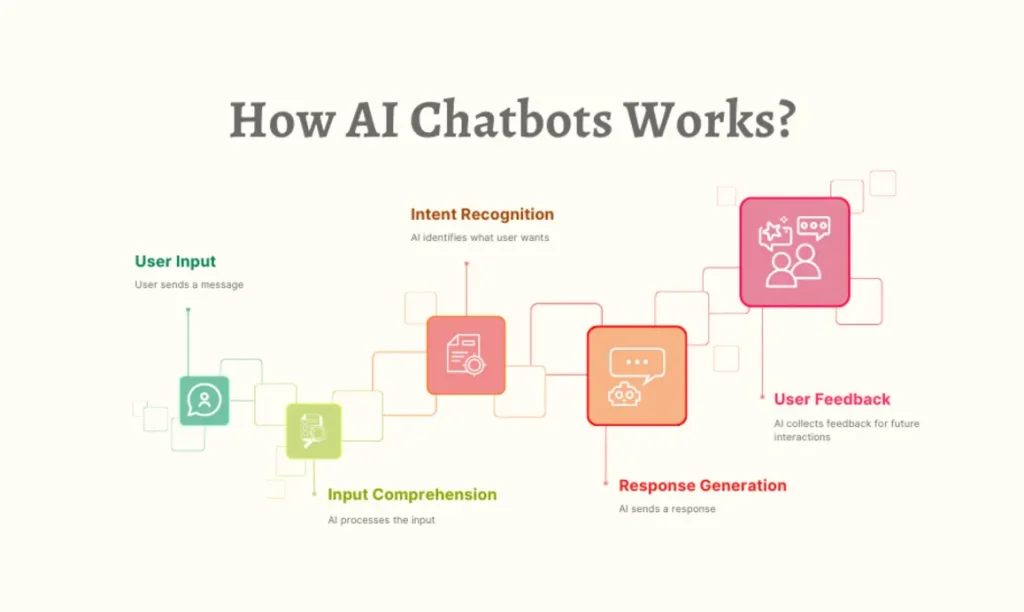
An AI Agent that acts, not just chats: Gorgias’s AI Agent reads a conversation, identifies intent, and then takes a real action against live Shopify data. Ask “where’s my order?” and it looks up the actual order and returns live tracking — it doesn’t just paste a generic help link. It plays two roles from one subscription: a Support Agent (returns, tracking, cancellations, missing items) and a Shopping Assistant (pre-purchase product guidance and recommendations), supports 80+ languages, and can even read images customers send.
Pricing that scales by volume, not by seat: On every paid plan above Starter you can add effectively unlimited agents (up to 500 seats) without raising your subscription. For brands that staff up seasonally — adding agents for Black Friday and letting them go in January — this is a real structural advantage over per-seat competitors, where every extra agent is a recurring line item.
Revenue attribution baked into support: Gorgias can tie support interactions back to sales, showing which conversations convert and how much revenue your support team generates through pre-sales chat and SMS. This reframes support from an expense to be minimized into a channel to be optimized — a pitch that resonates strongly with founders and CX leaders who have to justify headcount.
A mature ecosystem and low learning curve: As a category leader, Gorgias connects to 100+ ecommerce-specific apps (Klaviyo, Recharge, Loop Returns, AfterShip, Yotpo, Attentive, Stripe, and more) and has a deep partner and agency community. Reviewers consistently call the interface intuitive and quick for new agents to learn, which cuts onboarding time.
Key Features and Technology
Underneath the unified inbox sits a stack of automation and analytics features designed specifically around the rhythms of running a store. Here is how the major pieces fit together.
The unified inbox and store actions
Every conversation from every channel becomes an organized ticket that can be routed, assigned, tagged, and prioritized. The defining feature is the store-action sidebar: for connected Shopify, BigCommerce, or Magento stores, agents view and edit order data, issue refunds, cancel or modify subscriptions, and update shipping addresses without opening a second dashboard. This is the “fully resolve issues without leaving your tab” promise that anchors the entire product.
Macros and Rules
Macros are dynamic canned responses — not just static text, but templates that auto-fill customer details like name, last order number, or a live tracking link. Rules are the if-this-then-that automation engine: spot a ticket containing “track my order” and automatically reply with a macro that pulls the customer’s real tracking info, or auto-tag and assign tickets by intent. Together they handle the repetitive long tail of “where is my order” (WISMO) and routing without manual effort.
AI Agent, intents, and sentiment
Beyond rules, Gorgias layers in AI: automatic intent detection (e.g. refund-request) and sentiment analysis for granular routing and reporting, macro suggestions that speed up agent replies, and the autonomous AI Agent that can fully resolve eligible conversations across email, chat, and SMS. You shape its behavior with your knowledge base, opt-in actions, tone of voice, and the specific skills you enable. Each connected Shopify store gets its own dedicated AI Agent.
Self-service, Help Center, and quality tooling
A customer-facing Help Center and a self-serve menu in the chat widget let shoppers track, return, or initiate exchanges on their own, deflecting a portion of chats before they ever become tickets. On the management side, AutoQA uses AI to score interactions for quality feedback, Trends surfaces spikes (return requests, shipping delays, problem products), and revenue statistics connect conversations to sales — though, as noted below, the richer analytics sit behind higher tiers.
Pricing, Plans, and Package Structure
Here is where Gorgias gets genuinely different — and where you need to read carefully. Unlike most helpdesks, Gorgias is a recurring subscription billed by billable tickets, not by agent seats. A billable ticket is any customer-initiated conversation your team (or an automation) replies to; multiple messages in one thread count once, and filtered spam or auto-responders don’t count at all. The headline plan prices below are list prices on monthly billing in USD; annual billing knocks off roughly 16% (about two months free) but is non-refundable. Always confirm the live price and your specific ticket allotment on the Gorgias pricing page before purchasing, since promotions and bundles change.
| Plan | Price (monthly / annual) | Billable tickets / mo | Best for |
|---|---|---|---|
| Starter | ~$10/mo (monthly only) | 50 (3 seats, email only) | Solo sellers / testing the platform |
| Basic | ~$60 / ~$50 | 300 (unlimited seats) | Small growing stores, omnichannel + Help Center |
| Pro (most popular) | ~$360 / ~$300 | 2,000 | $1M–$10M brands; revenue stats + advanced automation |
| Advanced | ~$900 / ~$750 | 5,000 | High-volume teams; dedicated CSM + priority support |
| Enterprise | Custom quote | 5,000+ (negotiated) | Large/complex orgs; better overage rates, compliance |
Three cost variables sit underneath the list price and are where bills actually grow. Overages: exceed your ticket allotment and each extra ticket runs roughly $0.40 on Starter/Basic, $0.36 on Pro/Advanced, and ~$0.32 on Enterprise. AI Agent: the automation add-on is billed per fully resolved conversation at about $1.00/resolution monthly ($0.90 annual) — and critically, an AI-resolved conversation also counts as a helpdesk ticket, so you pay both fees. AI interactions beyond your bundle cost around $1.50 each. Voice and SMS: both are separate paid add-ons on top of your plan and AI costs. A realistic peak-season example circulating among operators: a Pro store paying ~$300/month can climb past $1,000 in a heavy Black Friday week once overages and AI resolutions stack up.
How Gorgias Compares to Alternatives
Gorgias doesn’t compete on raw feature count — it competes on ecommerce fit. Here’s how it stacks up against the alternatives most merchants actually weigh, plus the DIY option many start with.
| Option | Pricing model | Shopify actions | Best fit |
|---|---|---|---|
| Gorgias | Per ticket; unlimited seats | Native: refunds, order edits, subscriptions in-ticket | Shopify/DTC brands wanting support + sales in one |
| Zendesk | Per agent (~$55+/agent/mo) | Via connector/custom API; less native | Large teams, complex enterprise workflows/reporting |
| Freshdesk | Per agent (Growth ~$18/agent/mo) | Improved but weaker native actions; refunds need workarounds | Budget-conscious teams, lower ticket-to-seat ratios |
| Help Scout | Per agent / contact tiers | Limited; integration-based | Human-centric, conversational support; simpler needs |
| DIY (Gmail/Outlook + tabs) | Effectively free | Manual tab-switching for every order | Brand-new stores with very low volume |
vs. Zendesk: Zendesk wins on enterprise-grade workflow automation, reporting depth, and breadth across non-ecommerce use cases. But its Shopify connection typically relies on the app connector or custom development, and merchants frequently report middleware fragility for deep order sync. For a pure Shopify shop, Gorgias’s native actions feel less like a feature and more like the product itself. The cost math flips with team shape: per-seat Zendesk can be cheaper for a large team handling relatively few tickets, while Gorgias is cheaper for a small team handling lots of tickets.
vs. Freshdesk: Freshdesk is the value play, with a low per-agent entry point and a Shopify integration that has improved since Freshworks invested in commerce connectors. The gap remains in native actions — you can usually view order data, but issuing refunds directly from the ticket is smoother in Gorgias. If budget is the dominant constraint and your support is mostly conversational rather than action-heavy, Freshdesk deserves a serious look.
vs. the DIY shared inbox: A community rule of thumb is that Gorgias pays for itself once roughly 40% or more of your tickets require real store actions like refunds and order edits. Below that threshold — if you’re a tiny store fielding a handful of mostly conversational questions — the tab-switching tax may not yet justify the subscription, and a lighter tool can win.
Pros and Cons
What Ecommerce Teams Love
The Shopify integration is unmatched: The single most consistent praise across G2, Trustpilot, and the Shopify App Store is that agents can resolve order issues without leaving the helpdesk. Teams migrating from Salesforce or generic tools repeatedly describe it as the moment support stopped feeling like a workaround.
Unlimited seats genuinely save money: Not paying per agent is a real, recurring win — especially for brands that scale support staff up for peak season and back down afterward. A seasonal agent costs $0 in subscription; you only pay for the tickets they touch.
The AI Agent does real work: Reviewers report it autonomously handling product inquiries, WISMO, returns, and cancellations while maintaining solid CSAT — freeing human agents for complex, high-value conversations. It improves over time as you refine its knowledge base.
Fast to learn, no developers required: Teams praise how quickly new agents pick up the interface and how they can build macros, rules, and self-service flows themselves rather than relying on engineering.
Limitations Worth Knowing
Costs can spike unpredictably: Ticket-based pricing turns your best sales periods into your most expensive support periods. A promotion, product recall, or BFCM rush can blow through your allotment in days, and overages plus AI fees can multiply your bill — sometimes 2–3x — exactly when volume peaks.
AI Agent double-billing surprises people: Because an AI-resolved conversation incurs both a helpdesk ticket fee and a separate ~$0.90–$1.00 automation fee, automation that looks cheap at low usage gets expensive once you rely on it daily. Budget for both charges, not just one.
Feature gating forces upgrades: Revenue analytics are locked behind Pro, and Voice is always a separate add-on. Some brands upgrade tiers not because they’ve outgrown their ticket limit but because one needed feature sits on the next plan up.
Billing quirks and Shopify dependence: A customer who replies to an old thread after about 72 hours of inactivity can generate a new billable ticket; billing is USD-only (so non-US merchants carry FX fees); the product catalog needs manual resync rather than auto-syncing; and the most advanced AI behavior really wants a connected Shopify store. A handful of reviewers also note occasional AI hallucinations and that costs have crept up while support responsiveness has dipped.
Automation claims need a reality check: Gorgias markets “up to 60%” automation, but its own published case studies land closer to 26–56%, and many brands report real-world rates around 40% at peak. It’s strong — just calibrate expectations against your actual ticket mix rather than the headline number.
Who Should Use Gorgias
Established Shopify and DTC brands: If you’re doing meaningful order volume on Shopify and a large share of your tickets involve refunds, order edits, or subscription changes, Gorgias is close to a default recommendation. Start on Pro for revenue analytics and advanced automation, and add the AI Agent once your knowledge base is solid.
High-growth brands scaling support seasonally: Teams that swell during peak and shrink afterward benefit most from unlimited seats. Advanced makes sense once you’re consistently above a few thousand tickets a month and want a dedicated CSM and priority support to keep things smooth at scale.
Small but serious new stores: If you’re past the hobby stage and want to professionalize support, Basic gives you omnichannel and a Help Center at a modest cost. The Starter plan is best treated as a trial sandbox — its 50-ticket cap and 3-seat limit are consumed quickly by any store with steady orders.
Multi-channel and BigCommerce/Magento merchants: You’ll still get a robust centralized inbox and strong automation. Just go in knowing the deepest, most automated actions are tuned for Shopify, and weigh whether a per-seat alternative fits your team shape better.
Who should think twice: Very low-volume stores with mostly conversational, non-action tickets, brands that need ironclad monthly cost predictability, and teams not on a supported ecommerce platform may find a per-seat or simpler tool a better — and cheaper — fit.
Getting Started: Step by Step
- Start the free trial. Gorgias offers a 7-day free trial with full access and no credit card required — enough to evaluate the real workflow before paying.
- Connect your store first. Link your Shopify (or BigCommerce/Magento/WooCommerce) store so order data flows into tickets. This is the step that unlocks Gorgias’s signature value, so do it before anything else.
- Add your channels. Connect email, live chat, and your social accounts (Instagram, Facebook, TikTok, WhatsApp). Decide whether you need the SMS and Voice add-ons now or later.
- Build your core macros and rules. Create dynamic macros for your most common questions (WISMO, returns, exchanges) and set up rules to auto-tag, route, and reply, so the repetitive long tail handles itself.
- Stand up your Help Center. Publish FAQs and a self-serve menu so customers can track, return, or exchange on their own — deflecting tickets before they reach an agent.
- Configure the AI Agent deliberately. Feed it your knowledge base, set its tone of voice, and enable only the opt-in actions you trust. Start narrow, monitor accuracy closely, then expand its scope as confidence grows.
- Pick your plan against a real forecast. Before locking in annual billing, model both a normal and a peak month — tickets plus expected AI resolutions — and confirm the live price with sales.
Tips for Getting Maximum Value
The brands that get the most out of Gorgias treat it as a system to be tuned, not a tool to be switched on. Right-size your plan to your typical month and budget separately for peak-season overages so BFCM doesn’t blindside you — and remember that annual billing’s ~16% discount is non-refundable, so only commit once your volume is stable. Lean hard on automation for the predictable WISMO/returns long tail, but watch the AI Agent’s double-billing math and turn on actions gradually while you verify accuracy and guard against hallucinations. Invest early in a thorough knowledge base and tight macros, since both your human agents and the AI lean on them. Keep your product catalog manually resynced after changes so the AI answers from current data, treat the 3-day AI revenue-attribution window with healthy skepticism when reading ROI, and if you’re outside the US, factor FX and card fees into your real cost. Finally, ask sales for a worked cost example at your actual volume before you sign — the difference between the headline price and your true bill is almost always the automation and overage layer.
Future Outlook and Final Assessment
The tailwinds behind Gorgias are strong. Ecommerce support is shifting from a reactive cost center to a proactive revenue driver, AI agents are getting measurably better at resolving routine tickets autonomously, and messaging channels are increasingly becoming shopping channels — all trends Gorgias is built squarely around. Its retirement of legacy autoresponder rules in favor of the AI Agent signals where the whole platform is heading: toward automation that acts on live store data rather than just routing text.
The honest caveats remain, and they’re worth restating: the ticket-based model creates cost volatility that per-seat rivals avoid, AI automation is billed on top of (not instead of) ticket fees, key analytics are gated behind Pro, and the deepest magic is reserved for Shopify. Competitive pressure from Zendesk and Freshdesk is real, and merchants running very high volumes increasingly do the math on alternatives. None of that erases the core strength — for the right brand, the integration genuinely is the product.
Conclusion
Gorgias has built something genuinely hard to replicate: a helpdesk that doesn’t sit beside your store but operates inside it, turning every support conversation into a chance to resolve fast, retain a customer, and sometimes drive a sale. It’s the clear front-runner for Shopify and DTC brands serious about customer experience — deep where it counts, fast to learn, and built around the reality that in modern ecommerce, support is revenue. Just go in with eyes open on the ticket-based pricing and the add-on costs that ride on top of it. If you’re on a supported platform, handling action-heavy tickets, and willing to model your real volume before you sign, connect your store, configure the AI Agent thoughtfully, choose the tier that matches how you actually operate, and Gorgias takes one of the messiest parts of running an online store and makes everything easy.
Ready to turn customer support into your next revenue channel?
Explore more honest reviews, tutorials and tool comparisons to find the right tech for the way you work and live — at AI Solutes, where we make everything easy.
👉 Open Free Account: https://www.gorgias.com/
👉 Our YouTube Channel: youtube.com/@ai-solutes
👉 Our Facebook Fanpage: Facebook
👉 Our X (Twitter): @AISolutes
- Should Devs AI Optimize Workflow? Analyzing the Devs AI Development Platform
- Real-time Development Platform Unity: A Comprehensive Overview of Features, Capabilities, and Supporting Ecosystem
- Does Rawpixel Revolutionize Access to Public Domain Art? A Closer Look at Rawpixel’s Vintage Curation Framework
- Master Bright Data 2026: Unlock High-Success Web Scraping, Proxies, and SERP APIs for AI
- ChatAvatar