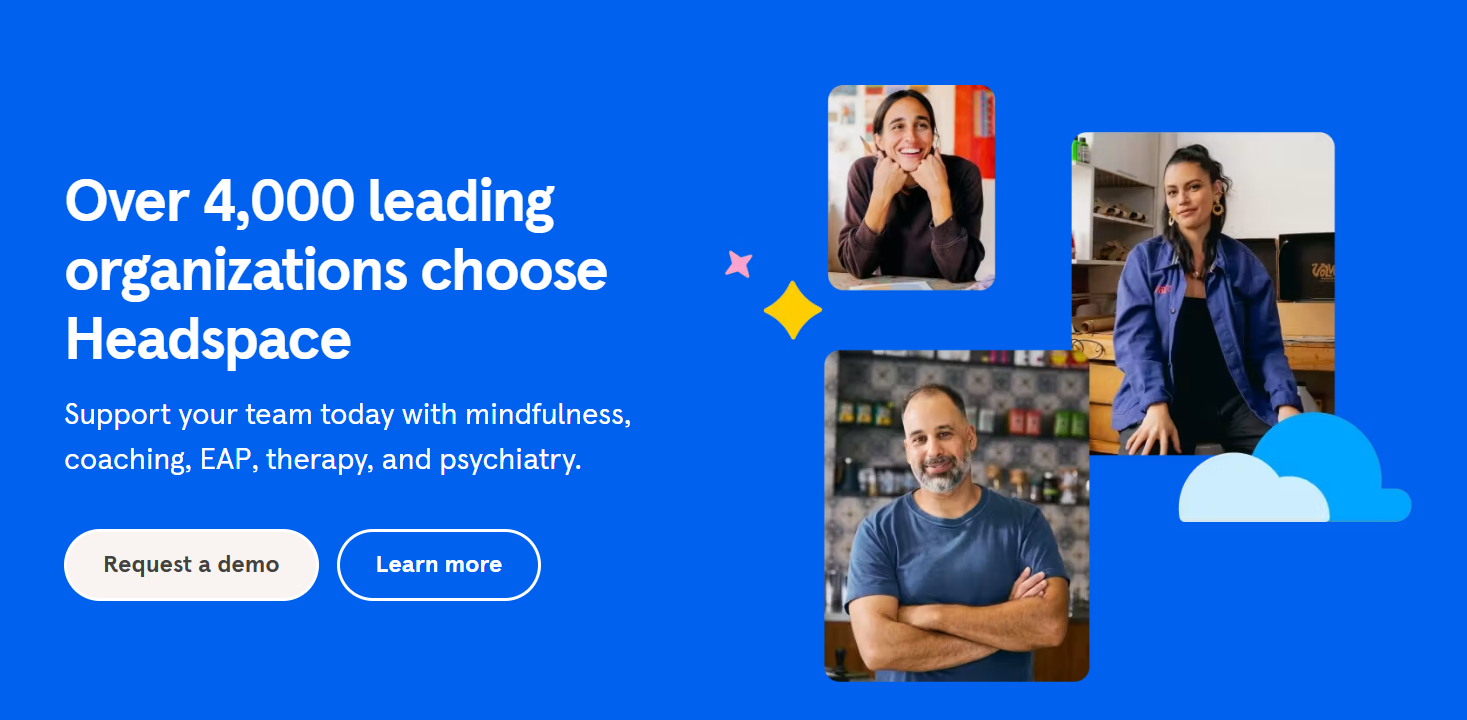
If you spend your days context-switching between Slack, spreadsheets, and a to-do list that never ends, you already know the feeling: a mind that won’t switch off, a night of shallow sleep, and a focus that frays by mid-afternoon. Headspace was built to fix exactly that. It’s a meditation, sleep, and mindfulness app that packages evidence-informed techniques into short, guided sessions you can actually fit into a working day — and in 2026 it has grown into one of the most recognizable wellness tools on the planet, with over 105 million downloads across 200 countries, 4,000+ organizations using it to support their teams, and a business that emerged from a former monk’s voice recordings into a company once valued at roughly $3 billion.
For professionals, founders, marketers, freelancers, and anyone who treats a clear head as a competitive advantage, the pitch is simple: ten mindful minutes a day, delivered by an app that makes the habit easy to keep. This 2026 review walks through everything that matters — what Headspace actually includes, its new AI companion Ebb, full and current pricing across every plan, how it stacks up against Calm and Insight Timer, the honest limitations worth knowing, and exactly who should (and shouldn’t) subscribe.
Headspace Review 2026: The Mindfulness App That Turns Meditation, Sleep, and Focus Into an Everyday Habit
Overview and Background
Headspace is a subscription-based digital wellness platform offering guided meditation, mindfulness training, sleep aids, focus music, and light movement exercises through its mobile app and website. Its whole philosophy can be summed up by co-founder Andy Puddicombe’s famous 2012 TED Talk: “All it takes is 10 mindful minutes.” Rather than treating meditation as something mystical or intimidating, Headspace strips it down to short, approachable, beautifully animated sessions that teach the skill one day at a time.
The origin story is a big part of the brand. Headspace was founded in 2010 by Andy Puddicombe — a Brit who spent roughly a decade training as a Buddhist monk in the Himalayas — and Rich Pierson, an advertising executive who had burned out on high-pressure agency life and turned to meditation to cope. The two met at a meditation clinic in London, started with sold-out live events (handing attendees meditation content on USB sticks), and launched the first Headspace app in January 2012. Headquartered today in Santa Monica, California, the company has since amassed over 105 million downloads and says it has touched more than 100 million lives across some 200 countries and regions.
In August 2021, Headspace merged with the virtual-therapy provider Ginger to form Headspace Health, a combined entity valued at around $3 billion, extending the brand from self-guided mindfulness into clinical coaching, therapy, and psychiatry. The founders have since stepped away from day-to-day leadership (Tom Pickett became CEO in 2024), but their fingerprints — warm tone, simple design, a genuine belief that this should be for everyone — remain all over the product.
Why Headspace Stands Out in 2026
It makes meditation genuinely beginner-friendly: This is Headspace’s superpower. The signature approach — start with a 10-day foundation course, learn one concept at a time, use plain language and charming animations — removes the intimidation that stops most people from ever starting. You’re never dropped into 45 minutes of silence and left to flounder; you’re guided, encouraged, and even told that a wandering mind is normal.
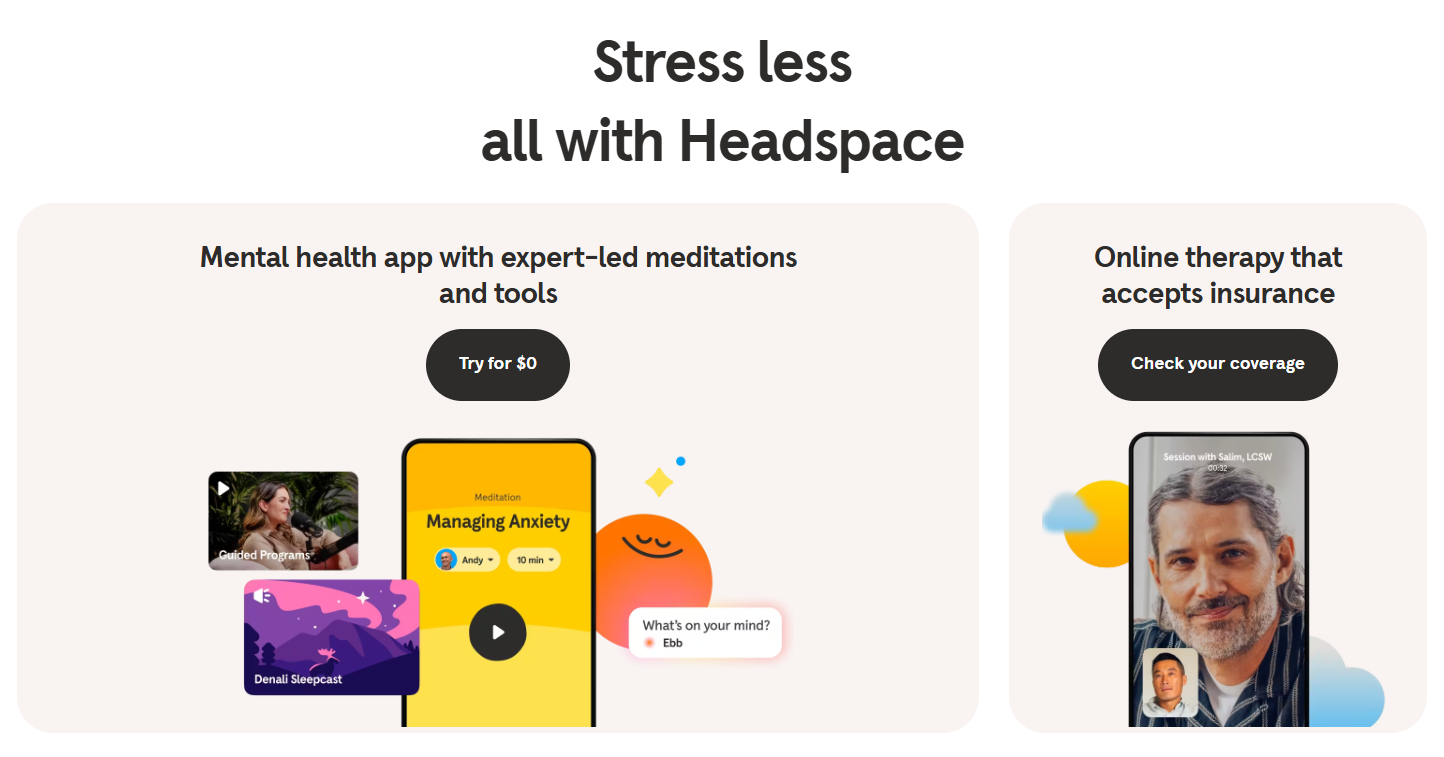
A complete wellbeing library, not just meditation: The app spans far more than breathing exercises. There are 500+ guided meditations for stress, anxiety, and focus; Sleepcasts and sleep sounds for winding down; focus music and soundscapes (with tracks from artists like Hans Zimmer and John Legend) engineered for deep work; short mindful-movement and workout sessions; and the daily “Wake Up” with mini-stories to start the morning right. One subscription covers the whole spectrum of a stressful modern day.
Ebb — a real AI companion, not a gimmick: This is where Headspace intersects with the AI-tools landscape. Ebb is an empathetic AI companion that offers real-time check-ins, reflective conversation, and encouragement in moments of stress — and as of late 2025 it added a voice feature. Headspace reported 11.5 million minutes spent interacting with Ebb in 2025 alone. The company is deliberate that AI here is the enabler, not the point: Ebb personalizes mindfulness at scale rather than trying to replace a human.
It’s backed by real research: Headspace leans harder into evidence than most wellness apps. Independent studies — including a 2025 randomized controlled trial in Annals of Behavioral Medicine — have found that structured Headspace programs can reduce subjective stress and improve coping in new meditators. (Worth noting honestly: some trials involved company access or staff, so the evidence base isn’t perfectly independent.)
Built for focus and productivity, not just calm: For this audience specifically, Headspace’s focus content is the sleeper feature. A dedicated 10-day Productivity course (taught in part by Puddicombe himself), the “noting” technique for handling distraction, and hours of focus music make it as useful for a deep-work block as for bedtime. Given that co-founder Pierson literally built this after professional burnout, that fit is no accident.
It works for the whole household: Headspace for Kids offers age-banded sessions (3–5, 6–8, 9–12) with calming breaths, gratitude visualizations, and bedtime wind-downs, and the Family plan covers up to six people. That makes it one subscription that can serve a stressed founder, a restless sleeper, and an anxious kid alike.
Polish and trust at scale: The app is consistently rated among the best in its category — roughly 4.8 stars from over a million iOS reviews and 4.5 stars from hundreds of thousands on Android — and its production quality (voice, sound design, animation) sets a bar smaller apps struggle to match.
Key Features and Technology
Headspace’s catalog is organized around the moments of a typical day — focus in the morning, calm under pressure, wind-down at night. Here’s how the core capabilities break down.
Guided Meditation and Everyday Mindfulness
The heart of the app: 500+ sessions spanning stress, anxiety, self-esteem, relationships, and focus, plus structured multi-day courses and quick “SOS” sessions for acute moments like a panic spike before a big meeting. Techniques include breath awareness, body scans, visualization, and noting — all taught progressively so beginners build genuine skill rather than just pressing play.
Sleep: Sleepcasts, Sounds, and Wind-Downs
Headspace’s sleep suite is a genuine reason people subscribe. Sleepcasts are dreamy, narrated bedtime “stories” for adults, layered with ambient soundscapes; there are also sleep music, nature sounds, and wind-down exercises to quiet a racing mind. It’s a direct answer to the classic knowledge-worker problem of a body that’s tired but a brain that won’t stop replaying the day.
Focus Music and Deep-Work Soundscapes
Curated focus playlists and long-form soundscapes — including tracks and originals from well-known artists — are designed to tune out distraction and hold attention through a work session. If you already reach for lo-fi or ambient music to concentrate, this is a more intentional, science-leaning version built into the same app as your calm and sleep tools.
Ebb: The Empathetic AI Companion
Ebb is Headspace’s conversational AI companion, offering guided reflections, mood check-ins, and gentle encouragement, now with a voice interface. Think of it as a supportive check-in partner that nudges you toward the right meditation or breathing exercise for how you’re actually feeling — a personalization layer that a static content library can’t provide on its own.
Movement, Kids, and Progress Tracking
Rounding out the library are short mindful-movement and workout sessions, the full Headspace for Kids collection organized by age group, streak tracking and reminders to build consistency, and basic self-assessments. Most audio can be downloaded for offline use, though a few formats (like Sleepcasts and the Wake Up) are stream-only.
Pricing, Plans, and Package Structure
Headspace uses a straightforward subscription model with a recurring cost, and every paid plan opens the complete content library. Note that all subscriptions auto-renew after the free trial unless canceled, and final pricing can vary by region and applicable tax. Here’s the 2026 US lineup.
| Plan | Price (US) | Free Trial | Best For |
|---|---|---|---|
| Monthly | $12.99 / month | 7 days | Trying it out with no long commitment |
| Annual | $69.99 / year (~$5.83/mo) | 14 days | Committed users — saves ~55% vs monthly |
| Family | $99.99 / year (up to 6 people) | Trial offered | Households (~$3.33 per person) |
| Student | $9.99 / year (85% off) | Verify via SheerID | Verified post-secondary students |
| Headspace for Work | ~$12–$36 / employee / year | Demo-based | Companies supporting team wellbeing |
Students get a standout deal at roughly $9.99/year (with a one-year alumni discount of about 40% off afterward), and the clinical services under Headspace Care are priced and accessed separately, usually through an employer benefit or insurance rather than the consumer app.
How Headspace Compares to Alternatives
The meditation-app space is crowded, but three names come up most often against Headspace: Calm (its biggest rival), Insight Timer (the free-heavy alternative), and the DIY route of scattered free YouTube videos. Here’s how they compare on what matters.
| Factor | Headspace | Calm | Insight Timer | Free / DIY |
|---|---|---|---|---|
| Best at | Structured, beginner-friendly courses | Sleep stories & relaxation | Huge free library, variety | Zero cost |
| Free content | Trial only | Trial + some free | Large free tier | All free |
| AI companion | Yes — Ebb (with voice) | Limited | No | No |
| Annual price (approx.) | ~$69.99 | ~$69.99 | Free / ~$60 Plus | $0 |
| Best for | Building a real meditation habit | Better sleep first | Explorers on a budget | Self-motivated DIYers |
vs. Calm: The two are priced almost identically and both are excellent. The rough rule of thumb: Calm leans into sleep and relaxation with celebrity Sleep Stories, while Headspace leans into structured learning and focus. If you want to be taught to meditate, Headspace usually wins; if sleep is your single biggest problem, Calm is a strong alternative.
vs. Insight Timer: Insight Timer offers an enormous free library, which makes it the budget champion — but it’s more of a sprawling marketplace than a guided path. Headspace trades breadth for polish, curation, and a hand-held structure that beginners tend to stick with far more reliably.
vs. free YouTube meditations: You can absolutely meditate for free. What you give up is structure, progression, sleep-specific content, offline downloads, and the AI-guided personalization — the very things that turn “I tried meditating once” into a habit that lasts. For many busy professionals, that convenience is exactly what the subscription buys. (Competitor pricing and features shift often; verify current details on each vendor’s site.)
Pros and Cons
What Users Love
Approachable and welcoming: the gentle tone, plain language, and animations make meditation feel doable rather than intimidating — the number-one reason beginners stick with it.
One app for the whole day: stress, sleep, focus, movement, and kids’ content all under a single subscription.
Excellent production and ratings: top-tier sound, voice, and design, reflected in ~4.8 (iOS) and 4.5 (Android) star averages across millions of reviews.
Real personalization via Ebb: the AI companion nudges you toward the right session for how you feel, adding a layer most rivals lack.
Genuinely affordable at the edges: the annual, family, and especially student plans bring the per-person cost down dramatically.
Limitations Worth Knowing
No permanent free tier: once your trial ends you must pay, whereas Insight Timer and others offer substantial free content.
Subscription friction: trials auto-convert to paid plans, and some users report confusion or difficulty with cancellations and refunds — a common complaint on third-party review sites.
It’s a wellness tool, not therapy: the standard app is self-directed with no clinician oversight; anyone needing clinical care should look to Headspace Care or a dedicated provider.
Can feel repetitive over time: long-term power users sometimes find they’ve “heard it all,” and the library skews toward beginners and improvers more than advanced practitioners.
A few offline gaps: most audio downloads for offline use, but some formats like Sleepcasts and the Wake Up are stream-only.
Who Should Use Headspace
Busy professionals and founders: if a racing mind, poor sleep, or afternoon focus crashes are costing you, Headspace’s focus courses, SOS sessions, and Sleepcasts target exactly those pain points. Start on the annual plan and build the 10-day foundation into your morning.
Complete beginners: if you’ve tried and failed to meditate before, this is arguably the most beginner-friendly app on the market. The 7- or 14-day trial is a no-risk way to find out if it clicks.
Families and students: the Family plan (up to six people, ~$3.33 each) and the ~$9.99 student plan make Headspace an easy shared subscription across a household or an unbeatable deal for anyone still in school.
Who should look elsewhere: if you want everything for free, Insight Timer fits better; if you’re an advanced meditator seeking long, unguided sits, a more minimalist tool may suit; and if you need clinical mental-health treatment, you need a therapy service, not a meditation app.
Getting Started: Step by Step
- Download the app from the App Store or Google Play (or sign up on the website) and create your account.
- Pick the right plan and start your free trial — choose annual for the best value and the longer 14-day trial, or the student plan if you qualify.
- Set your goals during onboarding (stress, sleep, focus) so the app and Ebb can tailor recommendations to what you actually need.
- Begin the foundation course — the 10-day beginner series builds the core skill one short session at a time.
- Build a daily anchor by scheduling a reminder and pairing meditation with an existing habit (morning coffee, or lights-out with a Sleepcast).
- Explore focus and sleep content for your work blocks and bedtime, and try a check-in with Ebb when you’re stressed.
- Set a cancellation reminder before your trial ends so you only continue if it’s genuinely earning its place in your routine.
Tips for Getting Maximum Value
Get the most out of Headspace by committing to the annual plan only after the trial confirms the habit sticks — and if you’re a student, never pay full price when the SheerID-verified plan is roughly $9.99/year. Consistency beats duration: three minutes every day builds the skill faster than a rare 30-minute session, so use short SOS meditations on hard days rather than skipping entirely. Lean on the focus soundscapes for deep-work blocks and the Sleepcasts for bedtime to squeeze value from the subscription beyond meditation alone, download sessions before flights or commutes with poor signal, and share a Family plan to slash the per-person cost across your household. Most importantly, set a reminder a day or two before your trial ends — the single most common Headspace complaint is an unexpected renewal charge, and it’s entirely avoidable.
Future Outlook and Final Assessment
Headspace is riding real tailwinds. Workplace wellbeing is now a mainstream budget line — the company already works with 4,000+ organizations — and its investment in AI through Ebb points to a future where mindfulness is increasingly personalized rather than one-size-fits-all. The honest caveats remain: there’s no permanent free tier, the subscription auto-renews so you have to stay on top of billing, and the consumer app is a wellness aid rather than clinical treatment. None of these are dealbreakers — they’re just things to go in with eyes open.
Conclusion
More than a decade after a former monk and a burned-out ad exec started running meditation nights in London, Headspace has become the app that made mindfulness mainstream — and in 2026 it’s still one of the best. It won’t replace therapy, and it isn’t free forever, but for stress, sleep, and focus it offers a warm, well-designed, research-backed path that genuinely fits into a working life. If you’re a professional, founder, freelancer, or family looking to take ten mindful minutes off a hectic day, Headspace is exactly the kind of tool that makes everything easy. Take the free trial, run the 10-day foundation course, and let your own experience decide.
Ready to Build a Calmer, More Focused Daily Routine?
Explore more honest reviews, tutorials and tool comparisons to find the right tech for the way you work and live — at AI Solutes, where we make everything easy.
👉 Start Your Free Trial: Get Started with Headspace
👉 Our YouTube Channel: youtube.com/@ai-solutes
👉 Our Facebook Fanpage: Facebook
👉 Our X (Twitter): @AISolutes
- Master Midjourney V7 Prompts in 2025: Ultimate Guide to Styles, Features, and AI Art Comparisons
- Ditch the Trip to the Post Office: How iPostal1 Turns Traditional Mail into a Seamless Digital Inbox
- Does IObit Maximize PC Performance? Evaluating the IObit System Optimization Suite
- Never Miss a Lead Again: How Manychat Quietly Converts DMs into Loyal Customers
- Discover How Doubao AI Is Revolutionizing Enterprise and Consumer Applications with ByteDance