If you have ever tried to buy in-game currency and hit a wall — no international credit card, a bank that rejects cross-border charges, a publisher store that simply does not accept your local e-wallet — then you already understand the problem UniPin was built to solve. UniPin (short for Universal Pin) is a digital entertainment enabler and payment service provider that lets players top up games, buy vouchers and pay for digital products using the payment methods they actually have: local bank transfers, e-wallets, carrier billing, virtual accounts, and even cash at a convenience store counter. Founded in Indonesia in 2009 as a voucher provider for publishers like Garena, Moonton and Tencent, the company has grown into one of Asia’s most established top-up networks — reporting somewhere between 21 and 26 million users across 32 to 40-plus countries depending on which company statement and date you read, roughly 254 employees spread across four continents as of April 2026, and a distribution network the company puts at more than 3.1 million channels.
That matters to more people than gamers. Content creators funding gameplay footage, community managers running tournaments, resellers building digital-goods businesses, and publishers monetising players across Southeast Asia, India and Latin America all hit the same payment wall — and UniPin sells to all four. This 2026 review walks through what UniPin actually is, how UniPin Credits and vouchers work, the payment channels and developer APIs behind the platform, realistic pricing and cashback expectations, how it stacks up against Codashop, Razer Gold and SEAGM, the honest limitations around refunds and regional availability, and exactly who should open an account.
UniPin Review 2026: The Game Top-Up and Digital Payment Network Built for Markets Credit Cards Never Reached
Overview and Background
UniPin calls itself a digital entertainment enabler — an abstract phrase for something concrete. It sits between game publishers and players in markets where the standard Western payment stack does not work. On one side it plugs into hundreds of local payment channels: conventional and digital banks, e-wallets, telco carrier billing, e-commerce platforms, super apps like Grab, and retail chains including Indomaret in Indonesia, 7-Eleven in the Philippines and KK Mart in Malaysia. On the other it holds integrations with thousands of publishers and digital-product partners, so money entering through any of those channels comes out as diamonds, UC, crystals or a streaming subscription.
The company started in 2009 in Indonesia distributing online game vouchers for publishers such as Garena, Moonton and Tencent, then expanded into non-gaming digital products — music, video and app-store credit among them — and outward geographically: across Southeast Asia first, then India, the Middle East, and eventually Latin America. Ashadi Ang leads the company as CEO, with headquarters in the Jakarta metropolitan area and a significant secondary base in Gurugram, India. Notably for a company of this scale and age, UniPin has never raised outside venture funding — both Crunchbase and Tracxn list it as unfunded, meaning fifteen-plus years of growth financed by the business itself.
Alongside payments, UniPin has invested heavily in esports as a customer-acquisition engine. It runs the SEACA regional circuit, has hosted female-only tournaments including the UniPin Ladies Championship since 2021, and launched the UniPin Campus Championship in India in late 2025 — an inter-university tournament across eight cities with a grand finale in January 2026 and a stated target of 50-plus universities during 2026. Brand partnerships have been similarly unconventional: a Jollibee tie-up bundled game credits into combo meals, and the company has worked with Indonesia’s creative economy ministry on campaigns promoting locally made games.
Why UniPin Stands Out in 2026
Payment coverage that actually matches emerging markets: This is the whole thesis, and it is hard to replicate. UniPin has spent over a decade wiring itself directly into local payment rails rather than routing everything through international card networks. For a player in Jakarta, Manila or Lucknow, that is not a convenience — it is the difference between being able to buy something and not. Cards are supported, but so are e-wallets, online banking, bank virtual accounts, carrier billing and cash at retail counters, with the mix varying by country.
One wallet across a very wide catalogue: UniPin Credits (UC) function as a universal balance: load them once through whichever payment channel suits you, then spend across a large catalogue without re-entering payment details. For anyone playing several titles — or managing top-ups for a team, a family or a content channel — a single balance with a single transaction history beats paying each publisher separately.
Cashback that is frequent rather than occasional: UniPin runs a near-constant rotation of regional cashback campaigns — commonly in the 5% to 10% band on UC top-ups, with the Philippine storefront advertising up to 7% on UniPin Credits through mid-2026 and Indonesian campaigns offering percentage cashback capped at a fixed UC amount. These are promotional, quota-limited and region-specific, so they are not a guaranteed discount. But if you time purchases around them, the effective saving over a year of regular play is meaningful.
Local currency pricing, not forced conversion: Because UniPin operates in-market with local entities and tax compliance, credits are typically sold in local currency. That avoids the foreign-exchange spread and cross-border fee that quietly inflate the cost of buying from an international storefront — a saving that never shows up in the sticker price but does show up on your bank statement.
Offline distribution most competitors ignore: A large share of Southeast Asia still transacts in cash. UniPin’s convenience-store partnerships mean a player without a bank account can walk into an Indomaret or 7-Eleven, pay in cash, and receive a voucher code that converts to game credit. Very few global platforms bother with physical distribution at this level.
A real B2B side, not just a consumer storefront: UniPin’s developer portal exposes payment channel integration, direct top-up APIs, voucher issuance and redemption, a merchant and reseller API, reporting and settlement, and webhook event notifications — all through unified endpoints. For a publisher or digital-goods business trying to monetise across 30-plus markets without negotiating with every local payment provider individually, that consolidation is the product.
Community credibility built over a decade: Publisher partnerships with NetEase, Krafton, Garena, Moonton and Tencent, plus a long-running esports programme spanning regional circuits, women’s tournaments and campus championships, give UniPin something that is hard to buy: standing in the gaming communities it serves. It has also collected recognition along the way, including repeated payment-gateway awards from Indonesian gaming media in the mid-2010s.
Key Features and Technology
UniPin is best understood as four connected products sharing one account: a stored-value wallet, a top-up storefront, a payment channel network, and a set of partner APIs.
UniPin Credits: The Universal Balance
UC is the core mechanic. Buy credits through any supported payment channel, they land in your account wallet, and you spend them on top-ups across the catalogue, with balance and full transaction history on your dashboard. Two rules matter: credits are tied to your registered account and cannot be transferred, shared or exchanged, and while UC does not expire as long as the account stays active, UniPin reserves the right to deactivate dormant accounts. UniPin Vouchers — the redeemable-code format sold through retail and third-party channels — may carry a stated expiry date, so redeem those promptly.
Direct Top-Up and the Product Catalogue
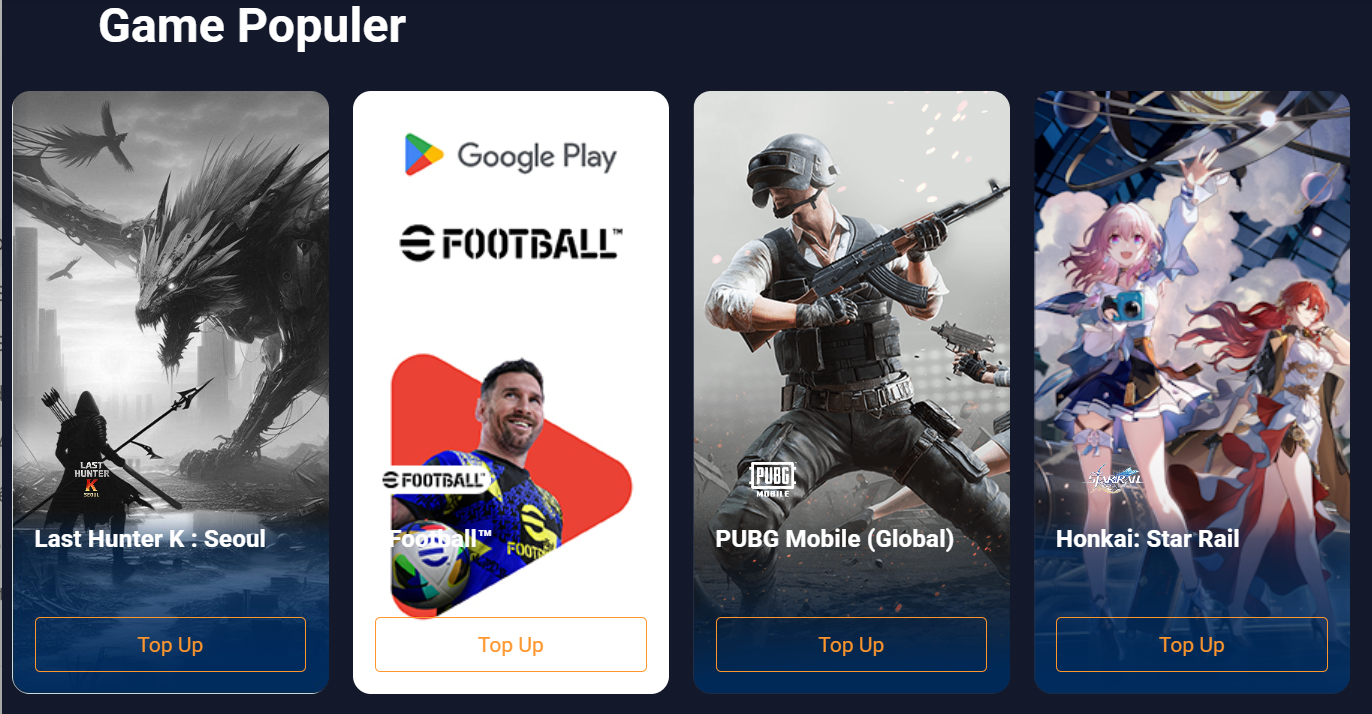
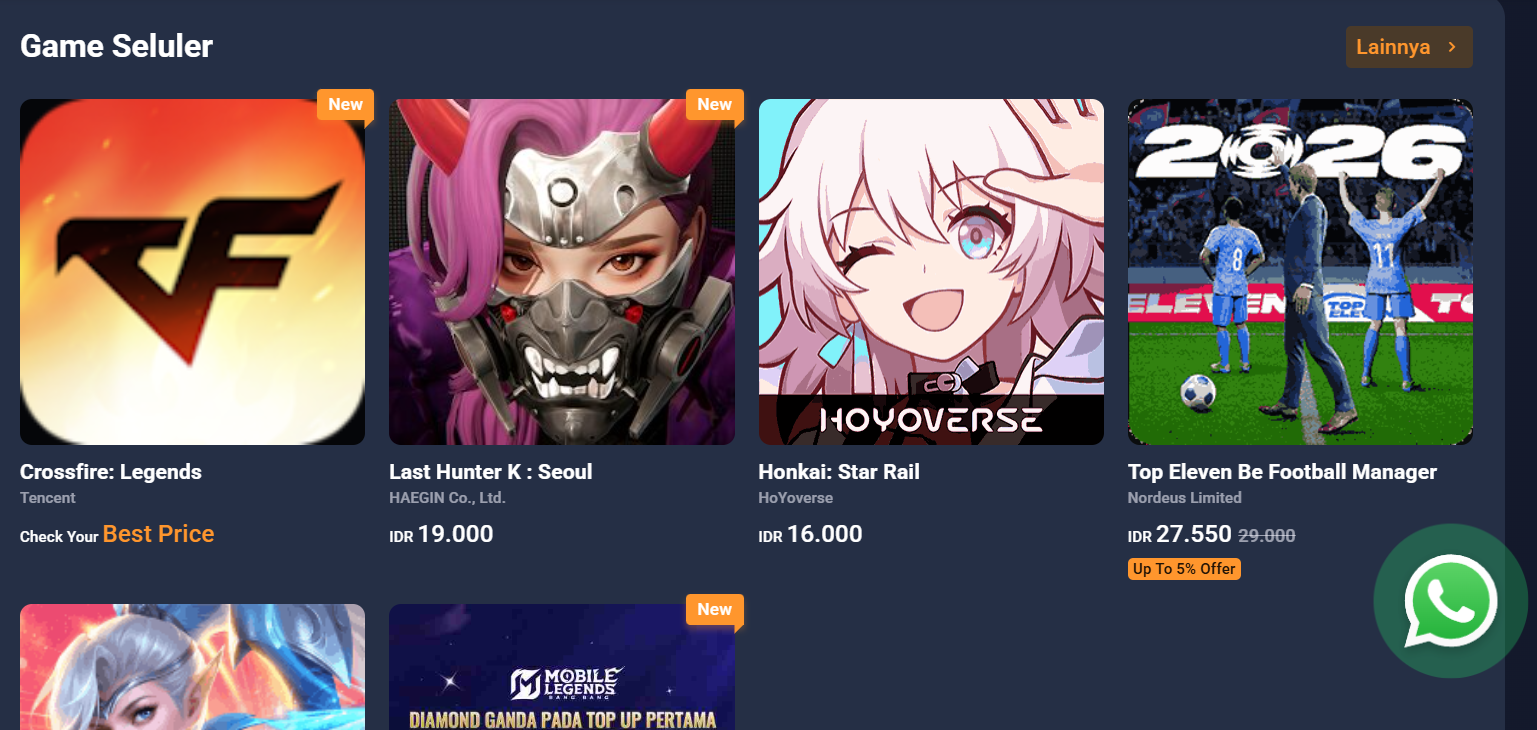
For many supported titles, UniPin offers direct top-up: enter your game user ID and server, choose a denomination, pay, and the currency lands in your account with no separate redemption step. The catalogue leans toward the mobile titles that dominate its core markets — Mobile Legends, Free Fire, PUBG Mobile and BGMI, Genshin Impact and other HoYoverse titles, Valorant, Roblox, Point Blank and a long tail of regional games — alongside streaming and app-store credit. Which items appear depends entirely on your country’s storefront.
The Payment Channel Network
This is the least visible and most valuable part of the stack. UniPin maintains direct connections to payment providers in each market it operates in, which the company frames as the reason it can offer competitive fees and reliable payouts rather than stacking intermediary margins. In practice a checkout page might offer Visa and Mastercard alongside GoPay, DANA, GCash, Maya, virtual accounts, internet banking, carrier billing and a convenience-store cash option — a menu no single global processor assembles alone.
Developer and Merchant APIs
The UniPin Developer Portal is aimed at publishers, resellers and merchants: payment channel integration through a single unified API, direct top-up integration, voucher issuance and redemption, a merchant and reseller API, reporting and settlement tooling, and webhooks for real-time event notification. UniPin markets it on operations across 32-plus countries compliant with local tax law, real-time processing, and access to that 3.1 million-channel distribution footprint. For a Korean or Chinese publisher entering Southeast Asia — a use case UniPin actively courts, including a 2025 Seoul seminar on expanding into SEA and India — the alternative is negotiating market by market.
Esports, Events and Community Layer
UniPin treats tournaments as infrastructure rather than marketing decoration. The SEACA circuit, the Ladies Championship series and the Indian campus championship put it in direct contact with the players who become customers, and give brand partners a route into gaming audiences. If you run a community, a creator channel or a small esports organisation, that matters — this is a company that shows up at grassroots events, not only in checkout flows.
Pricing, Plans, and Package Structure
UniPin has no subscription and no membership tier. The account is free and you pay only for what you top up, which makes “pricing” a question of denominations, regional rates and promotional cashback rather than plan comparison. Because UniPin sells in local currency across dozens of markets and publishers set bundle prices, the figures below are approximate USD equivalents showing the shape of the structure, not quotes. Merchant and publisher terms are quoted individually and not published.
| Product | Approx. Cost | What You Get | Best For |
|---|---|---|---|
| UniPin account | Free, permanently | Wallet, transaction history, access to promos and cashback campaigns | Everyone — there is no reason to buy as a guest |
| UniPin Credits — small top-up | ~$2 – $5 equivalent | Entry-level UC balance; often meets the minimum spend for cashback promos | Casual players testing the platform for the first time |
| UniPin Credits — standard top-up | ~$10 – $30 equivalent | The most common band; comfortably clears most promo thresholds | Regular players topping up one or two titles a month |
| UniPin Credits — large top-up | ~$50 – $100+ equivalent | Bulk balance for multiple titles or heavy gacha spending | Whales, creators funding content, community managers |
| UniPin Voucher (retail / third-party) | Fixed denominations, varies by market | A redeemable code convertible to UC; may carry an expiry date | Cash payers, gift buyers, users without bank access |
| Direct game top-up | Publisher-set denominations | In-game currency credited straight to your game ID, no redemption step | Players who want the fastest possible path to diamonds or UC |
| Merchant / publisher integration | Custom, quoted per partner | Payment channel API, direct top-up API, voucher issuance, settlement, webhooks | Publishers, resellers and digital-goods businesses entering Asia |
How UniPin Compares to Alternatives
The top-up market is crowded and competitive. Codashop leads on traffic, Razer Gold bundles a rewards ecosystem, SEAGM plays the global-catalogue game, and buying direct from the publisher remains simplest when it works. Here is how they line up.
| Platform | Core Strength | Account Required | Main Trade-off |
|---|---|---|---|
| UniPin | Deepest local payment coverage in SEA and India; offline retail; stored-value wallet; frequent cashback | Yes — account-based by design | Catalogue and promos vary sharply by country; support quality is inconsistent by region |
| Codashop | Simplest checkout, direct publisher partnerships, largest traffic in the category | No — guest checkout | No wallet or accumulated balance; fewer loyalty mechanics |
| Razer Gold | Rewards ecosystem (Razer Silver), strong global brand recognition | Yes | Rewards only pay off if you want Razer products; thinner hyper-local payment options |
| SEAGM | Very broad global catalogue including gift cards and console titles; loyalty points | Yes | Less locally embedded than UniPin in individual SEA markets |
| Official publisher store | Maximum safety; direct support path if something breaks | Usually yes | Often card-only, no cashback, and unavailable to many players in emerging markets |
vs. Codashop: Codashop wins on friction: no account, no wallet, no login — pick a game, enter your ID, pay, done. UniPin wins on depth, since the wallet, cashback programme and offline retail network only pay off if you top up regularly. Occasional buyer, Codashop. Recurring buyer in a UniPin core market, UniPin.
vs. Razer Gold: These are the two most comparable products — both wallet-based with a rewards layer. The question is which currency you want back. Razer Silver pays off if you are in the Razer hardware orbit; UniPin’s cashback returns as UC that goes straight into your next top-up. If your spending is purely in-game, UniPin’s loop is tighter and its local payment support in Southeast Asia is deeper.
vs. buying direct from the publisher: Going direct is always safest — one party, one support channel, no intermediary. Use it when you can. But for many players in UniPin’s markets it is not an option: no international card, no accepted local method, or no regional storefront at all. That gap is the space UniPin occupies, and why it has lasted fifteen-plus years without outside funding.
Pros and Cons
What Gamers and Partners Love
Payment options nobody else assembles: The breadth of local channels — e-wallets, virtual accounts, carrier billing, internet banking, convenience-store cash — is the platform’s defining advantage.
Fast, usually instant delivery: Direct top-ups and UC purchases typically land immediately, and independent comparison write-ups describe UniPin’s processing as prompt and dependable in its core markets.
Recurring cashback with a tight loop: Regular percentage-cashback campaigns return value as UC, which flows straight back into your next purchase rather than sitting in an unrelated rewards currency.
Long track record and real publisher relationships: Fifteen-plus years in operation, integrations with major publishers, and an unfunded balance sheet implying a business that supports itself rather than burning investor capital.
Local currency, local compliance: Buying in your own currency through a locally registered entity avoids conversion spreads and cross-border fees.
A serious partner-side offering: The developer portal, unified payment APIs and settlement tooling make UniPin a real go-to-market route for publishers and merchants, not merely a consumer checkout page.
Limitations Worth Knowing
A restrictive refund policy: Refunds are considered only in verified cases — payment completed but voucher not delivered, or a confirmed duplicate or erroneous transaction — and only after review by UniPin’s Risk and Compliance team, potentially requiring written approval from the Compliance Head. Defensible anti-fraud posture for digital goods, but change-of-mind returns are off the table and resolution can take time.
Support experience varies a lot by region: Reviews are mixed. Some Trustpilot users report issues resolved after emailing support and revise their ratings upward; on the South African platform Hellopeter, UniPin sits at a low trust index with recurring complaints about undelivered voucher tokens and slow or absent email responses. The 24/7 support claim looks much better served in core Asian markets than at the edges of the footprint.
Scams impersonating UniPin are a real problem: Because the brand is widely recognised, third parties pose as UniPin resellers. The company is explicit that it cannot refund transactions made with unauthorised individuals, websites or resellers — protection applies only to official channels and verified partners.
Fragmented experience across countries: Catalogue, pricing, payment methods, promotions and even the storefront you land on change by market, and comparison sites note that vouchers and credits carry regional usage restrictions. If you travel, live abroad or play on a foreign server, expect friction.
Credits are locked to one account: UC cannot be transferred, shared or exchanged between accounts, and UniPin reserves the right to deactivate dormant accounts. Do not stockpile a large balance you have no near-term plan to spend, and do not buy credits intending to gift them by handing over your balance.
Cashback is promotional, not structural: Campaigns are capped, quota-limited, often one-per-account and subject to change without notice. Treat cashback as an occasional bonus you time purchases around, not as a reliable standing discount.
A security incident in its history: In 2020, a disclosed vulnerability exposed data associated with roughly ten million transactions. It was reported publicly, is several years old, and there is no indication of a comparable incident since — but any platform holding payment and account data deserves the standard precautions: a unique password and multi-factor authentication wherever offered.
Who Should Use UniPin
Regular players in Southeast Asia, India and nearby markets: If you top up at least monthly and live in Indonesia, the Philippines, Malaysia, Vietnam, Thailand, Singapore or India, UniPin is close to a default choice: free account, load UC during an active cashback window, pay from the balance.
Players without cards or bank accounts: If international cards are not an option, the convenience-store voucher route through Indomaret, 7-Eleven or KK Mart is the single most practical path to in-game currency. Buy the voucher denomination that matches your intended spend and redeem it promptly.
Gaming content creators and streamers: If your channel funds gacha pulls, skins or battle passes as content, the wallet plus transaction history makes spend far easier to track and expense than scattered publisher receipts, and cashback trims a real recurring cost. The larger UC bands fit best.
Community managers and esports organisers: Running prize pools, funding team accounts or distributing rewards is far cleaner from one wallet with a full audit trail — and UniPin’s tournament footprint makes it a plausible partner rather than just a vendor.
Game publishers and digital-product companies entering Asia: If your growth plan involves Southeast Asia, India or Latin America, the developer portal is the relevant product — unified payment integration, direct top-up APIs, settlement and webhooks in place of thirty separate local negotiations. Start with a partner conversation, not the storefront.
Who should probably look elsewhere: If you are in North America or Western Europe with a working card and a publisher storefront that accepts it, buy direct — you gain a cleaner support path and lose very little. If you top up only once or twice a year, Codashop’s guest checkout is less overhead than maintaining a wallet balance.
Getting Started: Step by Step
- Register a free account on the official UniPin site for your country. Use the correct regional storefront — it determines your catalogue, currency, payment methods and available promotions. Verify you are on an official UniPin domain before entering anything.
- Secure the account immediately. Set a unique password you use nowhere else and enable any available verification step. This account will hold a stored balance and your payment history, so treat it like a wallet, because it is one.
- Check the promo and events page before you spend anything. Cashback campaigns are frequent but conditional — minimum spend, eligible titles, UC-as-payment-method requirements, daily quotas and one-per-account limits are all common. Reading the terms first is worth more than any coupon code.
- Load UniPin Credits through a local payment channel. Choose an e-wallet, bank transfer, virtual account or convenience-store option native to your country rather than an international card, so you avoid conversion charges and cross-border fees your bank may apply.
- Top up your game using the UC balance. Select the title, enter your game user ID and server carefully — a wrong ID is the most common cause of a “missing” top-up — pick your denomination, and pay from the wallet to stay eligible for UC-only promotions.
- Confirm delivery and keep the record. In-game currency usually arrives instantly. Save your transaction or order number and payment confirmation; if something goes wrong, support will ask for the order number, payment method, game ID and server, timestamp and proof of payment.
- If a transaction fails, open a support ticket promptly with the full record. Provide everything above in the first message. Complete documentation up front is consistently the difference between a resolved case and a stalled one.
Tips for Getting Maximum Value
The single biggest lever is timing: plan larger top-ups around active cashback windows rather than buying reactively mid-session, and always check whether the campaign requires paying with UniPin Credits rather than a direct payment method, because many do and that requirement is the most common reason people miss out on cashback they thought they had earned. Beyond that, stay on your local storefront and pay through a local channel, since a foreign card can add conversion charges that cancel the regional pricing advantage. Buy UC in denominations you will actually spend soon — credits are non-transferable and dormant accounts can be deactivated, so a large idle balance is dead money rather than savings. Watch for welcome and referral campaigns when you first register, and always log in before checking out, because promotional eligibility almost always requires it. Cross-check any large bundle against the official publisher store and one competitor first; UniPin is competitive in its core markets but not automatically cheapest on every title. Never buy UniPin credit from a social-media seller or an unofficial site offering an unusual discount — the refund policy does not cover unauthorised resellers, and that is exactly where impersonation scams operate. And if you are a business rather than a player, skip the consumer storefront and go through the developer portal, where terms, settlement schedules and channel access are negotiated rather than published.
Future Outlook and Final Assessment
The structural tailwinds are strong. Mobile gaming grows fastest in exactly the markets where card penetration is lowest and e-wallet adoption is highest — Southeast Asia, India, Latin America, the Middle East. Publishers in Korea, China and Japan keep looking outward and keep needing local payment rails to get there, which is precisely what UniPin sells them. And the grassroots esports investment, from SEACA to the campus championship expansion targeting 50-plus Indian universities in 2026, is long-horizon community building that compounds into loyalty in a category where switching costs are otherwise near zero.
The honest caveats stand alongside that. Competition is intense and differentiation is thin on price alone — Codashop is simpler, newer platforms discount harder, and UniPin’s advantage rests on payment infrastructure rather than headline savings. Support quality is uneven, notably worse at the geographic edges than in core Asian markets. The refund policy is tight. And the country-by-country fragmentation means your experience depends heavily on where you live. None of these are dealbreakers, but they separate an excellent fit from a frustrating one.
Conclusion
UniPin is not the flashiest platform in gaming, and it is not competing on being the absolute cheapest. What it has built over fifteen-plus years is quieter and harder to copy: direct connections into the payment methods people in emerging markets actually use, an offline retail network reaching players with no bank account at all, a wallet that consolidates spending across a wide catalogue, and a partner API layer giving publishers a single route into more than thirty markets. For regular players in Southeast Asia and India, for creators and community managers who need their gaming spend traceable, and for businesses monetising across the region without building payment infrastructure from scratch, that combination is genuinely valuable.
Go in with clear eyes: check the promo terms before you spend, stay on official channels, keep your balance modest, and confirm live pricing on your country’s storefront — regional variation is the rule here, not the exception. Do that, and UniPin does exactly what a good payment layer should do: it gets out of the way, removes the friction between wanting something and owning it, and makes everything easy.
Ready to top up without the payment headaches?
Explore more honest reviews, tutorials and tool comparisons to find the right tech for the way you work and live — at AI Solutes, where we make everything easy.
👉 Open Free Account: https://ai-solutes.com/unipin
👉 Our YouTube Channel: youtube.com/@ai-solutes
👉 Our Facebook Fanpage: Facebook
👉 Our X (Twitter): @AISolutes
- Master DeepSeek API Automation for Winning SEO Strategies and Real-Time Keyword Trends
- Transform Healthcare with Jimeng AI: Powering Clinical Decision Support, Integration, and Privacy Compliance
- Transform Retail Inventory in 2026: Increff AI Inventory and Omnichannel Platform Review
- Meshy AI
- Mentimeter