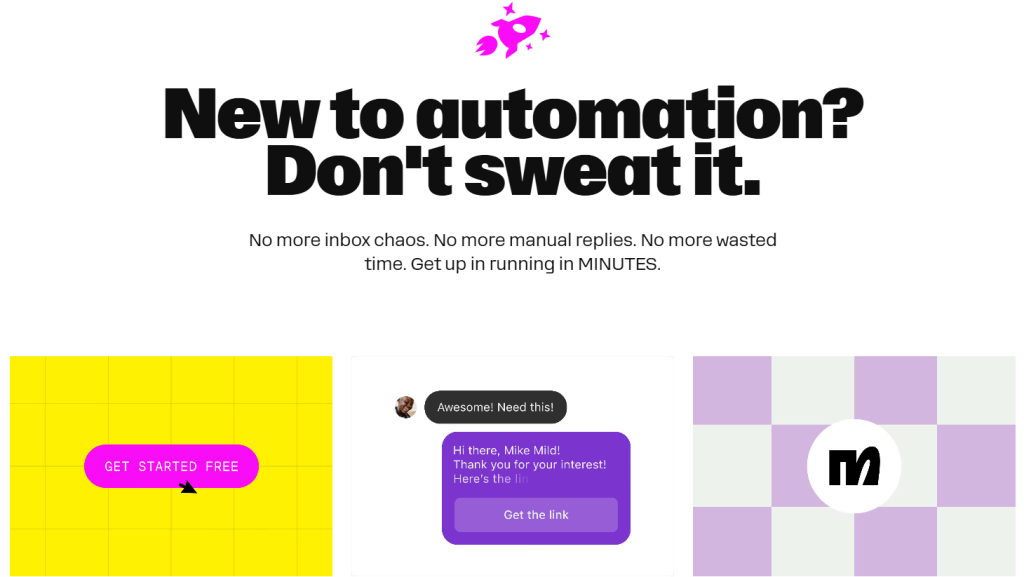
Every creator and small brand eventually runs into the same wall on Instagram. A Reel takes off, hundreds of people comment “LINK” or “GUIDE” expecting the freebie you promised, and there is physically no way to DM every one of them by hand before the moment passes. Manychat was built to make that moment automatic. Someone comments your keyword, and within seconds the platform slides into their DMs with your link, your discount code, or your lead magnet — no manual work, at any scale. Founded in 2015 by Mikael Yang and Antony Gorin, Manychat has become the default name in chat marketing: over a million connected business accounts across roughly 190 countries, official Meta and TikTok partner status, and more than $10 billion in facilitated merchant sales. In April 2025 it raised a $140 million round led by Summit Partners to push into AI-driven engagement.
That funding is the backdrop to a genuinely important 2026 story, because two things changed this year that every potential buyer needs to understand before signing up: Manychat overhauled its pricing on March 2, 2026, cutting the free plan by 97.5%, and its AI features — despite the marketing — are weaker and more expensive than the headlines suggest. This review covers the whole picture honestly: what the comment-to-DM engine does brilliantly, the real state of the AI tools, the new contact-based pricing and the overage traps hiding inside it, comparisons against the newer AI-native alternatives, the billing and support complaints, and exactly who should use it — and who now shouldn’t.
Manychat Review 2026: The Instagram DM Automation Leader After a Pricing Overhaul and an AI Push
Overview and Background
Manychat is a chat marketing and automation platform that lets businesses run automated conversations across Instagram, Facebook Messenger, WhatsApp, TikTok, Telegram, SMS and email — all from a single visual, drag-and-drop builder that requires no coding. You define triggers (a keyword, a comment, a story reply, an ad click), and the platform responds automatically, routing people through flows that capture leads, deliver content, answer questions and drive sales.
The company was founded in 2015 by CEO Mikael Yang and Antony Gorin, initially targeting Telegram before pivoting decisively when Facebook opened the Messenger platform in 2016. The name reflects the original vision — enabling “many” simultaneous, automated-yet-personal conversations without a large support team. Its trajectory maps the rise of messaging itself: 10,000 merchant accounts by 2017, an $18 million Series A led by Bessemer in 2018, Instagram automation in 2021, one million connected accounts by 2022, generative AI for copy and intent in 2023, and by 2025 over $10 billion in facilitated merchant sales. Crucially, Manychat is an official Meta Business Partner, meaning it connects through approved APIs rather than the browser hacks that get accounts banned.
The $140 million Summit Partners round in April 2025 — bringing total funding to roughly $158–163 million — is the context for everything that followed. The money went toward AI-driven customer engagement, and the 2026 product and pricing changes flow directly from that strategy. Whether the push has delivered yet is the central question of this review, and the honest answer is: partly.
Why Manychat Stands Out in 2026
Despite the pricing controversy, Manychat remains the category leader for good reasons. Here’s what it genuinely does better than anyone.
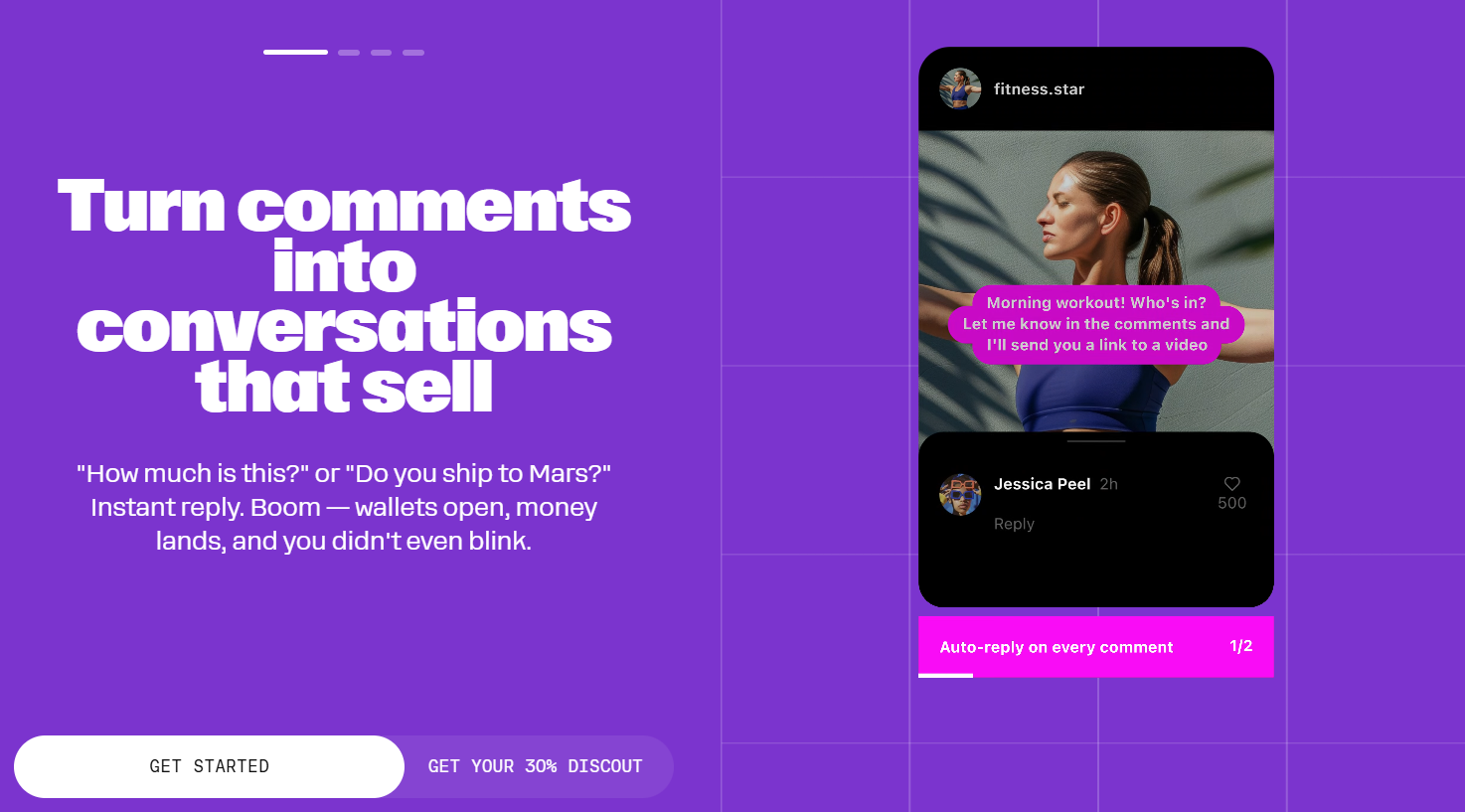
Comment-to-DM automation is best-in-class: This is the feature that built Manychat’s reputation and it remains unmatched. Someone comments a keyword on your post or Reel, and Manychat instantly DMs them your link, lead magnet or opt-in. In practice this can capture hundreds of leads in 48 hours with zero manual work. The trigger detection is reliable and the flow from comment to conversation is genuinely the simplest and most capable in the category. If this is your core need, few tools do it better.
Multi-channel coverage nobody matches: Instagram, Facebook Messenger, WhatsApp, TikTok, Telegram, SMS and email — seven channels from one inbox and one builder. TikTok DM and comment automation is a genuinely recent addition that most competitors lack entirely. For a brand that wants to meet customers wherever they are rather than betting on a single platform, this breadth is a real structural advantage.
The visual flow builder is approachable and deep: The drag-and-drop editor lets a non-technical creator design branching conversation paths with logic, conditions and delays, and be live in an afternoon. It scales from a one-step “comment triggers a DM” automation up to genuinely sophisticated funnels — a rare combination of low entry barrier and high ceiling.
Official Meta and TikTok partnership: This matters more than it sounds. Because Manychat connects through approved APIs, you’re not risking your account the way you do with grey-market automation tools that scrape or fake app behaviour. For a business whose Instagram presence is a real revenue channel, that compliance is close to non-negotiable.
Strong e-commerce integrations: Native connections to Shopify and WooCommerce, plus tools like Mailchimp, Kit and Hotmart, give the platform access to buyer behaviour and segmented audiences — previous purchasers, cart abandoners, interest groups. For sales-driven automation, that turns a broadcast tool into a targeted revenue engine.
A decade of stability and a huge community: Nearly ten years in a category where tools appear and vanish constantly, plus roughly 4.6 out of 5 on both G2 and Capterra, plus an active Manychat community for learning and templates. When you build your lead engine on a platform, that longevity and support ecosystem is worth real money.
Key Features and Technology
The platform breaks into four areas: the growth tools that capture people, the flow builder that converts them, the AI layer, and the integrations that connect it all to your business.
Growth Tools and Flow Builder
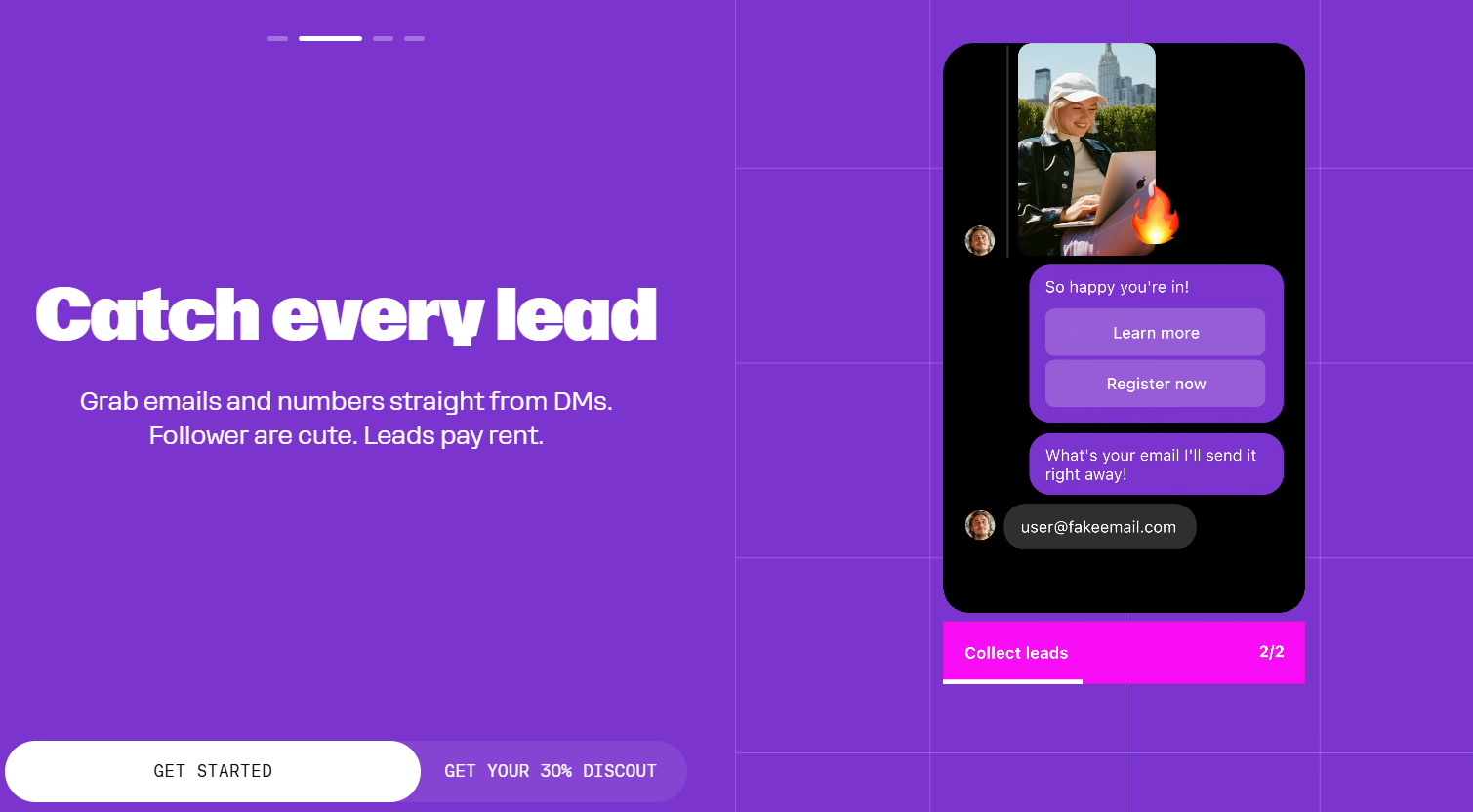
Beyond comment-to-DM, the growth toolkit includes website chat widgets, popups, scannable QR codes and referral URLs that drop people straight into a flow. The flow builder itself is the engine room: a visual canvas where you chain triggers to messages, questions, conditions and actions. You can qualify a lead with a question, branch based on the answer, collect an email or phone number, tag the contact, and route them to a sales page or booking link — all automatically. It supports A/B testing and broadcasts, and the whole thing is genuinely usable without technical skill.
The AI Layer — What It Actually Is
Manychat’s 2026 AI suite includes several named tools: AI Replies (trained on your website URLs and business info to answer DMs), AI Comments (auto-replying to comments in your own past style), AI Goals (following up after an AI interaction to hit an objective like leads or follows), AI Step (an assistant that takes over a chat to collect data), the AI Flow Builder Assistant (generating flows from a few answers), and AI Intents (triggering flows by intent rather than exact keywords). It’s a real feature set — but two caveats matter enormously. First, several of the most useful AI features, including AI Replies, AI Comments and AI Goals, are currently Instagram-only. Second, AI Comments can presently only reply to positive comments. The AI is a genuine upgrade over pure keyword matching, but it is not yet the fully conversational, context-holding agent the marketing implies.
Live Chat, Integrations and Templates
A live chat inbox lets human agents step in when automation isn’t enough. Integrations span Shopify, WooCommerce, Mailchimp, Kit, Hotmart, Google Sheets, Zapier and more, connecting Manychat to your CRM, email and store. A library of pre-built templates gives you tested starting points for common funnels — lead magnets, welcome sequences, abandoned-cart recovery — so you’re rarely designing from a blank canvas.
Pricing, Plans, and Package Structure
Manychat’s pricing is the hardest part to report accurately, and that difficulty is itself a warning. Since the March 2, 2026 overhaul the platform bills per active contact — anyone who interacts with your automation in a given month — and published figures vary wildly across sources because plan names, contact tiers and prices have shifted repeatedly, and Manychat blocks its pricing page from automated tools. Worse, an “active contact” keeps counting toward your limit even if they never message you again, unless you manually remove them. The table below gives realistic approximate ranges as of mid-2026 — orientation only, and genuinely verify these live.
| Plan | Approx. Price / Month | Contacts & Channels | Best For |
|---|---|---|---|
| Free | $0 | 25 contacts, 2 channels, ~4 automations, Manychat branding | Testing the builder only — exhausted within hours of any real use |
| Essential | ~$14–17 (250 contacts) | Up to 3 channels, unlimited automations, basic AI | Small creators starting out; scales by contact count |
| Pro | ~$29–39 (2,500 contacts) | 3 channels, full broadcasts, advanced automation, AI-capable | The most popular tier — active creators and small businesses |
| Business | ~$69–99 (7,500 contacts) | Unlimited channels, ~5 seats, advanced AI, priority support | Teams and higher-volume brands |
| Advanced / Elite | ~$139+ or custom quote | ~25,000 contacts and up; Elite adds a dedicated CSM, AI included | Large-volume operations and enterprises |
Three hidden costs turn the sticker price into something much larger. First, contact overages: exceed your tier and you pay per extra active contact, roughly $0.018 to $0.10 depending on plan — a viral Reel that pushes a Pro account from 2,500 to 5,000 contacts can more than quadruple that month’s bill. Second, the AI add-on: the useful AI features generally require a separate roughly $29/month add-on on top of Pro or Business, not included in the base price. Third, WhatsApp and SMS fees: these channels carry Meta’s per-message charges on top of your subscription. Third-party analyses put real-world monthly spend anywhere from around $100 for a lean single-channel setup to well over $1,000 for a business running WhatsApp, SMS and AI at scale.
How Manychat Compares to Alternatives
The competitive landscape shifted in 2026, largely because Manychat’s pricing changes opened a door for AI-native and flat-rate rivals. Here’s the honest picture.
| Option | Approx. Entry Price | Core Strength | Main Trade-Off |
|---|---|---|---|
| Manychat | Free (25) / ~$14+ per month | Best comment-to-DM, seven channels, deep flow builder, Meta/TikTok partner, huge community | Contact-based pricing scales fast; AI is a keyword-ish paid add-on; email-only support |
| ManyChat vs flat-rate DM tools | ~$10–50 flat | Predictable pricing that doesn’t grow with your audience; simpler to budget | Fewer channels and shallower flow logic; smaller ecosystems |
| AI-native agents (generative) | ~$30–50+ per month | Genuine conversational AI that qualifies, handles objections and books, grounded in your content | Narrower channel coverage; less mature flow tooling and templates |
| Chatfuel | Varies by contacts | Long-standing Meta-focused competitor with strong Messenger and WhatsApp tooling | Fewer channels than Manychat; comparable pricing complexity |
| Manual DMs + native tools | Free | No cost, full control, fine at very low volume | Impossible to scale; you miss leads the moment a post performs |
vs. flat-rate DM tools: The pricing overhaul made this the comparison that matters most for growing accounts. Simpler single-purpose tools charge a flat monthly fee that doesn’t balloon as your audience grows, which removes the overage anxiety entirely. What you give up is channel breadth and flow depth — most flat-rate tools do Instagram well and little else, with shallower branching logic. If your list is scaling fast and you only need Instagram, the predictable pricing can genuinely outweigh Manychat’s richer feature set.
vs. AI-native agents: This is where Manychat’s AI weakness shows. A newer generation of tools is built from the ground up around generative conversation — reading context, qualifying leads through natural dialogue, handling objections and booking appointments, grounded in your own content. Manychat’s keyword-leaning AI Step will disappoint anyone expecting that. If genuine conversational AI is the point of your automation, evaluate a purpose-built agent. If you want reliable funnels across many channels and treat AI as a bonus, Manychat is still the stronger platform.
vs. Chatfuel and other Meta-focused rivals: Chatfuel is the most established direct competitor, with solid Messenger and WhatsApp tooling. The decision usually comes down to Manychat’s wider channel coverage and larger community against a rival that may fit a specific Meta-only workflow better. Both share the contact-based pricing complexity, so neither escapes the budgeting challenge — test both against your real numbers.
Pros and Cons
What Users Love
Comment-to-DM that just works: The overwhelming theme in positive reviews. Reliable trigger detection, simple setup, and the ability to capture hundreds of leads from a single viral post with no manual effort. This is the reason most people come to Manychat and the reason most stay.
You can be live in an afternoon: The visual builder is approachable enough that non-technical creators build working funnels the same day they sign up, yet deep enough to support sophisticated branching once you’re ready. That range is rare.
Unmatched channel coverage: Seven channels including the recent TikTok addition, all from one dashboard. No competitor offers this breadth, and for multi-platform brands it’s a decisive advantage.
Platform-safe and well-supported: Official Meta and TikTok partnership means no account-ban risk, and the decade-long track record plus large community mean answers, templates and stability are easy to find.
Genuine e-commerce firepower: Shopify and WooCommerce integrations turn engagement into targeted, behaviour-driven sales flows — a real revenue tool, not just a chatbot.
Strong software-review scores: Roughly 4.6 out of 5 on both G2 and Capterra reflects broad satisfaction with the core product among users who use it for what it’s best at.
Limitations Worth Knowing
Contact-based pricing scales uncomfortably: This is the defining 2026 complaint. Your bill grows with your audience even if engagement stays flat, contacts count until you manually remove them, and a viral post can multiply a month’s cost through overages. Reddit and Capterra threads are full of users describing bills growing two to three times as their lists expanded. Budget for the trajectory, not the starting price.
The AI is weaker than the marketing suggests: The most common criticism since the 2026 push. The AI add-on costs roughly $29/month extra, several key features are Instagram-only, AI Comments only handles positive comments, and the AI Step behaves closer to enhanced keyword matching than a true context-holding conversational agent. It’s an upgrade over rigid flows, but it is not the reasoning AI the branding implies.
The free plan is effectively gone: Cutting it from 1,000 contacts to 25 removed the ability to run anything real for free. It’s now a sandbox, and combined with the pricing changes it damaged goodwill among long-time users who felt the ground shifted beneath them — the second significant pricing shift in 18 months.
Support is email-only and slow: A recurring complaint. There’s no phone line, responses can take multiple days, and users report particular frustration around billing issues — precisely the moments when slow support hurts most. Document your billing interactions in writing.
Billing complaints on Trustpilot: While G2 and Capterra scores are strong, Trustpilot reviews are more mixed, with several users describing being charged after cancelling or struggling to get refunds. The split between software-review sites and Trustpilot is worth reading before you commit to a paid tier.
Multi-channel means per-channel rework: Building the same bot across several channels means rebuilding messages for each one — a true omnichannel setup takes real effort rather than one-click duplication. The breadth is real, but so is the labour to use it fully.
Occasional Instagram API hiccups: Permission loops and broken triggers surface periodically in user forums. They usually clear up with a reconnect, but they can interrupt a live campaign at an inconvenient moment.
Who Should Use Manychat
Creators monetising Instagram and Facebook engagement: If your growth engine is turning comments and story replies into leads and sales, this is exactly what Manychat was built for, and nothing does comment-to-DM better. Start on the free plan to learn the builder, then move to Essential or Pro the moment a campaign works — which will be fast.
E-commerce brands running Shopify or WooCommerce: The native store integrations plus comment-to-DM make this a genuine sales channel — abandoned-cart recovery, product launches, segmented offers to past buyers. Pro is the natural home, with Business once contact volume climbs.
Coaches and course creators delivering lead magnets: The keyword-triggers-a-freebie funnel is the classic Manychat play and it converts. Just model your contact volume honestly — a successful launch generates contacts fast, and the overage math is where surprises live.
Multi-platform brands wanting one automation hub: If you’re active across Instagram, WhatsApp, TikTok and Messenger and want a single tool covering all of them, Manychat’s channel breadth is genuinely unmatched. Business unlocks unlimited channels and team seats.
Agencies managing client social automation: The templates, flow depth and multi-channel reach make Manychat a capable agency tool. Price it carefully per client on real contact volumes, and consider the Elite tier’s dedicated support for a serious client roster.
Who should skip it: Anyone whose core need is a genuine conversational AI agent that resolves support or qualifies through natural dialogue — a purpose-built generative agent will serve you far better. Businesses with large contact lists but flat engagement, where contact-based pricing punishes you for audience size you’re not monetising, should price flat-rate alternatives first. And anyone who needs responsive, real-time support should factor in the email-only limitation.
Getting Started: Step by Step
- Sign up free and connect one channel. Start with the free plan and link your Instagram or Facebook account. Remember it’s a sandbox capped at 25 contacts — you’re here to learn the builder, not to run a real campaign yet.
- Build one simple comment-to-DM flow. Pick a keyword, write the DM, connect it to a post. This single automation is Manychat’s core value, and getting it working teaches you 80% of what you need to know.
- Model your real contact volume before upgrading. Estimate how many people will interact monthly once you’re live. This number — not the plan’s headline price — determines which tier you need and what overages you’ll face. Do this math before you pay.
- Choose your tier on total real cost. Add the base plan, likely overages, the AI add-on if you need it, and any WhatsApp or SMS fees. Compare that full figure against a flat-rate alternative before committing — the sticker price is only the opening bid.
- Set up inactive-contact housekeeping. Since contacts count until removed, build a routine to clear inactive ones regularly. This one habit meaningfully controls your bill over time.
- Test the AI features against your expectations. If you’re paying for the AI add-on, trial AI Replies and AI Step on real messages and judge whether they meet your needs before relying on them — remember several are Instagram-only.
- Plan for virality and choose billing deliberately. Before launching a keyword campaign that could take off, know which tier the surge will push you into. Given the billing complaints, prefer monthly until you trust the platform, and keep records of what you signed up for.
Tips for Getting Maximum Value
Treat contact hygiene as an ongoing discipline — regularly removing inactive contacts is the single biggest lever on your monthly bill, since they keep counting until you clear them. Model any keyword campaign’s likely reach before you launch it, so a viral moment is a celebration rather than a billing shock. Lean on the template library instead of building from scratch; the tested funnels convert and save hours. Use Manychat for what it’s genuinely best at — capturing leads at the front of your funnel — and hand the deeper work to your CRM, email tool or a dedicated AI agent rather than stretching the AI Step past its limits. Before paying for the AI add-on, confirm the specific features you want aren’t restricted to Instagram, since several are. Build your most important flow on one channel first and perfect it before rebuilding across others, because per-channel duplication is manual work. Keep written records of every billing and cancellation interaction given the support and refund complaints. And whenever you evaluate the plan, price it on your real contact count plus every add-on and per-message fee — the honest total, not the headline, is what you’ll actually pay.
Future Outlook and Final Assessment
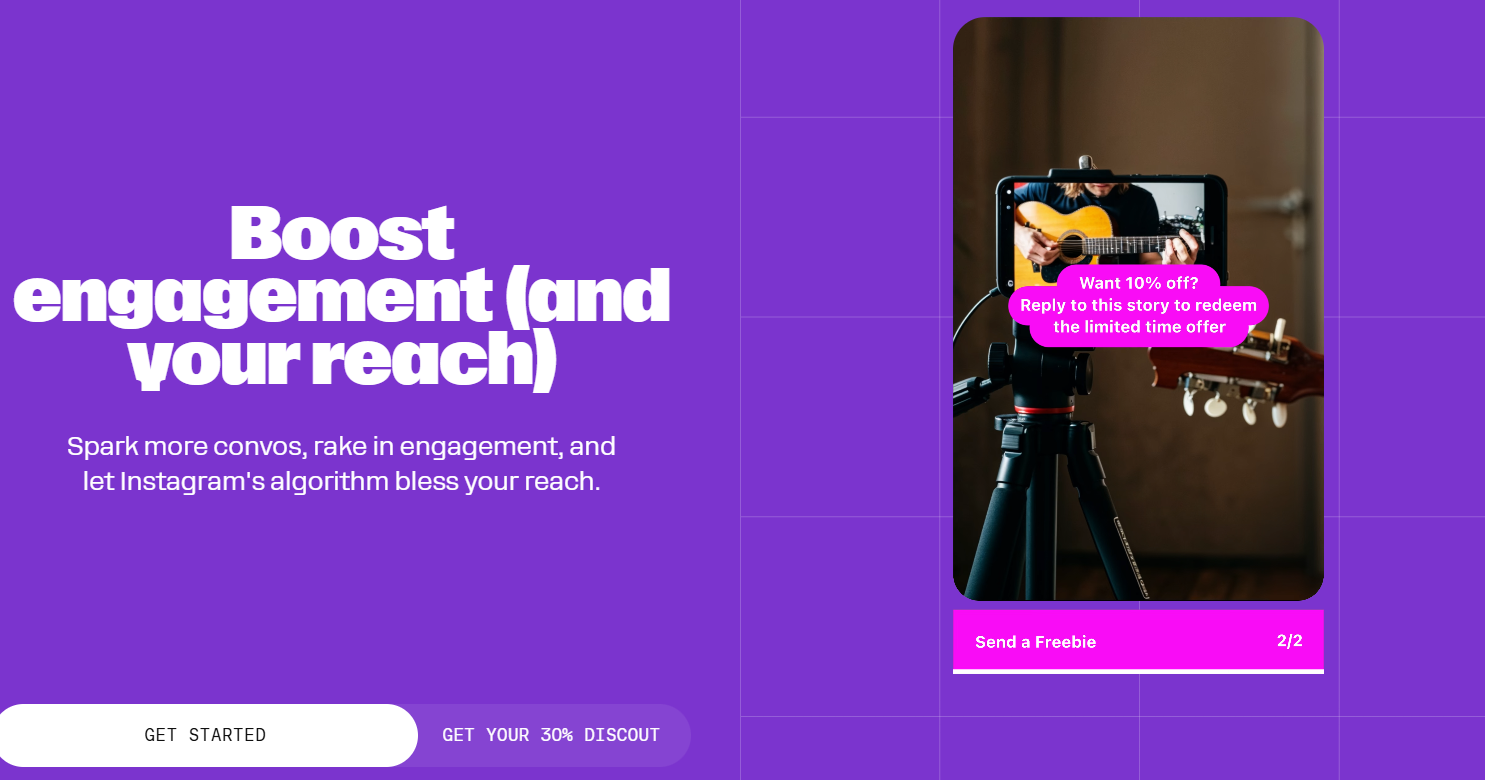
The market Manychat leads is large and growing — over 150 million people message a business on Instagram every month, and the gap between customer expectations and brand response times is a genuine, monetisable problem. Manychat’s core thesis, that conversation is where commerce is heading, is clearly correct, and its comment-to-DM engine remains the best expression of that thesis in the market. With more than a million connected accounts and over $10 billion in facilitated sales, its position at the front of the funnel is strong.
The strategic question is whether the AI push succeeds before the AI-native competitors catch up on channel breadth and flow depth. The $140 million Summit Partners round bought the runway to build genuine conversational AI, and the direction is right — but as of 2026 the execution lags the ambition, and the pricing changes that funded the push have cost the company goodwill. If Manychat delivers AI that matches the marketing while keeping its channel and community advantages, it stays dominant. If the AI-native tools close the gap first, the contact-based pricing becomes a liability rather than a footnote.
The caveats are real and specific. Contact-based pricing scales uncomfortably and requires active management. The AI is a genuine feature set but not the reasoning agent it’s sold as. The free plan is effectively gone. Support is email-only and slow. None of these change what Manychat is genuinely excellent at — they simply mean you should buy it clear-eyed, for the front-of-funnel job it does better than anyone, and manage the cost deliberately.
Conclusion
Manychat earned its position as the default name in chat marketing, and for its core job — turning a comment into a captured lead across Instagram, Messenger, WhatsApp and TikTok — it remains the most capable and approachable tool available in 2026. The flow builder is genuinely good, the channel coverage is unmatched, the Meta and TikTok partnerships keep your accounts safe, and a decade of stability plus a huge community mean you’re building on solid ground.
But 2026 asks more diligence of you than previous years did. The March pricing overhaul made the free plan a sandbox and tied your bill to your audience size, the celebrated AI features are more modest and more expensive than the marketing implies, and support remains a weak point. Go in understanding all of that — model your real contact volume, treat the AI as a helpful bonus rather than the main event, keep your contacts trimmed, and verify pricing live — and Manychat will do the one thing it does better than anyone: catch your leads the moment they raise their hand, automatically, at any scale, and make everything easy.
Turn every Instagram comment into a lead — automatically, starting free.
Explore more honest reviews, tutorials and tool comparisons to find the right tech for the way you work and live — at AI Solutes, where we make everything easy.
👉 Open Free Account: https://ai-solutes.com/manychat
👉 Our YouTube Channel: youtube.com/@ai-solutes
👉 Our Facebook Fanpage: Facebook
👉 Our X (Twitter): @AISolutes