Every serious data project eventually hits the same wall. Your scraper works beautifully for a week, then Cloudflare starts serving CAPTCHAs, your IPs get blacklisted, and the pipeline that was feeding your pricing model goes dark on a Tuesday morning. Bright Data exists to make that wall disappear. Founded in Israel in 2014 as Luminati Networks and rebranded in 2018, it is now the largest web data infrastructure company in the world — past $300 million in annual recurring revenue in 2025, still growing above 50% year over year, serving more than 20,000 organizations, and holding over 5,500 granted patent claims. Its customer list reportedly includes 14 of the top 20 global LLM labs, which tells you something: the companies training frontier AI models buy their web data here.
For developers, AI builders, e-commerce operators, SEO analysts and market researchers, Bright Data has effectively defined the category — and it prices accordingly. This 2026 review covers the platform honestly: all four proxy types, the Web Unlocker and SERP APIs, the datasets marketplace, the AI-agent products including a Web MCP with a genuinely free tier, pricing across every product line, comparisons against Oxylabs, Decodo and Apify, the landmark court rulings underpinning all of this, the billing pitfalls that catch new buyers, and exactly who should sign up — and who shouldn’t.
Bright Data Review 2026: The World’s Largest Web Data Platform — Powerful, Compliant, and Priced for Scale
Overview and Background
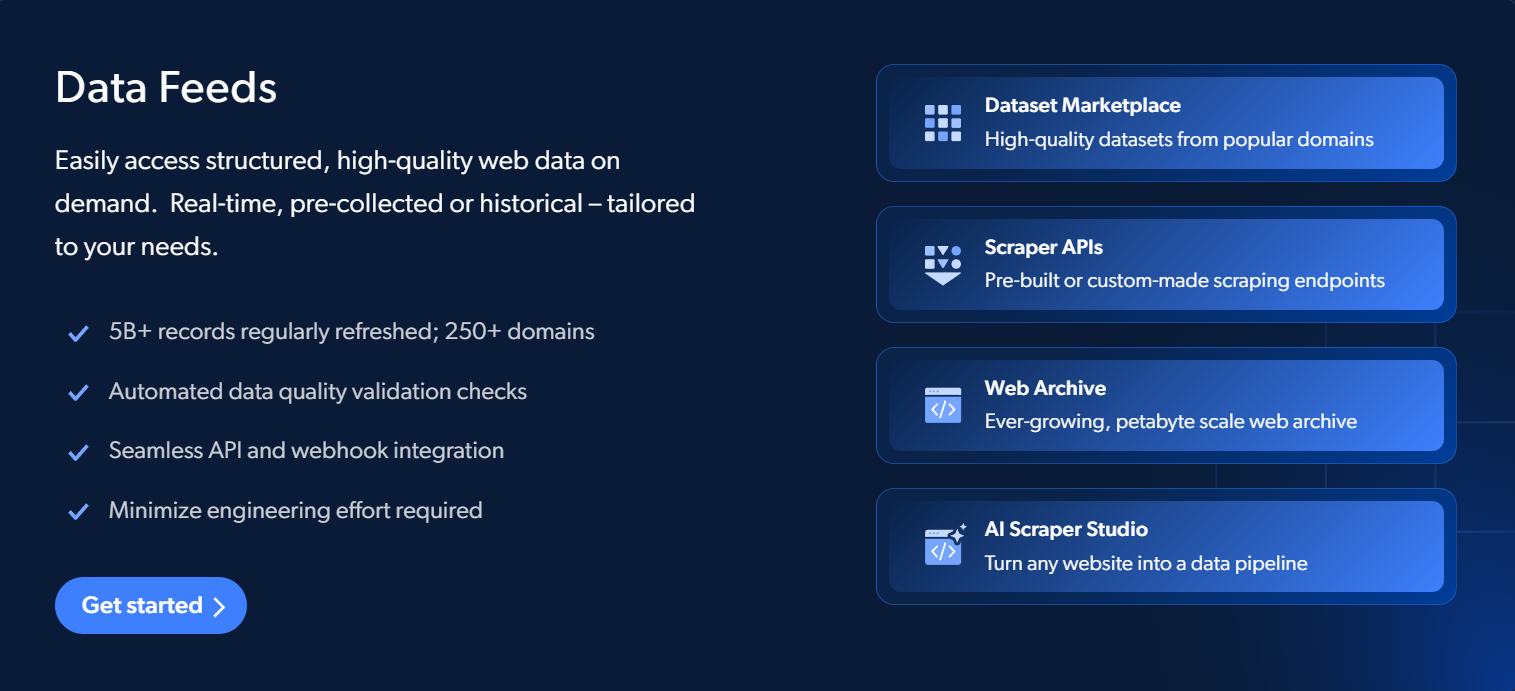
Bright Data is web data infrastructure, bundling four layers into one platform: proxy networks in residential, datacenter, ISP and mobile flavours; web access APIs handling unblocking, browsing and search-results extraction; structured data products including pre-built scrapers, ready-made datasets and a real-time firehose; and a newer AI layer built for autonomous agents. The promise: whatever public web data you need, however protected the source and however large the volume, one of these products gets it reliably.
The company was founded by Ofer Vilenski and Derry Shribman, is headquartered in Netanya, Israel with US offices, and is led today by CEO Or Lenchner. Network scale claims vary considerably by source and date — figures reported across 2026 range from roughly 72 million to over 150 million residential IPs, with the company’s own materials citing higher numbers still — but every source agrees on the shape of it: this is the largest commercial proxy pool available, spanning around 195 countries, with city, state, ASN and ZIP-level targeting. Reported uptime sits near 99.99%, and independent benchmarking has placed Bright Data’s success rate at the top of the field, with one comparison of eleven providers measuring roughly 98.4% and other tests landing around 99%.
What separates Bright Data from a pure proxy vendor is the legal groundwork it has laid. In January 2024 a US federal court granted it summary judgment in Meta Platforms v. Bright Data, with Judge Edward Chen holding that Facebook and Instagram’s terms do not bar logged-off scraping of public data, nor its sale. Meta dropped the rest of the case the following month and waived appeal; a separate suit brought by X was dismissed months later. Those rulings became reference points for the whole industry, and they are a large part of why enterprise legal teams approve Bright Data while rejecting smaller providers.
Why Bright Data Stands Out in 2026
There are cheaper proxies and simpler scrapers. Here’s what the premium actually buys.
Scale that removes the IP pool as a variable: When your proxy network is the largest in the world across roughly 195 countries, IP exhaustion and geographic gaps stop being problems you plan around. For workloads that need genuine city-level or ASN-level targeting across many markets simultaneously, no competitor matches the coverage — and pool freshness matters more than raw count at this scale, which is where Bright Data’s rotation infrastructure earns its keep.
It gets through where other tools fail: This is the most consistent theme in verified user reviews. Sites protected by Cloudflare, Akamai, DataDome, PerimeterX or Kasada routinely block cheaper providers outright. Bright Data’s Web Unlocker handles the anti-bot layer automatically — fingerprinting, CAPTCHA solving, retry logic — and reviewers running production operations repeatedly report success on e-commerce and travel targets where budget providers simply return errors.
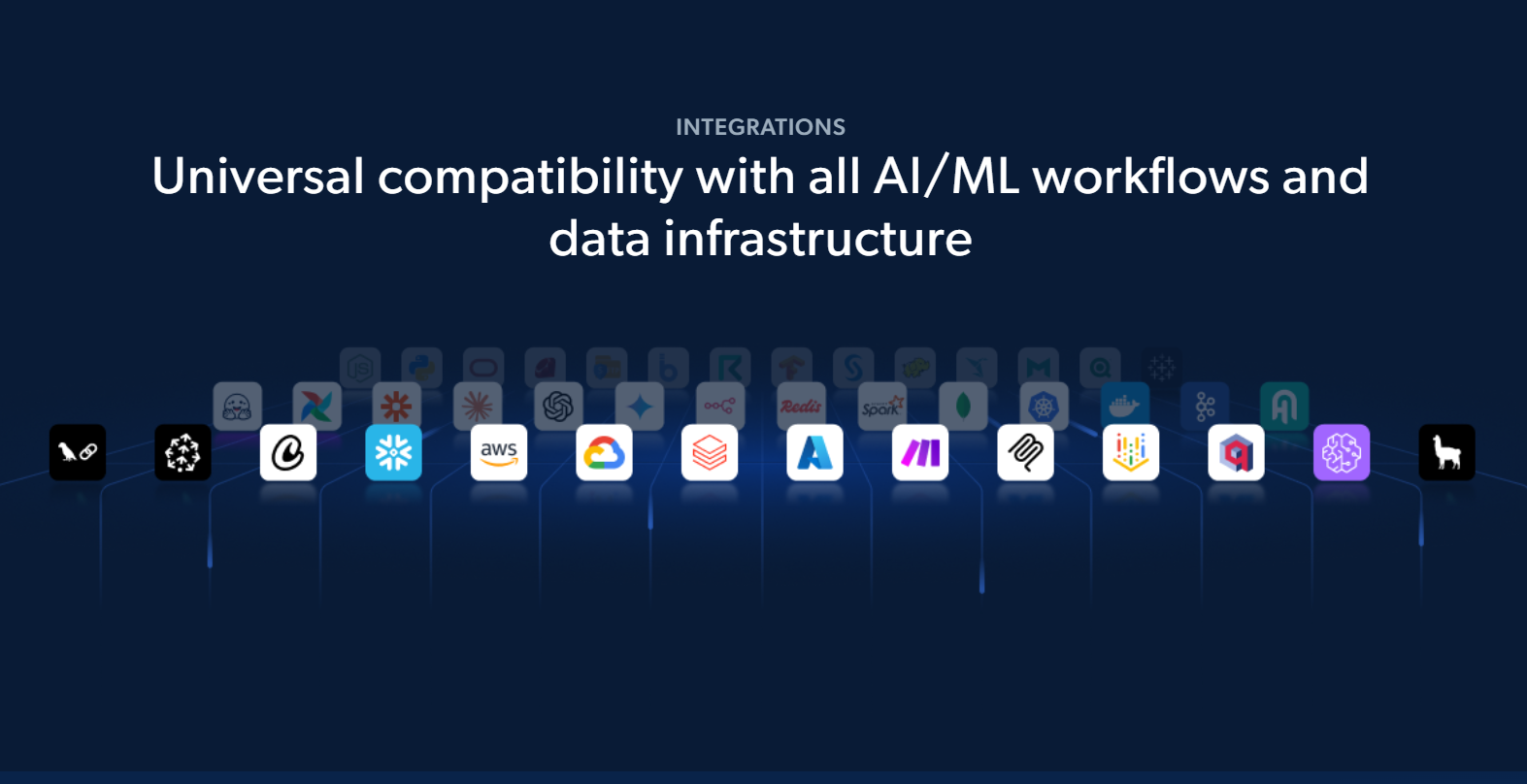
A free Web MCP built for AI agents: This is the detail most reviews bury, and for anyone building with Claude, ChatGPT or a custom agent it may be the most important feature on the platform. Bright Data’s Web MCP server gives an AI agent live, unblocked web access — search, crawl, extract, navigate — through the Model Context Protocol, with 5,000 requests per month at no cost. If your agent’s weakness is stale training data or blocked fetches, this closes that gap directly, and you can evaluate it without a credit card.
You can skip scraping entirely: The datasets marketplace sells pre-collected, structured, regularly refreshed data by the record or subscription. For a lot of teams this is the smarter purchase — no scraper to build, no maintenance when the target site changes its HTML, no proxy tuning. Bright Data is one of very few vendors that lets you choose between building the pipeline and simply buying the output.
Compliance that survives procurement: Ethically sourced opt-in residential IPs, formal compliance certifications, a dedicated compliance product in Bright Shield, and the court precedents described above. If you work in finance, healthcare, or anywhere a legal review precedes a purchase order, this is frequently the deciding factor — and it is the single hardest thing for a cheaper competitor to replicate.
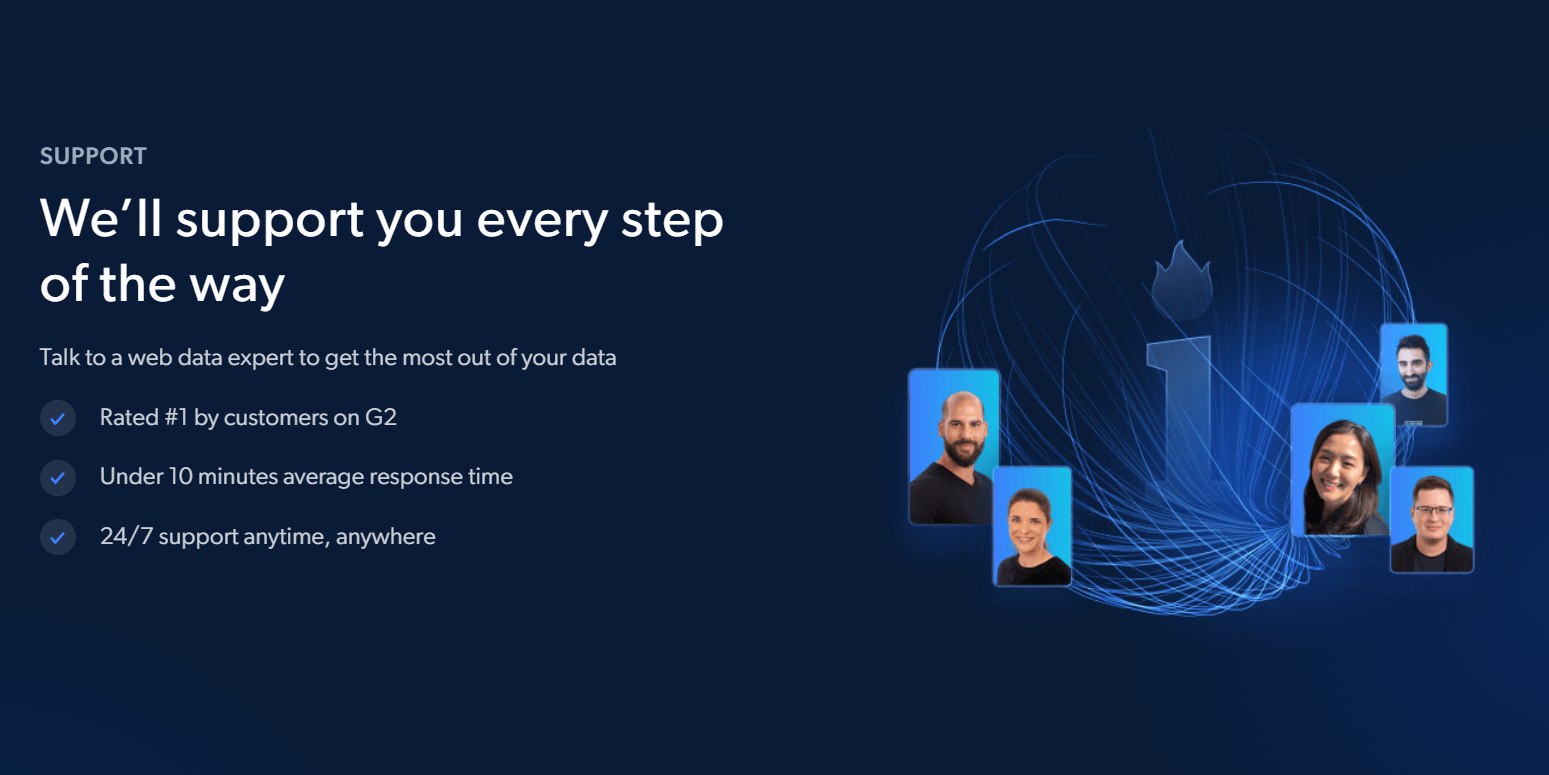
Support that reviewers actually praise: Unusual for enterprise infrastructure. Bright Data scores notably well on G2 for support quality, and reviewers describe fast, technically competent responses — including cases where a dashboard issue was escalated to engineering within days. Account-managed customers rate the experience particularly highly.
Key Features and Technology
The platform splits into four product families. Working out which one your problem belongs to is most of the battle — buying the wrong layer is the most expensive mistake new users make.
The Proxy Networks
Residential proxies route through real consumer devices — hardest to detect, most expensive per gigabyte, and what aggressively protected targets require. Datacenter proxies cost dramatically less and are perfectly adequate for unprotected APIs and pages without serious blocking. ISP proxies combine residential-grade trust with datacenter speed, billed per IP per month rather than by bandwidth, which makes costs predictable. Mobile proxies use real 3G/4G/5G connections and carry the highest trust for hostile targets. The practical rule: start on datacenter, escalate only once you’ve confirmed you’re blocked.
Web Access APIs
The Web Unlocker is the flagship: send a URL, receive the page, with proxy selection, browser fingerprinting, CAPTCHA solving and retries handled invisibly. The Browser API (also known as the Scraping Browser) gives you a cloud-hosted Playwright or Puppeteer environment with anti-bot bypass built in — the right tool for JavaScript-heavy sites requiring real interaction. The SERP API returns structured search engine results with location targeting, and the Crawl API handles multi-page traversal. These are billed per successful request rather than per gigabyte, which for many workloads is both cheaper and far more predictable than raw proxies.
Scrapers, Datasets and the Firehose
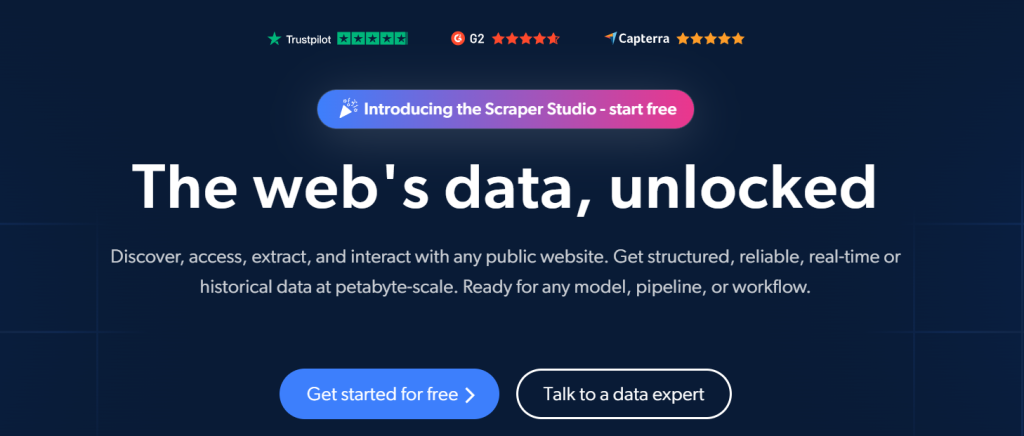
Bright Data maintains a large library of pre-built scrapers covering major platforms — marketplaces, social networks, directories, job boards — so you configure rather than code. Scraper Studio adds AI-assisted automation that verified reviewers credit with making complex extraction accessible to non-technical users. The datasets marketplace sells ready-made structured data outright, and the Data Firehose delivers real-time streams for continuous rather than batched collection. Output arrives as JSON, CSV or Excel.
The AI and Agent Layer
This is where the 2026 roadmap has concentrated. The Web MCP connects agents to live web data through a standard protocol, with that free monthly allowance. The Agent Browser lets an autonomous agent interact with the live web as a real user would rather than merely fetching HTML. Deep Lookup is a natural-language research engine that queries across petabytes of collected web data and returns structured, cited answers. Together these reframe the platform: it is no longer only infrastructure for engineers writing scrapers, but infrastructure for AI systems that need to see the current internet.
Pricing, Plans, and Package Structure
Bright Data’s pricing is consumption-based across more than a dozen separate product lines, with volume discounts, negotiated enterprise rates and frequent promotions layered on top. Published figures differ substantially between third-party trackers — residential proxy rates alone are quoted anywhere from roughly $2.50 to $10.50 per gigabyte depending on tier, commitment and promotion. The table below gives realistic approximate ranges as of mid-2026. Treat it as orientation, not a quote.
| Product | Approx. Rate | Billing Model | Best For |
|---|---|---|---|
| Web MCP (AI agents) | Free up to 5,000 req/month | Free tier, then usage-based | Giving Claude, ChatGPT or a custom agent live web access — start here |
| Datacenter proxies | ~$0.50–0.90/GB or ~$0.60–0.90/IP | Per GB or per IP | Unprotected sites and public APIs — always test here first |
| Residential proxies | ~$2.50–10.50/GB by tier | Per GB, volume discounts | Blocked or rate-limited targets; the price falls sharply with commitment |
| ISP / Mobile proxies | ISP ~$1.30–1.50/IP/mo; mobile ~$9/GB | Per IP (ISP) or per GB (mobile) | ISP for predictable costs and persistent sessions; mobile for the hardest targets |
| Web Unlocker / SERP / Scraper APIs | ~$1–5 per 1,000 requests or records | Per successful request | Most teams — predictable pricing and no proxy management |
| Growth plan / Enterprise | ~$499/mo commitment tier; enterprise custom | Monthly commitment or negotiated contract | High volume — commitment unlocks the meaningful per-unit discounts |
Three structural details matter more than the headline rates. Commitment balances generally don’t roll over unused funds. Billing runs on a calendar-month cycle resetting on the first, so signing up late in a month still triggers the next cycle shortly after — the first partial month is prorated, but the model confuses buyers. And accounts suspend at 100% balance consumption unless auto-recharge is enabled, which can halt a production pipeline mid-run. One benchmarking source puts the median customer at roughly $24,000 per year with around 20% available through negotiation — which tells you the shape of a typical account.
How Bright Data Compares to Alternatives
A caution most comparison articles get wrong: these tools aren’t all competing for the same buyer. Oxylabs is a premium proxy network, Decodo a mid-market proxy provider, Apify a scraping platform. Match the category to your problem first.
| Option | Approx. Entry Cost | Core Strength | Main Trade-Off |
|---|---|---|---|
| Bright Data | Trial credits; residential ~$2.50–10.50/GB | Largest pool, best unblocking, full product suite, datasets, AI/MCP layer, legal standing | Most expensive in category; steep learning curve; bandwidth billing is unpredictable |
| Oxylabs | ~$8/GB residential; API from ~$49/mo | Closest enterprise rival — very large pool, fast response times, strong SLAs | Same premium pricing and sales-gated access; narrower product range |
| Decodo (ex-Smartproxy) | ~$2–3/GB residential | Best mid-market value — very fast, ~99.7% success, simple dashboard, short trial with no KYC | Smaller pool; no datasets marketplace or equivalent AI-agent tooling |
| Apify | Free tier, paid from ~$29/mo | Huge marketplace of ready-made scrapers; genuinely useful free tier for evaluation | Quality varies outside popular scrapers; compute-unit billing is hard to forecast |
| DIY (own proxies + code) | Low cash cost, high time cost | Full control and the cheapest option at small scale | You own every block, CAPTCHA and site change — engineering time dwarfs the savings |
vs. Oxylabs: The genuine enterprise head-to-head. Both pools are large enough that raw IP count stops being the bottleneck, so it comes down to breadth versus focus. Bright Data offers far more surrounding product — datasets, pre-built scrapers, the AI agent layer. Oxylabs is a tighter proxy and scraping operation with excellent response times. If you want proxies done extremely well, Oxylabs is a legitimate alternative at comparable cost. If you want one vendor covering everything, Bright Data.
vs. Decodo: This comparison should give most small and mid-sized teams pause. Decodo delivers residential proxies at a fraction of Bright Data’s rate with competitive benchmark success rates and response times, plus a simpler dashboard and a no-KYC trial. If you need proxies and nothing else, and your targets aren’t among the most hostile on the internet, Decodo will likely serve you at much lower cost. Bright Data’s advantage reasserts itself on the hardest targets, at scale, and when you need the surrounding products.
vs. Apify: A different problem entirely. If a ready-made scraper exists for your target, Apify has you collecting data in minutes with no infrastructure decisions. Bright Data is what you reach for when no pre-built scraper exists, the target is heavily defended, or you need volume a marketplace tool can’t sustain. Many teams sensibly use both.
Pros and Cons
What Users Love
It works on targets that defeat everything else: The dominant theme across verified reviews. Teams running production scraping on protected e-commerce, travel and social platforms report consistent success where cheaper providers fail. When your pipeline is business-critical, that reliability is the product.
Genuine breadth in one account: Proxies, unblocking, SERP data, pre-built scrapers, datasets, real-time streams and agent tooling under one contract and dashboard. For teams otherwise stitching together four vendors, that consolidation has real operational value.
Strong ratings across every major platform: Roughly 4.6 out of 5 on G2, around 4.8 on Capterra and about 4.4 on Trustpilot across close to a thousand reviews — a consistency unusual in this category, suggesting the positive experience is the norm.
Support people actually recommend: High support scores on G2 and repeated praise for responsiveness and technical competence, particularly for accounts with a dedicated manager who actively helps optimise costs.
Legal and compliance standing nobody else has: Court wins against two of the largest platforms in the world, ethically sourced IPs and formal compliance tooling. For regulated industries this frequently is the buying decision.
A free path in for AI builders: The Web MCP’s ongoing free allowance means you can wire live web access into an agent and evaluate the whole platform without spending anything.
Limitations Worth Knowing
It is the most expensive option in the category, by a wide margin: Residential rates run several times what mid-market providers charge for benchmark-comparable performance on ordinary targets. The premium is defensible for hard targets and enterprise requirements. It is not defensible if you’re scraping a few thousand unprotected pages a month.
Bandwidth billing makes costs genuinely hard to forecast: Because quota counts headers and full response bodies rather than extracted data, buyers routinely overshoot estimates by a third to a half. This is the most cited practical complaint and the reason per-request APIs are often the better purchase.
Reports of charges for failed requests: Multiple reviewers, including verified Capterra users, report being billed for queries that returned errors or incomplete data, with the Web Unlocker most often named. Success-based billing doesn’t always hold up in practice, so monitor your success rate against your invoice in the first month rather than assuming they match.
The learning curve is steep and the platform is complex: Fourteen-plus product lines, zone-based configuration and a dense dashboard. Smaller teams without engineering resource consistently cite this in negative reviews. Expect real setup time.
Billing mechanics catch people out: Commitment balances that don’t roll over, calendar-month cycles that reset on the first, KYC and payment verification friction, temporary card authorisations, and account suspension at full balance consumption unless auto-recharge is on. None of it is hidden, but it surprises buyers regularly.
Some products are sales-gated: Full trial access on certain products requires a call rather than instant self-serve signup — a real friction point if you just want to test something this afternoon.
Sentiment is genuinely polarised: Enterprise customers with account managers rate the service highly; smaller self-serve teams write most of the one-star reviews, overwhelmingly about pricing, billing mechanics and dashboard complexity rather than data quality. Which group you fall into predicts your experience fairly well.
Who Should Use Bright Data
AI builders and agent developers: If you’re building anything that needs live, unblocked web access — a research agent, a monitoring bot, a RAG pipeline grounded in current data — the Web MCP free tier is the single best entry point on this platform and costs nothing. Start there before considering anything else.
E-commerce and pricing intelligence teams: Competitor price monitoring, catalogue tracking and marketplace analysis across many regions is exactly the workload this platform was built for, and the targets are precisely the ones that block cheaper tools. Use the pre-built scrapers or datasets before building custom infrastructure.
SEO and market research operations: The SERP API at roughly a dollar or two per thousand queries is one of the better-value products in the range, with location targeting that manual checking can’t replicate. This is a strong standalone use case even if you never touch the proxies.
Enterprises with compliance requirements: Finance, healthcare, legal and any organisation where procurement runs a legal review. The court precedents, ethical sourcing and compliance certifications are the reason to choose Bright Data specifically — go straight to an enterprise conversation and negotiate.
Agencies and consultancies serving multiple clients: Aggregated volume unlocks better rates than any single client would reach alone, and one vendor covering every data need is far simpler to manage than four.
Who should skip it: Anyone scraping a few hundred or few thousand unprotected pages a month — the pricing and complexity are wildly disproportionate, and Apify, Octoparse or Decodo will serve you better and cheaper. Solo developers on a tight budget who need proxies and nothing more should look at mid-market providers first. And if you can’t dedicate real setup time, the platform’s depth will work against you.
Getting Started: Step by Step
- Create the account and claim your trial credits. Note the exact credit amount and any expiry date. If you’re an AI builder, connect the Web MCP first — the free monthly allowance lets you evaluate the infrastructure with no spend at all.
- Define your actual target before choosing a product. Which specific sites, how many pages, how often, and what fields? The most expensive mistake here is buying residential proxies for a job that datacenter proxies would have handled fine.
- Test on datacenter proxies first. They cost a fraction of residential. If your target doesn’t block them, you have just saved yourself the majority of your projected budget. Only escalate when you have confirmed blocking.
- Check whether a pre-built scraper or dataset already exists. Before writing a line of code, search the scraper library and the datasets marketplace. Buying finished data is frequently cheaper than collecting it yourself.
- Run a controlled cost measurement. Collect a known number of pages, then compare the bandwidth consumed against the data you actually extracted. That ratio — not the advertised rate — tells you your real cost per record.
- Compare per-request APIs against per-gigabyte proxies on your own pages. For text-light extraction from heavy pages, the Web Unlocker or a Scraper API is often both cheaper and far more predictable than raw bandwidth.
- Set up billing controls before you scale. Enable spending alerts, decide deliberately whether auto-recharge should be on (it prevents pipeline suspension but removes a natural spending brake), and note the calendar-month cycle so the first invoice holds no surprises.
Tips for Getting Maximum Value
Match the proxy type to the target rather than defaulting to residential — this single discipline saves more money than every other optimisation combined. Request only what you need: disabling images and non-essential assets dramatically cuts bandwidth on media-heavy pages, since you’re billed for the full response either way. Prefer per-request APIs wherever the target allows, because deterministic pricing beats bandwidth roulette for budgeting. Monitor your success rate against your invoice during the first billing cycle and raise any discrepancy with support immediately rather than months later. Commit deliberately once you have a stable baseline, since volume tiers deliver meaningful discounts — but remember unused balance doesn’t carry forward, so commit to your realistic floor rather than your optimistic ceiling. Negotiate at enterprise scale; a fifth off list is reportedly attainable and account managers actively help find savings. On the legal side, keep your scraping logged-out and limited to genuinely public pages — that posture is what the court rulings protect — respect robots.txt as a minimum standard, and take advice before collecting personal data at scale, particularly with EU AI Act provisions arriving in August 2026. And use the free Web MCP allowance as your permanent testing sandbox even after you’re paying for other products.
Future Outlook and Final Assessment
The tailwinds here are unusually strong. The web scraping software market was estimated at roughly $1 billion in 2025 and is projected toward $2 billion by 2030 at a mid-teens compound growth rate — but that figure understates the real story, because the largest new source of demand isn’t traditional scraping at all. It’s AI. Models need training data, agents need live web access, and retrieval systems need current information rather than stale weights. Bright Data crossing $300 million in ARR while growing above 50% annually, with much of that growth attributed to AI customers, is the clearest signal available that web data infrastructure has become foundational rather than niche.
Bright Data’s position looks structurally secure. The proxy pool, the patent portfolio, the legal precedents and the enterprise relationships are all genuinely hard to replicate quickly. The pivot toward agent infrastructure — Web MCP, Agent Browser, Deep Lookup — is aimed squarely at where demand is heading rather than where it has been. The pressure is real from below, where Decodo and similar providers deliver comparable proxy performance for ordinary targets at dramatically lower prices, and Bright Data will need to keep justifying its premium on capability rather than reputation.
The caveats stand. It is expensive, the bandwidth billing model makes budgeting genuinely difficult, failed-request charges are a documented complaint, and the platform’s depth is a barrier for small teams. None of this is disqualifying, but all of it should determine which products you buy and how carefully you measure before scaling.
Conclusion
Bright Data is the most capable web data platform in existence, and it charges like it. The proxy network is the largest available, the unblocking technology genuinely defeats defences that stop everything else, the product range spans raw infrastructure through to finished datasets and agent tooling, and the compliance position — earned in court against two of the largest platforms on the internet — is something no competitor can simply buy. For teams whose business depends on reliable access to public web data at scale, it remains the safest choice available in 2026.
It also demands more from you than a simpler tool would: real setup time, careful product selection, and active cost monitoring in the first month. Go in knowing which layer you actually need, start on the free tier or datacenter proxies rather than the premium ones, measure your real cost per record before you scale, and the platform rewards you handsomely. Choose the right product for the job, let the infrastructure absorb the blocking, CAPTCHAs and site changes that used to eat your engineering week, and you get back to the analysis that actually creates value — because the right tools, chosen carefully, are what make everything easy.
Stop fighting blocked scrapers — get reliable web data at any scale, starting free.
Explore more honest reviews, tutorials and tool comparisons to find the right tech for the way you work and live — at AI Solutes, where we make everything easy.
👉 Start Your Free Trial: https://ai-solutes.com/brightdata
👉 Our YouTube Channel: youtube.com/@ai-solutes
👉 Our Facebook Fanpage: Facebook
👉 Our X (Twitter): @AISolutes
- Does MagicLight Change Residential Lighting Dynamics? Reviewing the MagicLight Connected Innovation
- Ditch the Trip to the Post Office: How iPostal1 Turns Traditional Mail into a Seamless Digital Inbox
- Does Freecash Maximize Pocket Money? Analyzing the Freecash Micro-Tasking Software
- Genspark Review 2026: The End of Search?
- Chatbase 2026 Review: Build No-Code AI Agents to Automate Customer Support Across Every Channel