The influence of generative AI has become pervasive across industries, reshaping innovation and operations on a global scale. At the forefront is OpenAI, a company now valued at an astonishing $340 billion in 2025. In this article, you’ll discover how its AI models—spanning ChatGPT 4, DALL-E 3, Codex, and Whisper—are powering tangible business results from healthcare and finance to education, creativity, and accessibility. We’ll also explore OpenAI’s rapidly expanding ecosystem, investor confidence, major partnerships, and the evolving competitive landscape. Whether you’re seeking practical use cases or understanding strategic market dynamics, this comprehensive guide reveals how OpenAI is transforming value creation and paving the way for an AI-driven future you can no longer ignore.
The State of OpenAI: Impact, Value, and Evolution in 2025
There are few moments in tech history when a company’s impact feels generational. That’s exactly where OpenAI finds itself in 2025. Whether you’re running a Fortune 500 operation or launching a startup from your dorm room, understanding OpenAI is quickly becoming a must-have skill. So, let’s break down exactly how this AI juggernaut is rewriting the rules for every industry it touches.
Applications of OpenAI Generative AI in Industry
OpenAI’s generative AI models started as futuristic demos and, seemingly overnight, became mission-critical tools—for companies big and small, students and scientists, and pretty much anyone with a creative or computational problem to solve. Let’s map out the real-world impact by industry.
Healthcare: Diagnosis, Triage, and Patient Communication
If you ask most healthcare professionals what eats up their day, it isn’t just seeing patients—it’s trudging through mountains of paperwork, looking up medical literature, and praying they don’t miss something important. OpenAI’s models are giving back valuable time and peace of mind:
- Diagnosis Aid: With OpenAI’s large language models, clinicians don’t need to read through endless articles or guidelines. The AI can instantly sift through oceans of medical research, spot rare cases, and suggest treatment options based on the latest evidence. Imagine having a specialized medical librarian, epidemiologist, and diagnostician in your pocket—24/7.
- Patient Triage: Virtual assistants powered by ChatGPT guide patients through symptom checkers, quickly flagging who needs urgent care and who can wait. The software also prepares doctors before appointments, slashing uncertainty.
- Medical Documentation: Automated note-taking with Whisper frees physicians from keyboard captivity, slashing hours spent on documentation per week. That means more eye contact, more personalized care, and less burnout.
Real-World Example
One standout? The Mayo Clinic’s OpenAI-driven radiology triage pilot. By integrating a ChatGPT-powered triage system, Mayo improved radiology request response times by 42% and cut down on unnecessary “urgent” orders. For patients, that meant safer, speedier care. For staff, it was a workflow revolution.

Want some numbers? According to a 2024 study in the Journal of Medical Systems, clinics using AI-powered triage tools reported a 35% drop in avoidable ER visits and a 27% improvement in patient satisfaction scores.
Education: Personalized, Adaptive Learning
If you grew up cramming for exams with textbooks that never quite matched your learning style, you’ll relate to the frustration. OpenAI’s tools are rewriting this story—bringing adaptive education to every student, no matter where or who they are.
- Custom Tutoring: Instead of generic video lectures, students use ChatGPT as an on-demand tutor. Struggling with calculus proofs? Stuck on a coding assignment? The AI breaks down concepts in your language and at your pace.
- Homework and Feedback: OpenAI’s APIs can instantly grade essays, review programming code, and give feedback on problem sets. Students don’t have to wait days for answers—they build skills on the fly.
- Curriculum Authoring: Teachers use DALL-E and GPT-4 to create lesson plans, develop quizzes, and produce original visual aids. This slashes prep time and empowers creativity in lesson delivery.
Case Study
A leading online learning platform piloted OpenAI’s APIs to power interactive STEM modules. The result? A 23% boost in student retention and a 30% faster progression through challenging topics, especially among learners who previously struggled with traditional approaches.
Think this is just edtech hype? According to HolonIQ, the global market for AI in education is projected to hit $25 billion by 2027, with OpenAI as a leading enabler.
“With OpenAI, my students feel like the smartest version of themselves—they ask better questions, get instant feedback, and move at their own pace. The AI has leveled the playing field.”
— Ms. Nguyen (High school STEM teacher, Los Angeles)
Finance: Risk Analysis, Compliance, and Reporting Automation
Banking isn’t boring anymore. Well, at least not for the engineers behind the scenes. OpenAI is making finance faster, safer, and far more insightful:
- Risk Assessment: By gobbling up tons of unstructured financial data—earnings reports, analyst bulletins, SEC filings—OpenAI’s language models can update risk profiles in seconds. No more stalling for days waiting on the quarterly “risk memo.”
- Compliance Monitoring: Gone are the days when human auditors could parse every email or transaction for wrongdoing. Generative AI flags anomalies, spots patterns suggestive of compliance breaches, and escalates issues before they become regulatory headaches.
- Automated Reporting: Need an investor update, a regulator-friendly compliance brief, or an executive summary of this week’s market moves? OpenAI drafts everything, adjusting language and depth for the recipient.
Real-World Scenario
A multinational bank implemented OpenAI-based compliance solutions and reported a 60% reduction in manual audit hours and a 40% improvement in detecting small, previously overlooked compliance violations.
Creative Industries: Content, Visual, and Audio Generation
If your TikTok feed feels extra creative lately, OpenAI likely had something to do with it. Content, design, and audio are evolving—faster than ever:
- Content Generation: Journalists use GPT-4 as a rapid research assistant and first-draft generator. Ad agencies let the AI iterate campaign slogans, product names, and more—cutting the time from brainstorm to delivery.
- Image & Video Synthesis: Designers whip up mockups and original images on-demand with DALL-E 3. Editorial teams get customized imagery—no more stock photo fatigue.
- Audio Production: Whisper transforms audio into text and, increasingly, edits soundtracks for podcasts or captions for video—all in real time.
Example in Practice
The Wall Street Journal credits AI with a 30% boost in newsroom productivity, while indie YouTubers regularly use DALL-E visuals to spike engagement rates.
Accessibility Tools: Adaptive, Inclusive AI
Technology is only as good as the number of people it helps. OpenAI is bringing the digital world to everyone, regardless of ability:
- Speech-to-Text for the Deaf: Whisper delivers real-time captions, enabling equal participation in meetings, lectures, and livestreams.
- Text Simplification for Dyslexia: Custom GPT prompts generate clear, easy-to-read versions of complex documents.
- Vision Aids: Multimodal models generate spoken scene descriptions, helping visually impaired users “see” what’s on their screen or in their surroundings.
Key Point
This isn’t just about productivity. AI like OpenAI’s is actively driving digital inclusion, smashing accessibility barriers, and opening up new possibilities for every user.
Further Illustration
Recent stats from the World Health Organization show over 1 billion people live with some form of disability. With OpenAI’s tools, organizations are making their apps and customer experiences radically more inclusive—a smart move, and the right thing to do.
OpenAI Valuation and Investment Milestones 2024–2025
Let’s talk dollars—for a minute, at least. In 2025, OpenAI isn’t just setting tech trends; its skyrocketing valuation is the talk of the finance world. At over $340 billion, OpenAI has leapfrogged household names in software. Curious how this came together? Let’s break it down.
Funding Rounds and Major Investors
OpenAI’s meteoric rise has been underpinned by audacious funding rounds and globe-spanning partnerships:
- Microsoft: Perhaps the most visible backer, Microsoft’s investment in OpenAI is now north of $13 billion, including deep Azure integration and co-building advanced AI infrastructure.
- 2024–2025 Funding Frenzy: With major venture players (Khosla Ventures, a16z, Sequoia) and international sovereign wealth funds jumping in, OpenAI’s latest round locked in that $340B value—making it a bona fide AI superpower.
- Strategic Partners: AMD turbocharges OpenAI’s compute muscle, while AWS ensures scalable hosting. Specialized venture funds focused on “AI adoption” are helping embed OpenAI into legacy sectors.
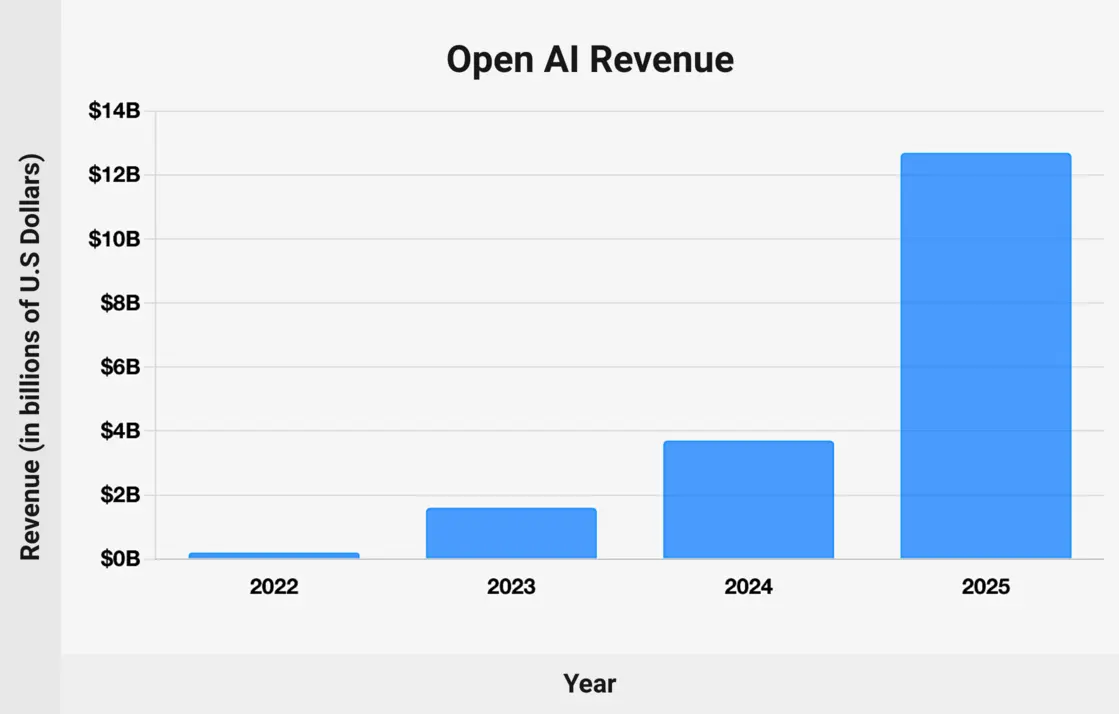
Chart: OpenAI Valuation Timeline 2020–2025
What Drives Investor Confidence?
Behind every dollar are a million decisions. So, why are investors so bullish on OpenAI?
- Enterprise Adoption: The world’s biggest names in healthcare, finance, and logistics are rapidly embedding OpenAI APIs in day-to-day operations—a visible proof of value.
- Developer Momentum: OpenAI’s developer base has soared to over 2.4 million in 2025, doubling in just two years. It’s not just hype—real people are building real products that generate real money.
- AI as Digital Infrastructure: OpenAI is now treated like a “utility”—fundamental, like internet access or cloud storage. Businesses simply can’t operate without it.
The Market Impact: Adoption and Innovation Velocity
OpenAI’s valuation and market confidence form a powerful feedback loop:
- Ecosystem Effect: Capital inflow = faster development cycles, better features, and more third-party partnerships. That means tech gets better, quicker.
- Competitive Fire: Rivals like Anthropic, DeepSeek, and Google are forced to accelerate their own innovation. The whole industry moves at “AI speed”—faster than ever before.
- Hurdle Removal: When OpenAI is seen as “the safe bet,” even risk-averse sectors (think government or insurance) green-light AI adoption confidently.
Further Perspective
According to CB Insights, enterprise adoption of generative AI increased by 74% YoY in 2024, with 60% of Fortune 500 firms launching pilot projects built on OpenAI APIs.
OpenAI Product Ecosystem Map 2025
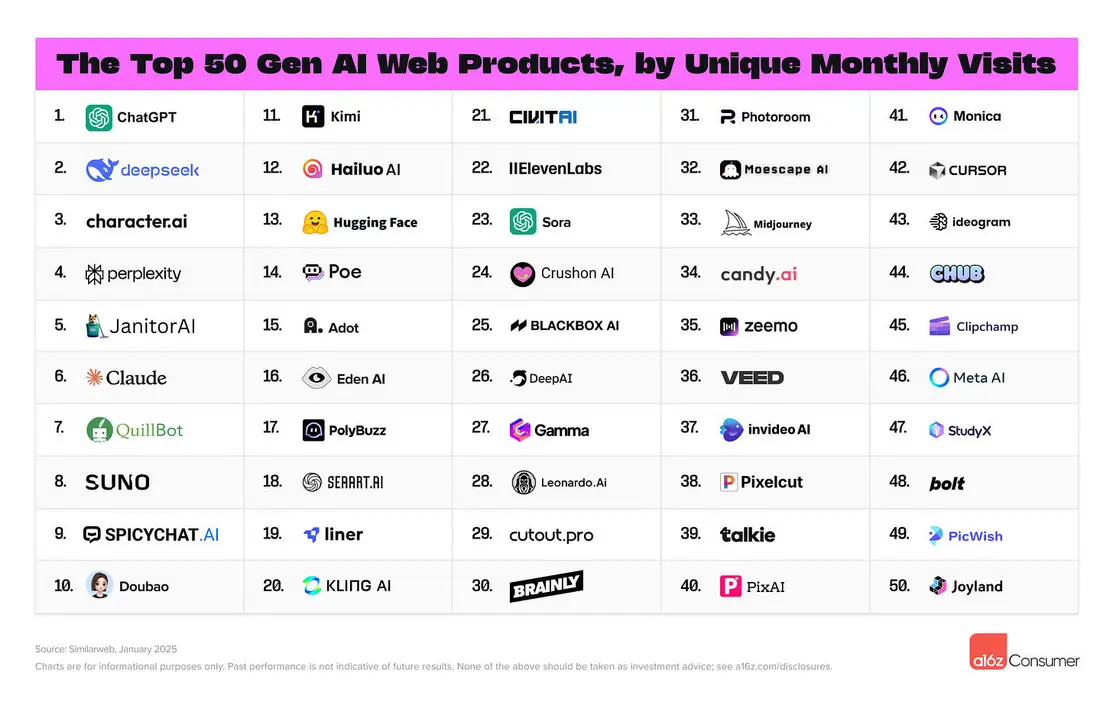
Here’s where it gets interesting—OpenAI is more than a chatbot or an image generator. In 2025, it’s a sprawling, interconnected web of cutting-edge services, compute platforms, and developer tools:
Core Foundation Models
- ChatGPT 4 Turbo, GPT-4o: The latest and most powerful generative language brains—conversational AI, document summarizing, advanced reasoning, and more.
- DALL-E 3: Not just for static images—now features video and seamless cross-modal creation (imagine going from a sketch to a full video with a single prompt).
- Codex: A coder’s dream. Write, debug, and automate software in dozens of languages, right from a chat window.
- Whisper: The gold standard in speech recognition, with dynamic translation and transcription across dozens of languages.
High-Performance Compute Partnerships
- AMD & Nvidia: Bringing in GPU muscle to train and deploy enormous AI models faster and more affordably. AMD’s clusters power a large chunk of OpenAI’s enterprise offerings, ensuring availability even during surges.
Developer and Enterprise APIs
- APIs & SDKs: Secure, high-throughput interfaces with built-in compliance (GDPR, HIPAA, SOC 2). Businesses—from banks to clinics—have trustworthy rails for AI deployment.
- Open Standards: OpenAI’s moves toward open documentation and consistent APIs are reducing lock-in risks, giving CIOs peace of mind.
Enterprise Ecosystem Connectors
- Workflow Integration: Deep plug-ins for popular SaaS products—think Salesforce, ServiceNow, and vertical-specific software platforms. This means companies can bring OpenAI’s smarts into nearly any digital workflow, easily.
- 3rd Party Marketplace: An “App Store” for extensions—translation, summarization, risk scoring, accessibility, HR, and more. The value keeps multiplying.
Internal Link 1
For a deeper dive into how real-time analytics and omnichannel capabilities are transforming enterprise operations with OpenAI’s ecosystem, read more on
Watch more
Additional Insight
According to Gartner, more than 70% of enterprise IT leaders now cite “integration readiness” as a top criterion when selecting AI vendors—a nod to the growing complexity and interconnectivity of digital business.
Comparison Chart of Leading AI Models
Gone are the days where “bigger is better” was all that mattered in AI. Today, enterprises want speed, accuracy, safety, and developer-friendly ecosystems. Here’s how OpenAI stacks up against major competitors in 2025:
| Feature/Metric | OpenAI Suite | DeepSeek AI | Anthropic Claude 3 | Google Gemini Ultra |
|---|---|---|---|---|
| NLU Speed & Accuracy | 98%/Top 1% benchmarks | 96%/Competitive | 97% | 95% |
| Multimodal Capability | Text, image, audio | Text, some image | Text only | Text, image |
| API Ecosystem | Comprehensive, stable | Early, maturing | Limited | Extensive |
| Compliance & Ethics | SOC 2, GDPR, HIPAA | GDPR, basic | Ethical focus | SOC 2, GDPR |
| Developer Community | 2.4M+, extensive docs | 300k+, strong OSS | 150k+, focused | 2M+, varied |
| ROI & Industry Adoption | Strongest (healthcare, finance, creative, retail) | High in research | Moderate/NGOs | Expansive |
Performance Takeaways
- OpenAI remains out in front with best-in-class accuracy, broad developer support, and ironclad compliance—especially crucial in sensitive industries.
- DeepSeek is the darling of the open-source crowd, excelling in flexibility and lower cost per token.
- Anthropic and Google are carving niches, with a focus on safety (Anthropic) and language diversity (Google).
Deeper Dive: Model Architecture & Training
- Scale Counts: OpenAI’s sheer size—in terms of model weights, data ingestion, and training breadth—outclasses most.
- Interpretability: Investments in “explainable AI” and transparency give OpenAI an edge with regulators and risk-averse sectors.
- Ethics and Bias Controls: OpenAI is aggressively embedding bias-mitigation and toxicity filters in deployments—critical as governments scrutinize AI safety.
External Context
A 2024 MIT study noted that firms using OpenAI’s API suite in highly regulated industries saw a 2x improvement in compliance audit pass rates relative to those using less mature, less transparent models.
Transition to Future Trends and Industry Outcomes
It’s not just about being the biggest or fastest. OpenAI is pushing the boundaries—forcing everyone to rethink how AI will shape the world in the years ahead. Here’s a taste of what the next era will look like:
Multimodal and Cross-Modal AI
- Rich Inputs/Outputs: Future models won’t just understand text—they’ll process sound, images, video, tabular data, and more. This leads to interactions that feel more…well, human.
- Real-World Uses: Doctors using AI to compare MRI images to patient charts, finance pros analyzing voice calls alongside earnings reports, and accessibility features for neurodiverse users.
Story in Action
A law firm recently trialed GPT-4o to process contracts (text) while simultaneously flagging risks in accompanying scanned images, all in one interface.
API and Developer Ecosystem Evolution
- Enterprise Controls: Fine-grained access (think role-based permissions, detailed analytics, and auto-logging) has moved from “nice-to-have” to “must-have.” Businesses need control and audit trails to manage risk.
- Marketplace Boom: Expect marketplaces of OpenAI-powered apps to swell. Soon, even small businesses could spin up custom sales tools or translation bots in a few clicks.
Expanding Partnerships and Use Cases
- Deep Integration in Key Sectors: Companies are fine-tuning OpenAI models for oncology diagnostics, regulatory compliance, and hyper-personalized customer experiences.
- Fresh Collaborations: The AMD partnership provides raw power for new model releases, and alliances with SaaS giants (like Salesforce) ensure rapid adoption.
Example
Retailers now use OpenAI plugins to predict restocking needs, while logistics firms feed real-time sensor data directly into language models for instant analysis.
Enterprise ROI and Governance Best Practices
- Measuring Value: Companies are moving beyond “automation for automation’s sake.” Instead, they track clear outputs—time saved, errors reduced, and “soft” wins like better employee morale and more inclusive experiences.
- Responsible AI: Governance is non-negotiable—ethical frameworks, transparent model selection, and user consent protocols are now table stakes for any serious deployment.
Ethical and Societal Considerations
- Bias & Accountability: OpenAI is leaning in on model interpretability and red/yellow flag systems. Enterprise deployments come with real transparency—not just black-box results.
- Global Conformity: As laws like the EU’s AI Act and China’s generative AI regulations tighten, OpenAI’s proactiveness in compliance keeps it ahead of scrutiny.
Noteworthy
A recent Forrester survey found that 83% of enterprise leaders see “AI explainability” as crucial for regulatory compliance and public trust—a clear driver for OpenAI’s transparency investments.
Conclusion: Preparing for the AI-Driven Future
No matter your field—healthcare, creative work, finance, government, or accessibility—OpenAI’s generative AI ecosystem is more than advanced or hyped. It’s proven, trusted, and ready for prime time. The $340 billion valuation isn’t just a financial headline. It signals a flywheel of innovation, adoption, and real-world transformation that’s shaping the digital economy for a generation.
Want your business to keep up—and even lead—in this new era? Here’s what you should do next:
- Pinpoint OpenAI touchpoints in your business—where can these APIs streamline, automate, or amplify real value, today?
- Benchmark rivals, but focus on maturity and ROI. A shiny new model means little without a robust compliance and developer ecosystem.
- Invest in AI literacy and governance. Upskill your team and set rules for responsible AI use—no one wants to become tomorrow’s negative headline.
Remember: Tomorrow’s market leaders are the ones who see seismic tech shifts, adapt fast, and act responsibly. The age of generative AI isn’t waiting for anyone. Now is your moment.
Internal Link 2
For a deeper look at how predictive analytics and AI-driven inventory optimization are driving competitive advantage, Watch more
👉 Our Website: https://ai-solutes.com/
👉 Our YouTube Channel: http://www.youtube.com/@ai-solutes
👉 Our Facebook Fanpage: https://www.facebook.com/profile.php?id=61576606911341
👉 Our X (Twitter): https://x.com/AISolutes
- Transform Video Marketing in 2025 with AI Templates and Automated SEO for Creators and SMBs
- Why is Ulike US Trending Worldwide? Reviewing the Ulike US At-Home Laser Alternatives
- Does HelpDesk Streamline Customer Support? Evaluating the HelpDesk Ticket Management Suite
- Framer Website Builder Review: Can You Really Build a Fast, Professional Website Without Code?
- AppSumo Lifetime Deals vs Direct Subscriptions 2025: Save Thousands on SaaS