Deciding to learn a new language is the easy part. Choosing how to learn it is where most people stall. The options range from free, game-like apps that keep you tapping but rarely speaking, to expensive private tutors and everything in between. Somewhere in the sensible middle sits Babbel — a structured, subscription-based platform that has spent nearly two decades betting that adults learn best through real grammar, real conversations and short daily lessons rather than streaks and cartoon owls.
Babbel is one of the world’s best-selling language-learning apps, teaching 14 languages through bite-sized lessons built by a team of professional linguists and voiced by native speakers. In 2026 it is also leaning hard into AI, with a new voice-led conversation partner called Babbel Speak and AI-enhanced speech recognition designed to get nervous beginners actually talking. In this review, we will break down what Babbel offers, exactly what it costs this year, how its AI speaking tools perform, how it compares with Duolingo and Rosetta Stone, and where it still falls short — so you can decide whether it earns a place in your routine and your budget.
Babbel Review 2026: Is This Structured Language App Worth Paying For?
What Is Babbel?
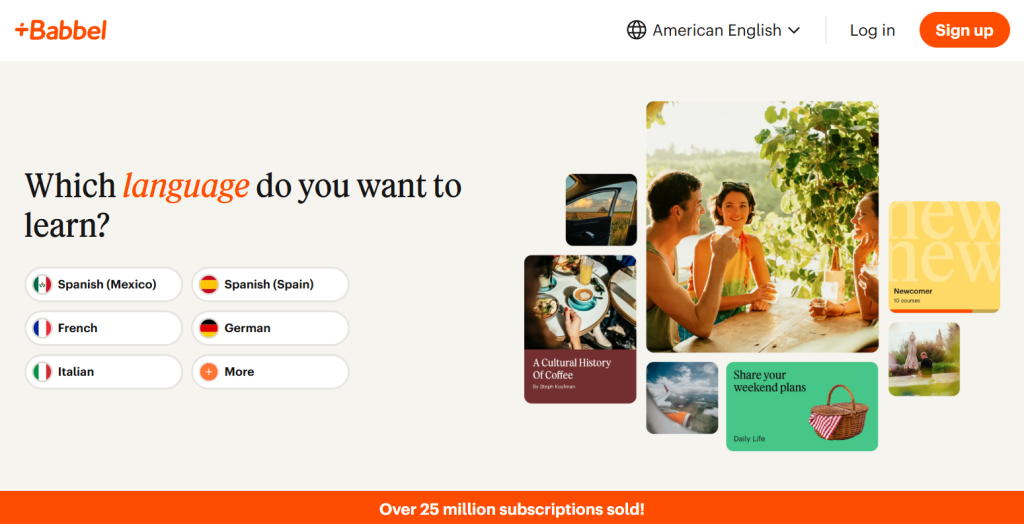
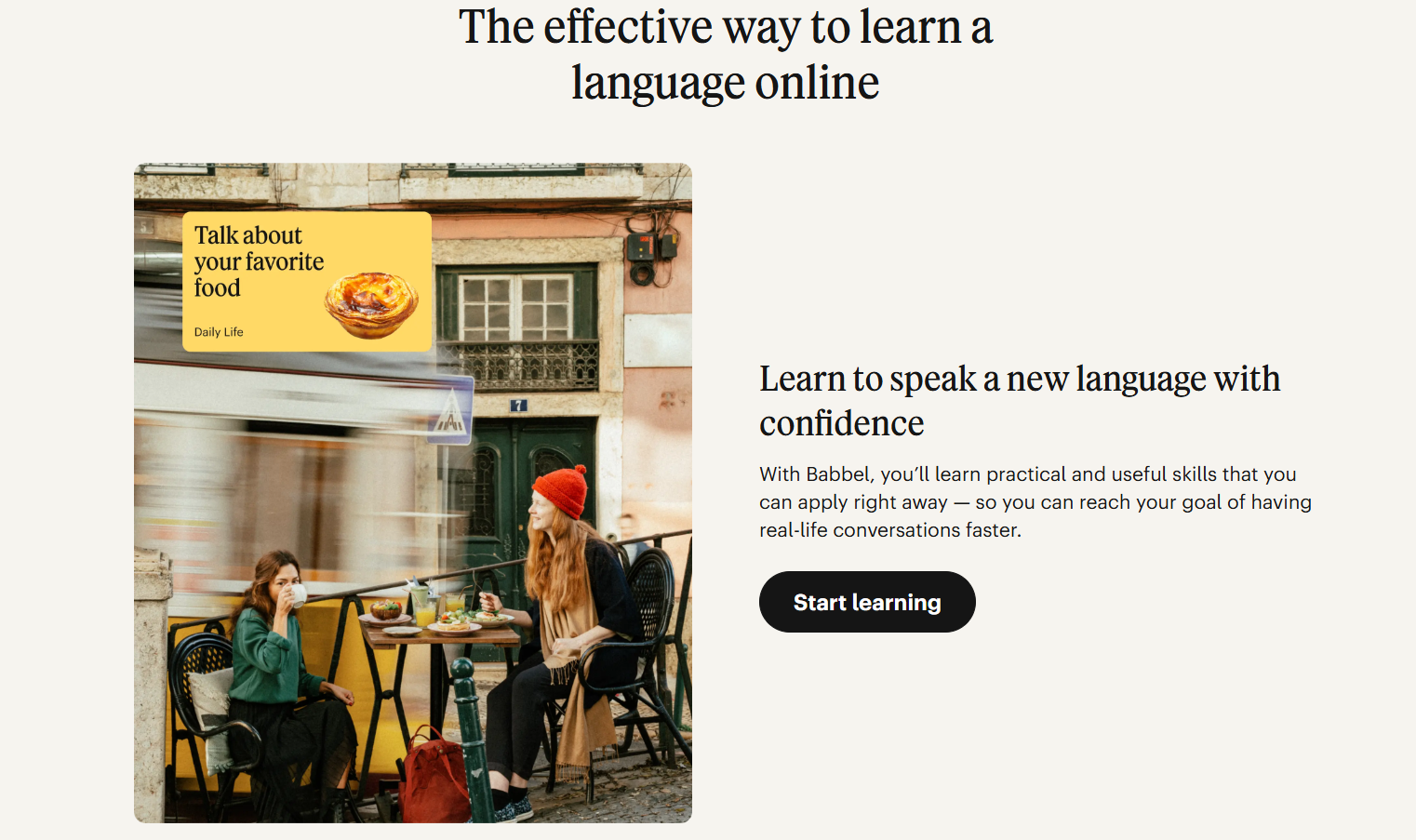
Babbel is a subscription-based language-learning platform founded in Berlin in 2007, making it one of the longest-running names in the category. It offers structured courses across 14 languages for English speakers — including Spanish, French, German, Italian, Portuguese and more — and has sold over 25 million subscriptions to date. Unlike gamified rivals, Babbel takes a deliberately traditional approach: short, focused lessons designed by more than 200 linguists, organised by real-life topics like travel, work and daily life, and built to make you conversational as quickly as possible.
The platform is available through the Babbel app on iOS and Android, a web version, and a separate Babbel for Business offering for organisations. Its effectiveness is not just marketing: independent studies from institutions including Yale University, Michigan State University and the City University of New York have examined the Babbel method and found it delivers measurable learning gains.
Recently, Babbel has been repositioning itself as an AI-forward learning tool. Under new CEO Tim Allen, the company has been pushing what it calls AI-driven growth, headlined by Babbel Speak — an AI conversation partner that launched in open beta in September 2025 — alongside AI-enhanced speech recognition that gives learners instant pronunciation feedback. The core courses remain human-crafted, but AI now powers much of the speaking practice.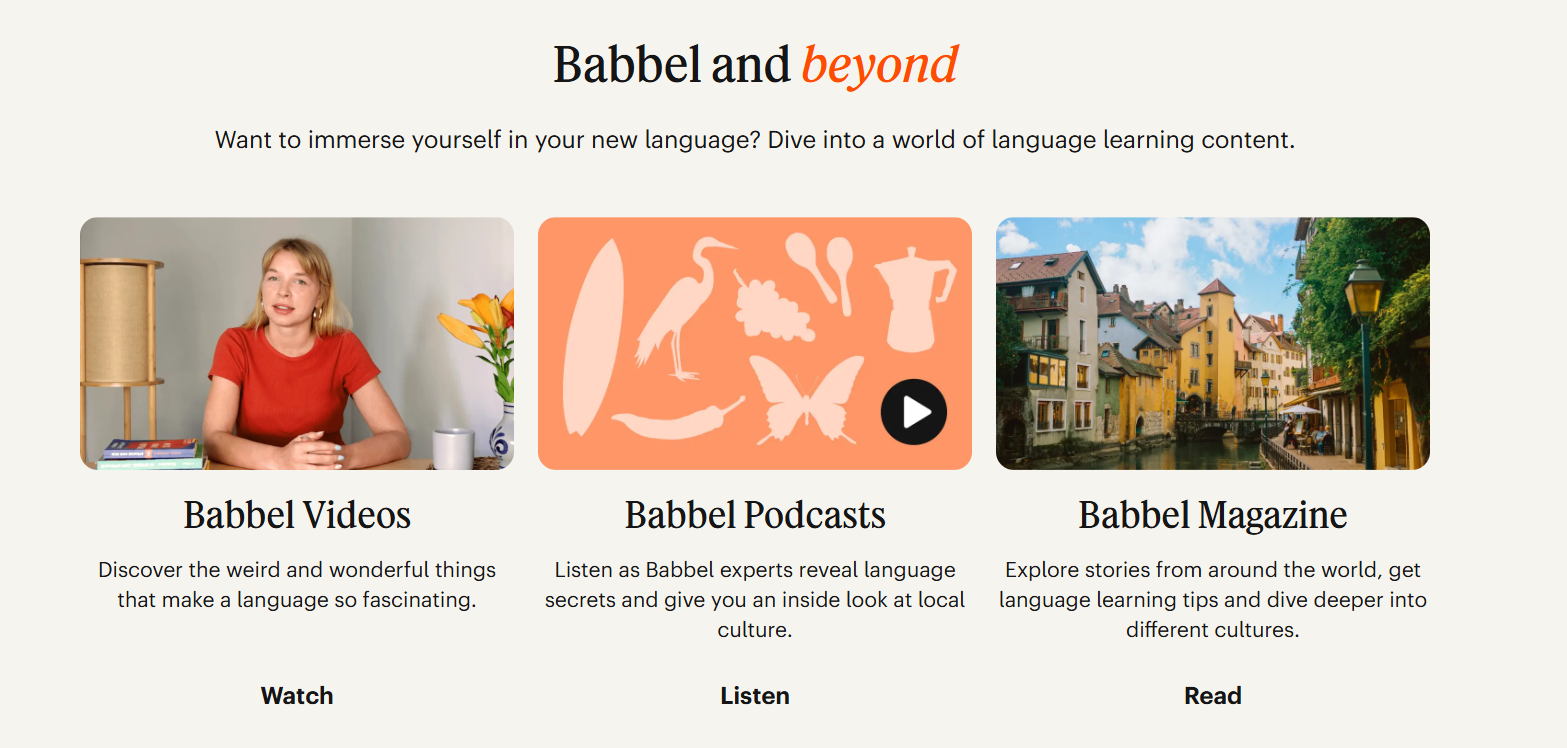
Why Babbel Stands Out
With dozens of language apps competing for attention, Babbel earns its place through a few clear strengths that suit serious adult learners.
A genuinely structured, grammar-first method: Where many apps drill isolated words, Babbel teaches you why sentences work, building grammar understanding alongside vocabulary. That foundation is what lets you eventually construct your own sentences rather than just recognise memorised phrases, and it is the single biggest reason grammar-minded learners prefer it.
Practical, real-life content: Every lesson centres on situations you will actually encounter — ordering food, introducing yourself, navigating a trip, handling a work conversation. The dialogues are voiced by native speakers and include cultural context, so what you learn transfers directly to the real world rather than to a points leaderboard.
AI speaking practice that lowers the fear: The new Babbel Speak feature gives beginners a calm, judgment-free space to practise talking with an AI partner. For many people, speaking is the most intimidating part of a new language, and having a low-stakes way to make mistakes and get feedback is a genuinely valuable addition that most structured courses lack.
Short lessons that fit real schedules: Bite-sized 10-to-15-minute lessons are built for busy adults. It is realistic to fit Babbel into a commute or a coffee break, and the low daily time commitment is a big part of why users report sticking with it and making steady progress.
Key Features That Matter
Beyond the headline pitch, these are the features that define what learning with Babbel actually feels like day to day.
Bite-Sized, Expert-Designed Lessons
The backbone of Babbel is its library of short, sequential lessons across 14 languages, each created by professional linguists rather than crowdsourced or machine-generated. Lessons start by asking about your current level, goals and interests to build a personalised path, then move through vocabulary, grammar and reading in a logical order. The content is practical and focused, which keeps each 10-to-15-minute session feeling purposeful.
Babbel Speak: AI Conversation Practice
Launched in open beta in September 2025, Babbel Speak is the app’s AI-powered, voice-led speaking trainer, accessed through a dedicated tab. You pick a real-life scenario, an AI voice speaks first, and you talk back — with the freedom to ask it to slow down, repeat, translate or offer a hint whenever you freeze. After each conversation you get feedback on the tasks you completed and the vocabulary you used. It is currently available to subscribers learning English, Spanish, French, Italian and German on the mobile app. It is worth noting the experience is guided and scenario-based rather than fully open-ended, so it is best thought of as a confidence on-ramp for beginners rather than a substitute for free-flowing conversation.
AI Speech Recognition and Pronunciation Feedback
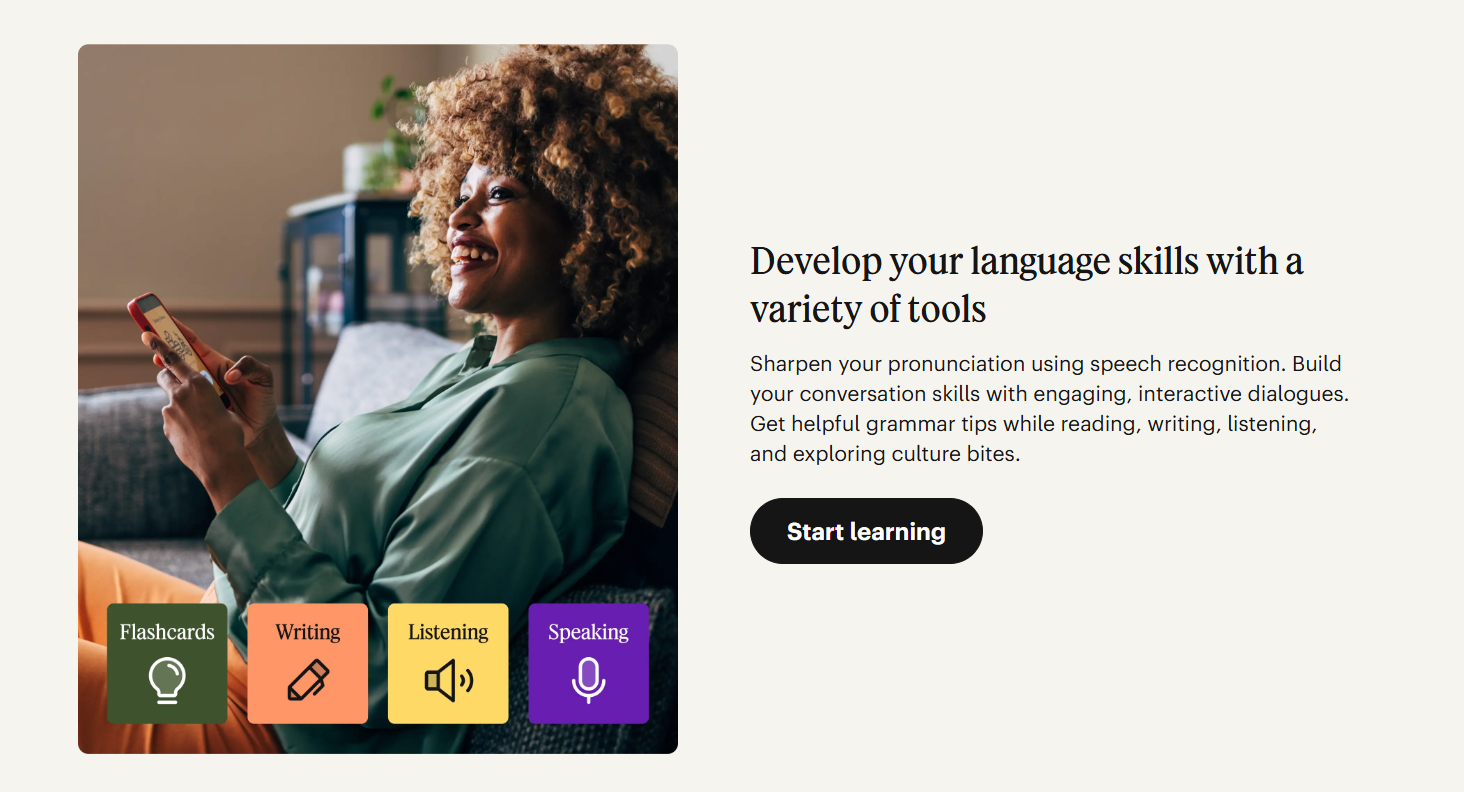
Built into regular lessons, Babbel’s AI-enhanced speech recognition listens to your pronunciation and offers tailored feedback. The technology was developed with Babbel’s linguists and trained on a wide range of accents, dialects and voice ranges, so it is designed specifically for the needs of learners rather than simply trying to understand commands. It helps you correct pronunciation on the spot, though it is fair to say Babbel’s speech feedback is less granular than specialist pronunciation apps.
Personalised Review and Spaced Repetition
Babbel schedules review sessions based on what you have learned and where you are struggling, using spaced-repetition techniques to move vocabulary from short-term into long-term memory. Many users single out the review feature as a favourite, because it lets you keep revisiting your specific mistakes until they stick rather than endlessly repeating material you already know.
Podcasts, Games and Culture Content
Beyond core lessons, Babbel offers supplementary material to keep things varied — short podcasts pitched at your level, quick games to reinforce vocabulary, and culture and grammar magazines that add context to what you are learning. These extras help break up study and give you different ways to engage with the language when you do not feel like a standard lesson.
Offline Learning and Cross-Device Sync
You can download lessons ahead of time to study without an internet connection — ideal for flights and commutes with patchy signal — and your progress syncs across devices, so you can start a lesson on your phone and pick it up later on the web. That flexibility makes it easy to keep a daily habit going wherever you are.
Babbel Pricing Explained
Babbel is not free like Duolingo — once you finish the free first lesson, continuing requires a paid subscription. Pricing is tiered by length, and the per-month cost drops sharply the longer you commit. Here are Babbel’s standard US list prices, which you should treat as a ceiling rather than what you will actually pay.
| Plan | Price (US, approx.) | Best For |
|---|---|---|
| 1-Month | ~$17.95 / month | Trying Babbel short-term or prepping for a single trip; the most expensive per month |
| 6-Month | ~$13.50 / month | A medium-term commitment to one language |
| 12-Month (Annual) | ~$8.95 / month (often 50% off) | The best value for most learners committing to one language for a year |
| Lifetime | ~$299 one-time (list up to ~$599; often on sale) | Committed learners who want all 14 languages forever with no renewals |
Babbel also runs deep discounts for specific groups: students can get around 65% off a three-month plan, while active military, veterans, educators and healthcare workers can get six months for roughly $36 (about $6 per month). There is also a newer Babbel Group Plan — the first shared subscription in the company’s history — letting up to six users learn under one plan with independent progress. Note that the old seven-day free trial has been discontinued; today you get the first lesson of each course free plus a 20-day money-back guarantee.
A note on the figures: these are US list prices accurate as of our research date, and they vary by language, region, plan length and the promotion running when you visit. Subscriptions also auto-renew at the end of the term, sometimes at a higher rate than your introductory price, so set a reminder before your renewal date and always confirm the live price at checkout before you buy.
How Babbel Compares
Babbel competes with a broad field, from the free-and-gamified Duolingo to the immersion-focused Rosetta Stone and the audio-first Pimsleur. Each takes a different philosophy, so the right pick depends on how you like to learn. Here is how they stack up.
| Feature | Babbel | Duolingo | Rosetta Stone | Pimsleur |
|---|---|---|---|---|
| Approach | Structured grammar + conversation | Gamified, bite-size | Full immersion, no translation | Audio-first |
| Free option | First lesson only | Full free tier (with ads) | Trial only | Short trial only |
| Price (approx.) | ~$9/mo annual | Free or ~$7+/mo premium | ~$12/mo or ~$179 lifetime | ~$15-21/mo |
| AI speaking practice | Yes (Babbel Speak, beta) | Yes (higher tiers) | Limited | Limited |
| Languages | 14 | 40+ | 25 | 50+ |
| Best for | Structured adult learners | Casual, habit-building | Immersion fans | Commuters and audio learners |
The takeaway: if you want structured, grammar-aware lessons with practical dialogue and a bit of AI speaking practice, Babbel is one of the strongest picks and sits at a fair price on the annual plan. If cost is your priority and you like a game-like habit, Duolingo’s free tier is hard to beat. Rosetta Stone suits immersion purists who want to think in the language, and Pimsleur is ideal if you learn best by ear on the move. Babbel’s sweet spot is the committed adult who wants real progress without either the gamification of Duolingo or the price of a private tutor.
Pros and Cons of Babbel
No language app is perfect, so here is the honest, balanced view of where Babbel delivers and where it frustrates.
Excellent structured method: The grammar-first, real-life approach genuinely builds usable skills, and studies from major universities back its effectiveness.
Fair, flexible pricing with big discounts: At roughly $9 a month on the annual plan — often less in a sale — it is one of the cheaper ways to get expert-designed lessons, with a Lifetime option for the committed.
Useful AI speaking tools: Babbel Speak and AI speech recognition add a low-pressure way to practise talking and pronunciation that most structured courses lack.
Short, sustainable lessons: Ten-to-fifteen-minute sessions fit real schedules, which helps people actually keep the habit and make steady progress.
Strong review system: Spaced-repetition review targets your specific mistakes and reinforces learning over time, which users consistently praise.
Not free: Beyond the first lesson, Babbel requires payment, so budget-first learners who want a permanent free option will prefer Duolingo.
One language per subscription: Standard plans cover a single language, so studying more than one means multiple subscriptions or the Lifetime plan.
Speaking practice is guided, not open-ended: Babbel Speak is scenario-based and best for beginners; advanced learners wanting free-flowing conversation will outgrow it and may prefer a dedicated AI tutor.
Progress can plateau: Some learners find the content slows or repeats beyond beginner and low-intermediate levels, and it is less suited to reaching advanced fluency.
No live classes for individuals: Babbel Live’s group classes for individual consumers closed in July 2025, so live tutoring is now only available through Babbel for Business.
Who Should Use Babbel?
Babbel is an ideal match for beginner and low-intermediate learners who want a structured, self-paced course rather than a game. It suits busy adults who can commit 10 to 15 minutes a day, travellers preparing for a trip, and anyone who values clear grammar explanations and practical, real-world dialogue. It is also a strong pick for professionals building a language for work, and the newer Group Plan makes it appealing for a couple, family or small team who each want their own learning path under one subscription.
It is a weaker fit for a few groups. Anyone wanting a completely free option should look at Duolingo. Advanced learners chasing full fluency or open-ended, unscripted conversation will likely outgrow Babbel and may prefer live tutoring or a dedicated AI conversation tutor. And learners who thrive on heavy gamification and daily streaks may find Babbel’s calmer, more academic style less motivating.
How to Get Started with Babbel
Getting started with Babbel takes only a few minutes, and you can sample it before paying. Here is the step-by-step process.
- Go to the Babbel website or download the app, create a free account with your email, and choose the language you want to learn.
- Answer a few quick questions about your current level, goals and interests so Babbel can build a personalised learning path.
- Complete the free first lesson to get a feel for the lesson style, pacing and interface before committing.
- If you want to continue, choose a subscription — ideally on the website rather than the app store to avoid inflated fees — and pick the plan length that matches your commitment.
- Set a daily reminder and build a short study habit, and note your renewal date so you can decide before the subscription auto-renews.
- Open the Babbel Speak tab to practise real conversations with the AI partner, and use the review sessions to lock in what you have learned.
Future Outlook and Final Assessment
Babbel’s direction under new leadership is clearly toward AI-driven learning. Babbel Speak brought AI conversation practice into the app, AI-enhanced speech recognition sharpens pronunciation feedback, and the company has signalled that this is the start of a broader AI push rather than the end. Combined with its long track record, research-backed method and a growing set of options like the new Group Plan, Babbel remains a serious, well-resourced player as the language-learning market gets more competitive and more AI-driven.
The honest caveats are worth repeating. Babbel is a paid product with no permanent free tier, each standard subscription covers only one language, its AI speaking practice is still guided rather than fully open-ended, and live classes for individuals are no longer offered. None of these are dealbreakers for the right learner, but they matter when weighing Babbel against free apps or newer AI tutors built around unscripted conversation.
Conclusion
Babbel remains one of the most dependable language-learning platforms available in 2026. It pairs a proven, grammar-first method and expert-designed lessons across 14 languages with genuinely useful new AI tools in Babbel Speak and speech recognition, all at a fair price that is almost always discounted. It is not free, it limits you to one language per subscription, and advanced learners chasing open-ended conversation may outgrow it — but for structured, practical, sustainable progress, it is a genuinely strong choice for serious adult learners.
If you want to move beyond memorising words to actually understanding and speaking a language, and you prefer substance over streaks, Babbel is well worth the free first lesson and a proper trial through its money-back window. Pick the right plan for how you learn, build a small daily habit, and it quietly becomes one of the most effective tools in your routine. At AI Solutes, that is exactly our goal: helping you find the right tools and make everything easy.
Ready to go from first words to real conversations? Give Babbel a proper try.
Explore more honest reviews, tutorials and tool comparisons to find the right tech for the way you work and live — at AI Solutes, where we make everything easy.
👉 Try Your First Lesson Free: Get Started with Babbel
👉 Our YouTube Channel: youtube.com/@ai-solutes
👉 Our Facebook Fanpage: Facebook
👉 Our X (Twitter): @AISolutes
- How Do We Make Customers Love Coming Back? Exploring Omnisend’s Gentle Retention Tools
- Unlocking the Viral Potential of Your Content: How Opus Quietly Repurposes Long-Form Videos
- Unlock the Future of Customer Experience with Freshworks 2025: AI, Omnichannel Support, and Business Growth
- AppSumo Lifetime Deals vs Direct Subscriptions 2025: Save Thousands on SaaS
- Unlock Salon-Grade Hair at Home with Christophe Robin: Luxury Scalp Scrub Rituals and Masks