Facebook groups bury your best content under an algorithm you don't control, and traditional course platforms like Kajabi or Thinkific bury your community under a dozen menus nobody clicks. Skool was built to solve both problems at once: one clean space where a discussion feed, a classroom of courses, a calendar of live events, and a genuinely addictive points-and-leaderboard system all live together. Founded in 2019 by Sam Ovens and Daniel Kang, and propelled into mainstream creator awareness after Alex Hormozi's 2024 investment and the now-famous Skool Games competition, Skool has become one of the fastest-growing community platforms for coaches, cohort programs, and creators who believe engagement — not polished branding — is what actually keeps members paying.
But Skool's deliberate simplicity is also its biggest trade-off. There's no quiz builder, no certificates, no email marketing, no custom domain, and a Trustpilot score that sits at an uncomfortable 1.9 out of 5. This 2026 review breaks down exactly what Skool does well, the real pricing and transaction fee math (which matters more than the sticker price), how it stacks up against Circle, Kajabi, and Mighty Networks, the honest limitations creators keep running into, and exactly who should — and shouldn't — build their community on it.
Skool Review 2026: The Community-First Course Platform That Makes Engagement the Product
Overview and Background
Skool was founded in 2019 by Sam Ovens, who also built the consulting business Consulting.com, alongside co-founder and CTO Daniel Kang. The platform's founding premise was deliberately narrow: instead of piling on features the way most all-in-one course platforms do, build a community-first product where discussion, courses, and events live in a single, distraction-free space. Skool opened to the public beyond its beta users in 2022 and grew steadily until 2024, when entrepreneur and investor Alex Hormozi made a significant investment and helped launch the Skool Games, a quarterly competition where community owners compete to grow their groups for cash prizes and recognition. That partnership pushed Skool firmly into mainstream creator awareness.
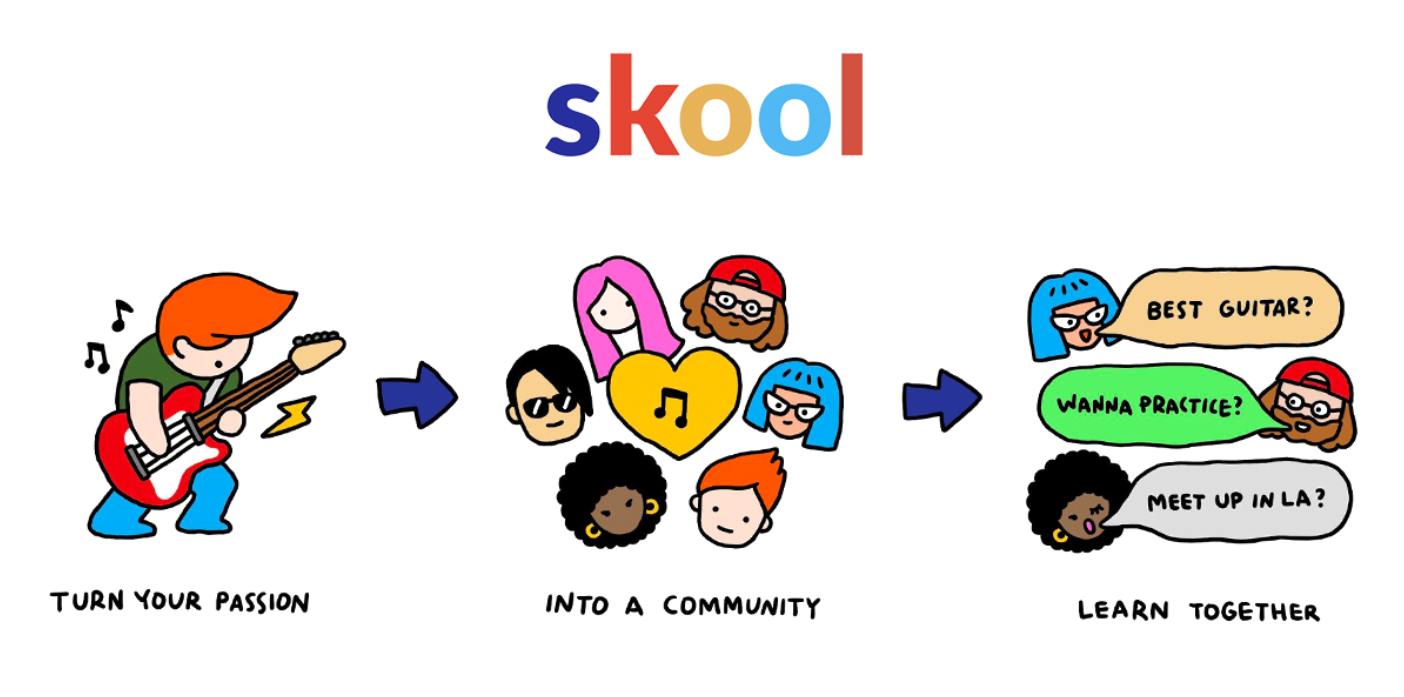
Structurally, a Skool community combines four core pieces: a Facebook-group-style discussion feed, a Classroom area for unlimited courses (video, text, and file-based), a Calendar for live events and webinars, and a gamification layer built on points and levels that rewards active participation. None of these individual pieces are new to the category — what Skool is actually known for is how tightly they're integrated and how little setup is required to get a working community live.
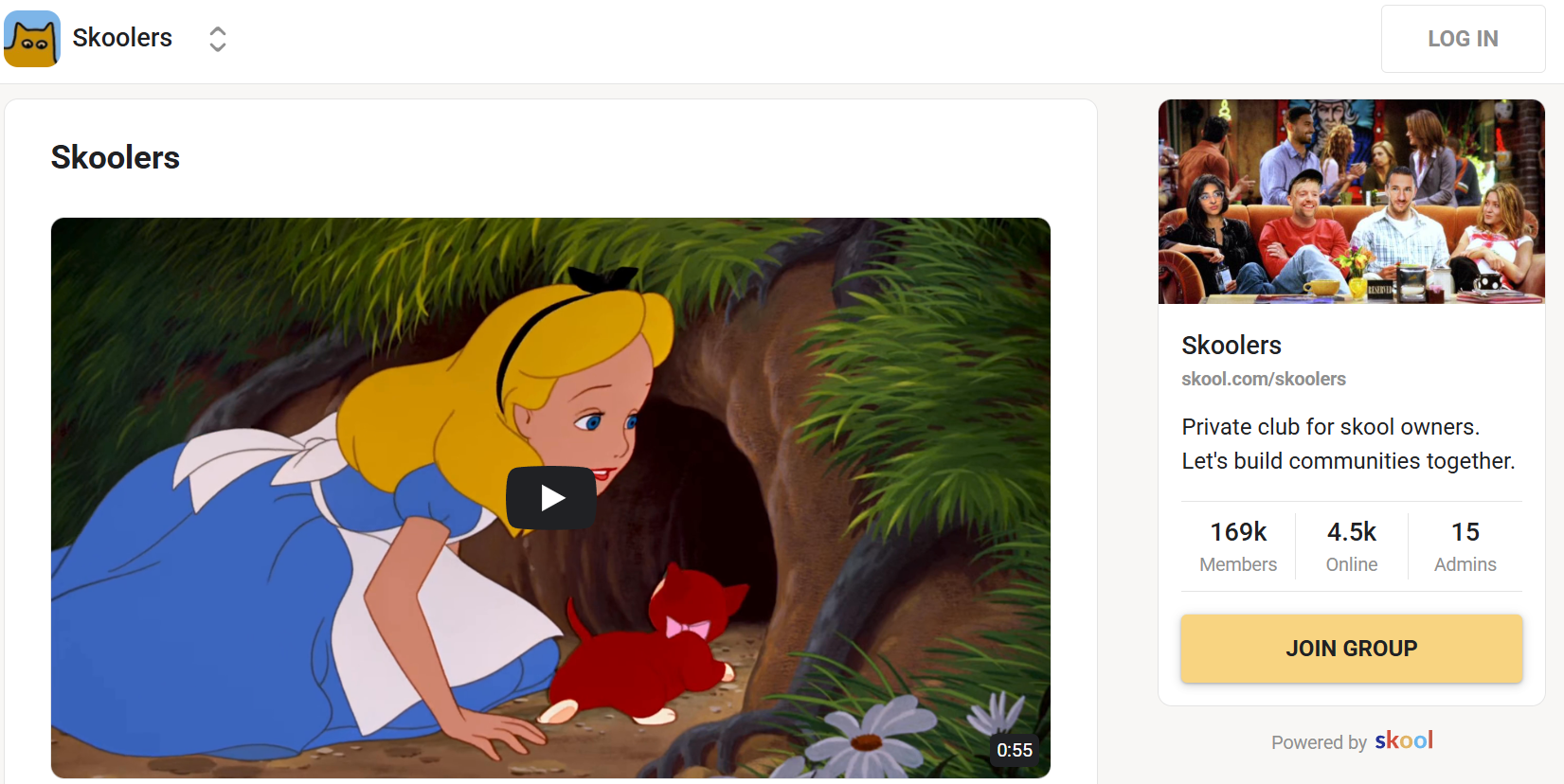
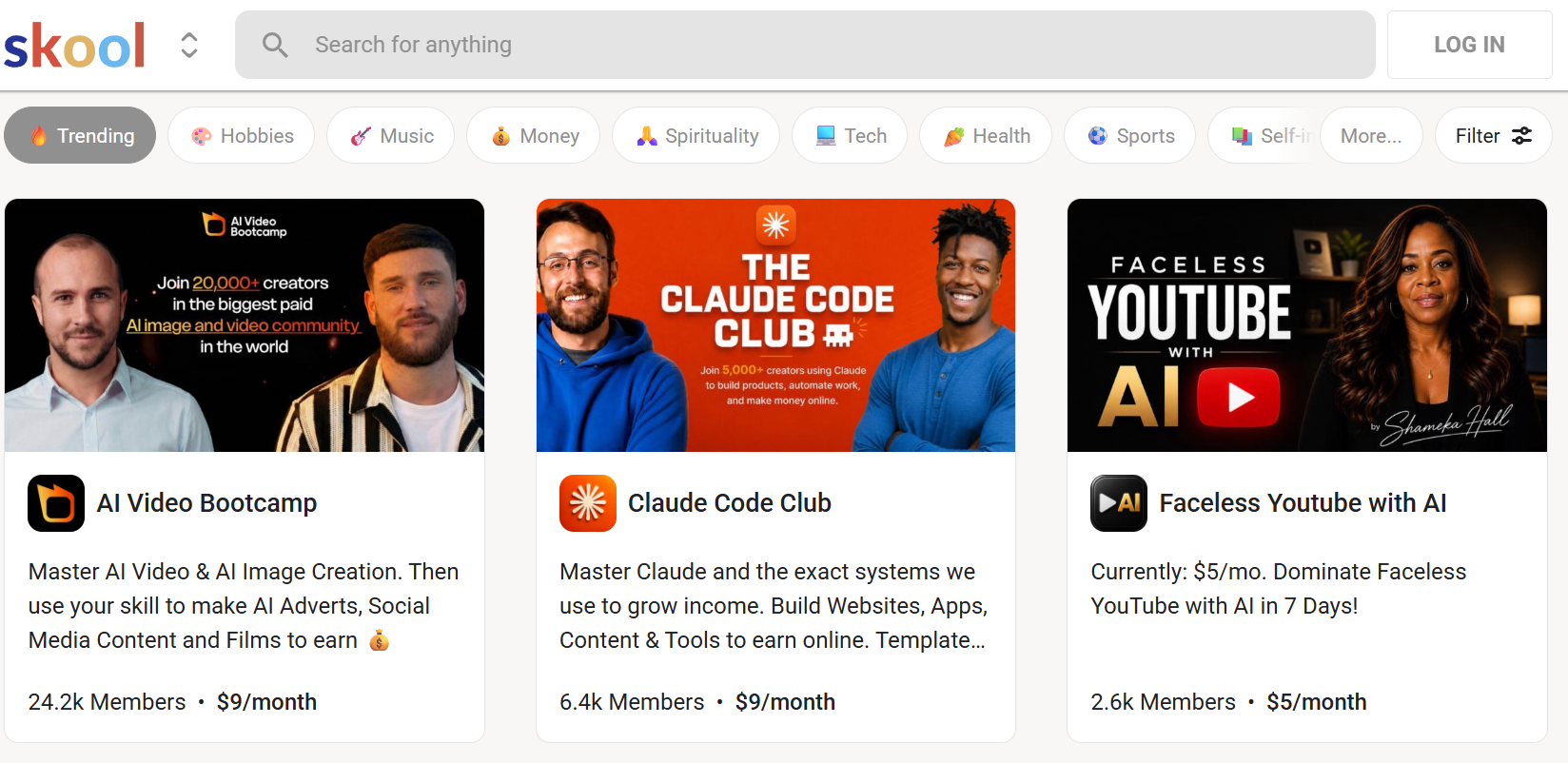
Skool also runs a built-in Discovery page where prospective members can browse and find communities by category and popularity — a meaningful acquisition advantage over platforms like Circle or Kajabi, where you're entirely responsible for driving your own traffic. The platform offers native iOS and Android apps that largely mirror the desktop experience, and it processes payments through its own built-in system, so creators don't need to separately configure Stripe or PayPal to start charging members.
Why Skool Stands Out in 2026
Gamification that genuinely drives engagement: The points-and-leaderboard system is widely cited as Skool's real differentiator. Multiple independent reviews report members staying active noticeably longer than on traditional forum or course platforms, precisely because progress and status are visible and rewarded in real time.
Set up a working community in under an hour: Reviewers consistently describe launching a functioning group — feed, courses, and an event calendar — with minimal configuration, a sharp contrast to the multi-step onboarding of feature-heavy competitors like Kajabi.
Genuinely competitive transaction fees at scale: On the Pro plan, Skool charges no platform fee at all on individual sales up to $899 — you only pay standard Stripe processing, which Skool itself absorbs the international card and subscription surcharges on. Compare that to Discord's 16% or Patreon's 10%, and Skool's fee structure becomes a real financial advantage once your community reaches meaningful revenue.
A built-in discovery channel for new members: Skool's Discovery page actively surfaces communities to prospective members browsing by topic and popularity, functioning as a free acquisition channel most competing platforms simply don't offer.
Flexible monetization models added in 2026: Where Skool used to force creators into a single recurring-subscription model, it now supports Free, Subscription, Freemium, Tiered, and one-time “Buy Now” course purchases within the same group settings — a meaningful expansion that matches how creators actually sell in 2026.
A genuinely low-cost entry point: The Hobby plan at $9/month makes testing a real community viable for creators who aren't ready to commit to Kajabi's $149-plus monthly starting price or Thinkific's $49-plus tiers.
Key Features and Technology
Skool's feature set is intentionally narrow, built around a few pillars executed well rather than a sprawling toolkit.
Community Feed and Member Directory
The discussion feed is deliberately clean and distraction-free, styled closer to a Facebook group than a traditional forum. Member profiles support peer-to-peer discovery within the community, and posts, comments, and reactions all feed into the gamification engine that assigns points and levels.
Classroom and Video Hosting
You can host unlimited courses within a single community, mixing video, text, and file-based content. Skool added native video uploads in the last year, removing the need to route video through YouTube or Vimeo embeds. That said, video analytics remain basic — you can't dig into detailed view analytics or gate specific videos behind completed actions the way a dedicated LMS would allow.
Calendar and Events
A built-in calendar handles live calls, webinars, and events, giving members one place to see what's coming up alongside their course progress and community activity. Skool doesn't include native video conferencing, though, so live calls still route through an external tool like Zoom.
Payments and Monetization
Skool handles billing, refunds, and cancellations natively, and the Pro plan includes a built-in affiliate/referral system that lets members earn commissions for bringing in new subscribers. The 2026 monetization update adds freemium tiers, multiple pricing levels, and standalone one-time course purchases alongside the original subscription model.
Pricing, Plans, and Package Structure
Skool's pricing is genuinely simple on the surface — two plans, both with full access to the core feature set — but the real cost depends heavily on your transaction volume, since the platform fee is where most of the actual cost lives. Each community requires its own separate subscription; running two communities means paying twice.
| Plan | Price | Transaction Fee | Best For |
|---|---|---|---|
| Hobby | $9/month, one admin | 10% + $0.30 per transaction | Testing a community below ≈$1,200/month revenue |
| Pro | $99/month, unlimited admins | 0% Skool fee up to $899/sale (standard Stripe processing only); 3.9% + $0.30 above $899 | Established communities above ≈$1,200/month revenue |
The break-even point between the two plans generally lands around $1,200 to $1,400 in monthly membership revenue. Below that, Hobby's lower base price wins despite the steep 10% fee. Above it, Pro's near-zero fee on transactions under $899 more than makes up for the $90 price difference, plus you unlock unlimited admins, custom URL options, webhooks, boosted Discovery placement, and detailed analytics. Note the tiered Pro fee structure: sales above $899 (common for high-ticket coaching or mastermind offers) get charged a 3.9% platform fee rather than the advertised near-zero rate, which is easy to miss when comparing plans at a glance.
How Skool Compares to Alternatives
| Platform | Starting Price | Core Focus | Best For |
|---|---|---|---|
| Skool | $9/month | Community + courses + gamification | Coaches and cohort programs prioritizing engagement |
| Circle | Similar range to Skool | Community with more design customization | Creators who want more branding control |
| Kajabi | ≈ $149/month | All-in-one marketing + courses (community as add-on) | Businesses needing funnels, email automation, and a website builder |
| Mighty Networks | Comparable Business-tier pricing to Skool Pro | Community with more app customization | Creators wanting a branded native mobile app |
vs. Circle: Circle offers more design flexibility and a few more bells and whistles at broadly similar pricing to Skool, making it a serious alternative if branding control matters more to you than Skool's gamification engine. If community engagement through points and leaderboards is central to your model, Skool still has the edge on out-of-the-box stickiness.
vs. Kajabi: Kajabi is a genuinely all-in-one platform — email marketing, funnels, a website builder, affiliate management — and its community feature (built on the acquired Vibely product) has improved but still feels secondary to its marketing tools. If community is your actual product rather than a supporting feature, Skool's focus wins; if you need the full marketing stack under one roof, Kajabi's higher price buys real breadth Skool doesn't offer.
vs. Mighty Networks: Mighty Networks' Business plan lands at essentially the same price as Skool Pro but adds the ability to launch a fully branded native mobile app under your own name — a meaningful differentiator if brand identity matters to your business model, at the cost of some of Skool's tighter integration between community and course delivery.
Pros and Cons
What Creators Love
Engagement that other platforms genuinely can't match: The combination of a clean feed and visible gamification consistently produces members who stay active longer and complete more of what's asked of them, which is the entire point of a community-driven business.
Radically fast setup: Creators repeatedly describe going from signup to a live, functioning community in under an hour, with no complex configuration standing between them and their first members.
A built-in acquisition channel: The Discovery page and Skool Games ecosystem give creators exposure to potential members that competing platforms simply don't provide without separate marketing spend.
Fee structure that rewards scale: Once a community clears roughly $1,200 to $1,400 in monthly revenue, Skool's Pro plan fee structure becomes genuinely competitive against Discord, Patreon, and even Circle.
Limitations Worth Knowing
No formal LMS features at any price: Quizzes, graded assessments, drip content, assignments, and completion certificates are absent from both plans. Training organizations needing compliance-grade completion tracking will hit a hard wall Skool has no plan to fill.
Branding and customization are deliberately limited: Every community lives under a skool.com subdomain — there's no custom domain on any plan — and design control is intentionally rigid compared to WordPress-based or Circle-style platforms.
A concerning Trustpilot score and cancellation complaints: At 1.9 out of 5 on Trustpilot with an unclaimed profile, and specific reports of difficulty canceling subscriptions after free trials, this is a genuine red flag worth weighing even against the platform's strong creator-community reputation elsewhere.
Limited data portability: Exporting your member data, content, and community history if you decide to leave is reportedly limited. Before building a business on Skool for years, it's worth requesting a test export to see exactly what you'd be able to take with you.
No native email marketing, CRM, or funnel tools: You'll still need a separate platform like ConvertKit, Mailchimp, or GoHighLevel for your broader email list and marketing automation — Skool handles the community and course delivery only.
Who Should Use Skool
Coaches and cohort program leaders: If your business model depends on members showing up, engaging with each other, and completing action steps together, Skool's gamification and tight community-course integration are purpose-built for exactly that.
Creators validating a new community idea: The $9/month Hobby plan and 14-day free trial make it genuinely low-risk to test whether a paid community will resonate with your audience before committing serious budget.
Established communities scaling past $1,200/month: The Pro plan's near-zero transaction fee on sub-$899 sales makes Skool one of the more cost-efficient options in the category once revenue reaches meaningful scale.
Not the right fit: Training organizations needing certificates or formal assessment tracking, businesses wanting deep branding and a custom domain, anyone selling physical products, and creators who need a true all-in-one marketing suite with email automation and funnels built in should look at Kajabi, Thinkific, or a dedicated LMS instead.
Getting Started: Step by Step
- Start the 14-day free trial. A credit card is required upfront, so set a calendar reminder before your trial converts to a paid plan if you're still deciding.
- Choose your monetization model. Decide between Free, Subscription, Freemium, Tiered, or one-time Buy Now pricing based on how your audience actually buys — this is set inside group settings and can be adjusted as your model evolves.
- Build your Classroom. Upload your first course using Skool's native video hosting, organizing content into logical modules even without drip-content or quiz features to lean on.
- Set up your Calendar. Schedule your first live call or webinar, and connect an external tool like Zoom for the actual video conferencing since Skool doesn't include this natively.
- Invite your first members and seed the feed. Post a handful of discussion threads yourself before inviting members, since an empty feed is the fastest way to kill early momentum.
- Decide on Hobby vs. Pro based on real revenue math. Run your expected monthly revenue against both fee structures rather than defaulting to the cheaper sticker price.
- Install the mobile app and enable push notifications. This is one of the simplest levers for keeping engagement high between live sessions.
Tips for Getting Maximum Value
Seed your community's feed with genuine, valuable posts before you invite your first paying members — an active-looking feed from day one dramatically improves early retention. Lean into the points and leaderboard system deliberately rather than leaving it on autopilot; creators who tie specific point rewards to the actions that matter most (completing a course module, showing up to a live call) see noticeably stronger engagement than those who treat gamification as a background feature. If you're running a high-ticket offer above $899, budget for the tiered 3.9% Pro fee explicitly rather than assuming the advertised near-zero rate applies across the board. Keep your email list on a separate platform from day one, since Skool won't ever notify members outside the platform itself — you need your own channel to re-engage anyone who drifts away from the feed. And if data portability matters to your long-term plans, request a test export early rather than after you've built three years of community history you can't easily move.
Future Outlook and Final Assessment
The tailwinds favor Skool and community-first platforms broadly. In an environment saturated with AI-generated content, learners increasingly value genuine human connection and peer accountability over polished, passive video courses — exactly the shift Skool was built around before it became fashionable to say. The platform's 2026 monetization update, native video uploads, and continued investment from Hormozi's ecosystem all suggest a company doubling down on its community-first bet rather than chasing feature parity with all-in-one competitors.
The honest caveats remain real: the missing LMS features aren't coming anytime soon given how deliberate Skool's simplicity philosophy is, the branding and export limitations are structural rather than incidental, and the Trustpilot concerns deserve a genuine second look before you build a business on the platform for years. Within those boundaries, Skool delivers exactly what it promises for its core audience — a community platform where engagement, not administrative overhead, is the product.
Conclusion
Skool made a deliberate bet that most course platforms got backwards: engagement, not feature count, is what actually keeps a paid community alive. That bet has paid off for coaches, cohort programs, and creators who want their members showing up and interacting rather than passively consuming another video course, and the platform's fee structure and built-in discovery channel become genuine financial advantages once your community reaches real scale. Just go in with clear eyes about what's missing — certificates, deep branding, email marketing, and easy data portability aren't part of the deal — and confirm the cancellation and export terms before you build for the long haul. Get that trade-off right, and Skool can make community the actual center of your business, making everything easy, one engaged member at a time.
Ready to build a community that actually stays engaged?
Explore more honest reviews, tutorials and tool comparisons to find the right tech for the way you work and live — at AI Solutes, where we make everything easy.
👉 Open Free Account: Get Started with Skool
👉 Our YouTube Channel: youtube.com/@ai-solutes
👉 Our Facebook Fanpage: Facebook
👉 Our X (Twitter): @AISolutes