If you've ever paid for a desk you barely used, signed a multi-year office lease that outlived your headcount plans, or burned an afternoon hunting for a quiet place to take a client call between flights, you already understand the problem WeWork was built to solve. WeWork is the world's most recognizable flexible-workspace brand — a global platform of coworking floors, private offices, dedicated desks, day passes, and on-demand meeting rooms that lets professionals and teams rent exactly the space they need, for exactly as long as they need it, without the capital cost and rigidity of a traditional lease. After one of the most dramatic corporate turnarounds in recent memory — a 2023 bankruptcy followed by a 2024 restructuring under new ownership — the company now runs nearly 600 locations across 37 countries, spans roughly 45 million square feet, serves more than 500,000 members from solo freelancers to Fortune 100 enterprises, and in 2026 was even named to the TIME100 Most Influential Companies list for its “masterful turnaround.”
For remote workers, hybrid teams, startup founders, marketers, content creators, freelancers, and any business that treats flexibility as a survival strategy rather than a perk, the value proposition is immediate: walk in, plug in, and get to work — with the design, technology, and hospitality handled for you. But WeWork in 2026 is a leaner, more pragmatic company than the unicorn of headlines past, and its pricing, contract terms, and access rules reward members who understand exactly what they're buying. This 2026 review walks through WeWork's full ecosystem — every major product tier, the technology layer, real-world pricing and the hidden costs to watch, head-to-head comparisons with Regus, Industrious and local coworking, honest limitations, and exactly who should (and shouldn't) sign up.
WeWork Review 2026: The Flexible-Workspace Platform That Turns “Where Will I Work?” Into a One-Tap Decision
Overview and Background
WeWork is a global flexible-workspace provider — what the industry calls a “flex” or coworking operator. Rather than leasing you four bare walls and a five-year obligation, WeWork leases or manages large floors of commercial real estate, designs and furnishes them, layers in fast Wi-Fi, meeting rooms, phone booths, printers, stocked kitchens, community events, and on-site staff, then sells access to that space in flexible increments: by the day, by the month, by the desk, or by the office. The company was founded in 2010 by Adam Neumann and Miguel McKelvey on a simple insight — that the way people worked was becoming more mobile, more collaborative, and far less suited to the rigid corporate lease — and it rode that idea to a peak private valuation of roughly $47 billion before its 2019 IPO attempt collapsed and exposed years of unsustainable spending.
The chapter that matters most for anyone evaluating WeWork today is what happened next. In November 2023, weighed down by expensive long-term leases and a pandemic-driven collapse in office occupancy, WeWork filed for Chapter 11 bankruptcy. It emerged in June 2024 as a private company, having shed more than $4 billion in debt, exited around 170 unprofitable locations, and cut future lease obligations roughly in half — savings the company put near $12 billion. Real-estate software firm Yardi Systems took a majority stake (around 60%) during the restructuring, commercial-real-estate veteran John Santora became CEO, and the business reset around a leaner, “asset-light” strategy. By 2025–2026 WeWork reported that it had returned to profitability, resumed adding locations, and was investing tens of millions back into its portfolio — the kind of “from unicorn to boring” discipline analysts had been demanding for years.
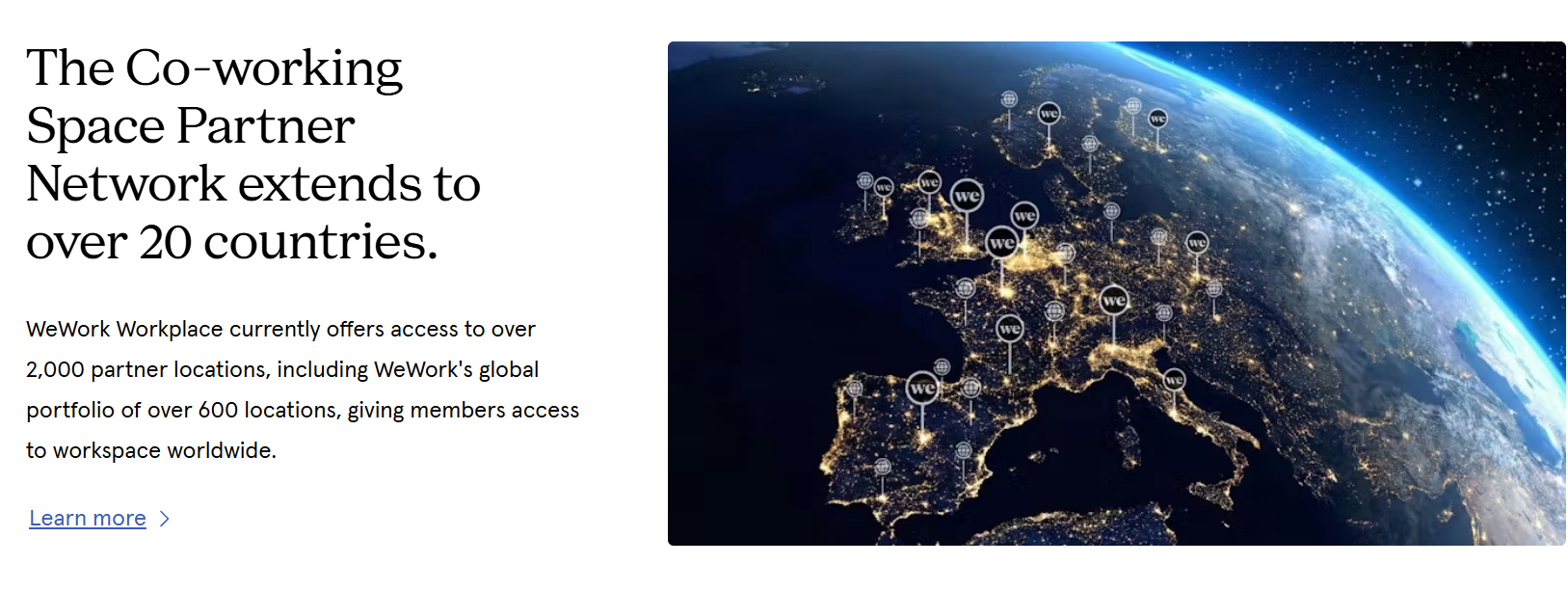
The reorganized WeWork is genuinely different in spirit. Instead of chasing growth at any cost, it now positions itself as a “global real estate platform” that blends its own roughly 600 locations with an ever-expanding Coworking Partner Network of third-party operators — about 2,000 instantly bookable locations worldwide as of early 2026 — plus space-management software and new on-the-go products. For a member, that translates into more places to work under one login and one app, which is precisely the convenience most people came to WeWork for in the first place.
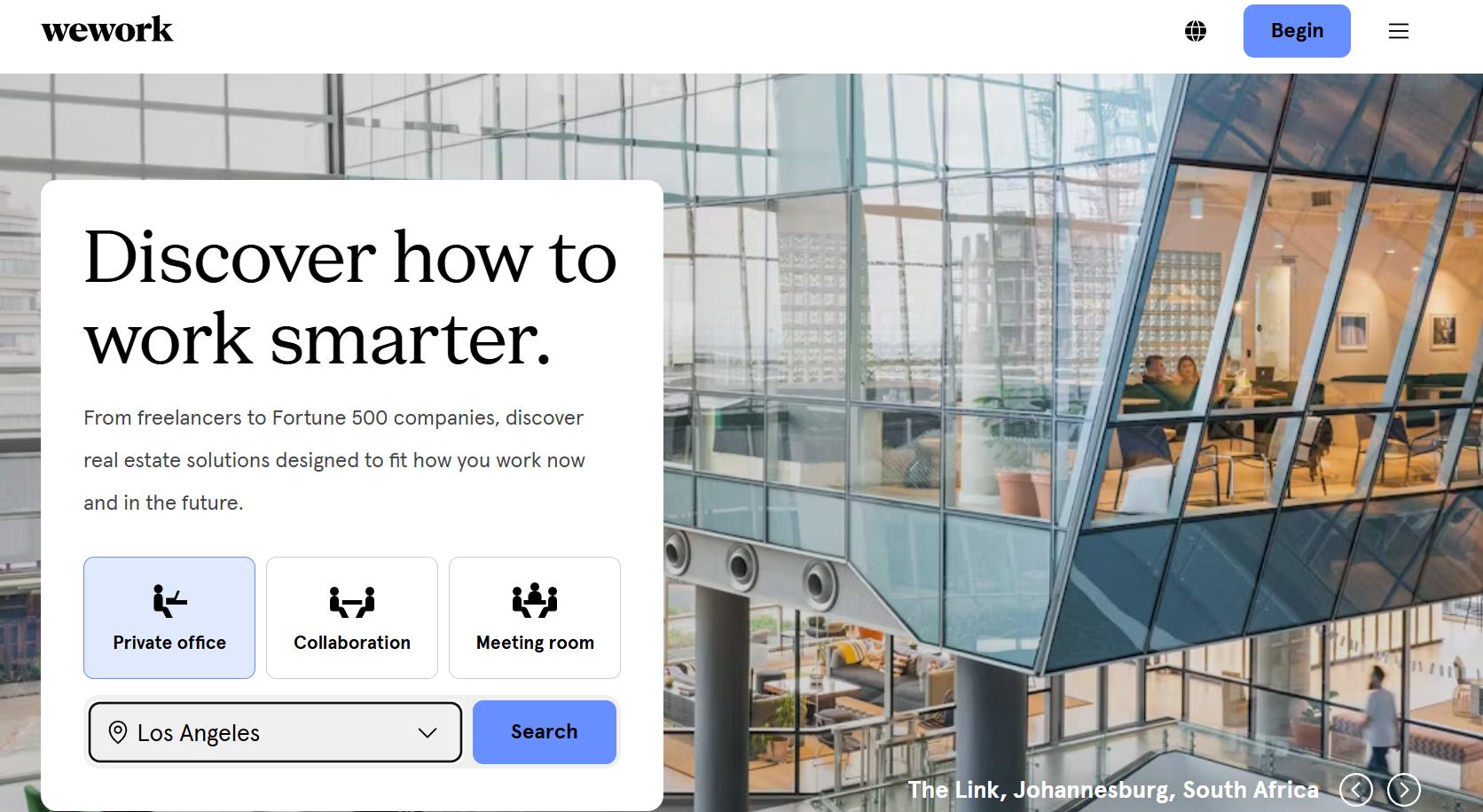
Why WeWork Stands Out in 2026
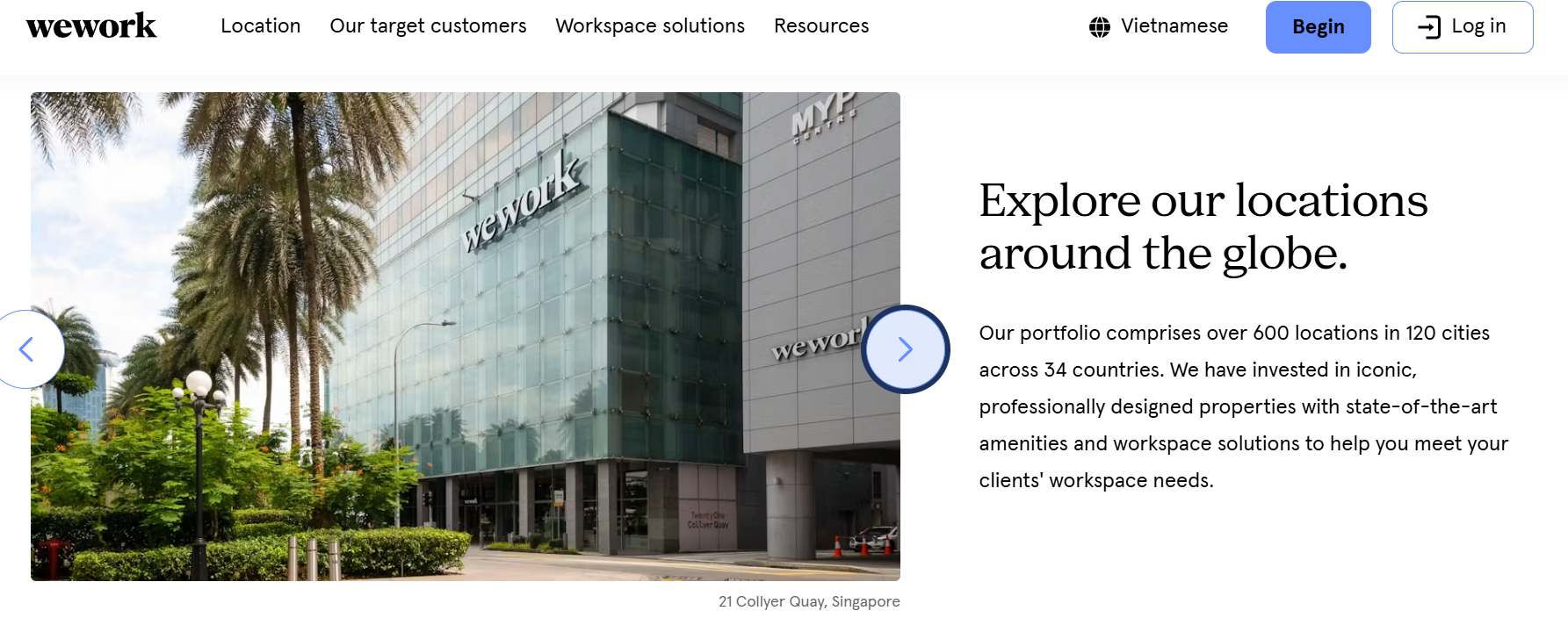
A genuinely global footprint under one membership: Few competitors can match WeWork's combination of scale and brand consistency. With nearly 600 owned and operated locations across 37 countries — plus access to roughly 2,000 partner locations for enterprise members — a single All Access membership can let you drop into a familiar, professional space whether you're in New York, London, Tokyo, or a partner site in a suburb you'd never heard of. For multi-city teams and frequent travelers, that “same login, same standard, new city” experience is the core draw.
Design and hospitality that clients notice: WeWork popularized the idea that an office could feel less like a cubicle farm and more like a well-run boutique hotel. Sunlit lounges, real coffee, plants, thoughtful interiors, and a refreshed 2026 design aesthetic mean the space works as a quiet brand asset — the kind of environment where bringing a client to a meeting subtly raises your credibility rather than apologizing for the carpet.
Technology that makes booking frictionless: This is where WeWork earns its place in any “tools for professionals and digital-native users” conversation. The WeWork app turns finding and booking a desk, private office, or meeting room into a few taps; WeWork On Demand lets you pay as you go with a credit card; and WeWork Workplace, the company's space-management software, gives enterprises a data-driven way to manage hybrid teams across many sites. The software-and-services layer is increasingly what differentiates WeWork from a plain landlord.
True flexibility instead of a multi-year lease: The whole point of flex space is that it scales with you. Need one desk this quarter and ten next quarter? Add them. Closing an office for the summer? Many memberships run month-to-month with around 30 days' notice. For startups whose headcount is genuinely unpredictable, swapping fixed lease risk for a flexible monthly cost can be the difference between agility and being trapped.
Everything-included, walk-in-ready space: A WeWork membership bundles high-speed Wi-Fi, furniture, utilities, cleaning, printing, meeting rooms, community events, and on-site support into one predictable bill. You skip the furniture shopping, the IT setup, the cleaning contract, and the office-manager headache — you just show up and work. For solo founders and small teams especially, that removal of operational overhead is a real productivity unlock.
A community and network, not just a room: WeWork still leans into the social side of work — networking events, member perks, and the simple serendipity of sharing a kitchen with other founders and freelancers. For people working remotely who miss the energy of an office, that community can be worth as much as the desk itself.
A reset, financially healthier company: The post-bankruptcy WeWork carries far less debt, a smaller and more profitable footprint, and a real-estate-savvy owner in Yardi. For anyone who hesitated to commit to the “old” WeWork, the 2026 version is a more stable counterparty — a meaningful consideration when you're entrusting it with your team's daily workspace.
Key Features and Technology
WeWork isn't a single product — it's a ladder of workspace options plus a technology layer that ties them together. Understanding the building blocks is the fastest way to figure out which one fits how you actually work.
WeWork On Demand: pay-as-you-go workspace
The lowest-commitment way in. Through the WeWork app you can book a hot desk (“Desk”), a private office for the day (“Office”), or a meeting room by the hour (“Room”) at participating locations across 70-plus cities, paying per use with a credit card. Bookings generally cover standard business hours, and there's a clear cancellation window for refunds. On Demand is ideal for occasional users and travelers who want WeWork's quality without a monthly bill — and it's the best way to test a building before upgrading to a membership.
WeWork All Access: the global coworking membership
A monthly membership that unlocks coworking space across WeWork's network rather than tying you to one building — perfect for hybrid and distributed workers. It typically comes in tiers (often a Basic and a Plus level), with the higher tier offering broader access and more meeting-room credits. Credits refresh on the first of each month and don't roll over, and you can book extra rooms beyond your allowance for additional fees. All Access is the sweet spot for remote professionals who want a few flexible days a week across multiple locations.
Dedicated Desk and Private Office: your own space
For people who want a permanent home base, a Dedicated Desk gives you a reserved spot in a shared room — complete with a lockable filing cabinet and 24/7 access at your home location. A Private Office goes further: a fully furnished, lockable, 24/7 room (or suite) sized for one person to a whole team, with the same amenities and the privacy that client-facing or compliance-sensitive businesses often need. These are the tiers most teams graduate to once they outgrow hot-desking.
WeWork Go and WeWork Workplace: the 2026 platform plays
Launched in April 2026, WeWork Go is the company's first new product since 2022 — private office “pods” placed in high-traffic spots like airport terminals, convention centers, and hotel lobbies, bookable at flexible per-session rates, in single-user, multi-user (up to four people), and ADA-accessible formats. It's aimed squarely at the professional on the move who needs five minutes of quiet for a call or a focused hour between flights. Meanwhile, WeWork Workplace is the space-management software that powers enterprise booking across both WeWork's own portfolio and its 2,000-location Coworking Partner Network, giving companies one dashboard to manage hybrid teams.
Pricing, Plans, and Package Structure
WeWork is a subscription/recurring-cost product (On Demand aside), and its single most frustrating trait is opaque, location-driven pricing. The ranges below are approximate, skew toward US markets, and move with city, building, demand, and promotions — premium global cities run much higher, suburban and partner sites lower. Use them to set expectations, then get a live quote for your exact location.
| Plan / Product | Approx. Price (varies by city) | What You Get | Best For |
|---|---|---|---|
| WeWork On Demand | ~$29–$59 / day (from ~£35 in the UK); meeting rooms by the hour | Pay-as-you-go hot desk, day office, or meeting room via the app — no membership | Occasional users, travelers, and anyone testing a location first |
| WeWork All Access (entry tier) | ~$250–$300 / month | Monthly coworking access across participating locations, plus some meeting-room credits | Hybrid and remote workers wanting a few flexible days a week |
| WeWork All Access (Plus) | ~$300–$350 / month (higher in premium cities) | Broader network access, more credits, more flexibility | Frequent users and multi-city professionals |
| Dedicated Desk | ~$300–$600+ / month (e.g., from ~$447 in LA, ~$523 in SF) | Your own reserved desk + lockable cabinet, 24/7 access at your home location | Freelancers and small teams wanting a stable, permanent spot |
| Private Office | From ~$300–$800+ / person / month (wide range by city and size) | Fully furnished, lockable, 24/7 private room or suite for 1 to many | Teams and businesses needing privacy and a branded space |
| WeWork Go (new in 2026) | Flexible per-session rates (vary by location) | Private office pods in airports, hotels, and convention centers; single, multi-user, or ADA pods | Mobile professionals needing privacy on the move |
How WeWork Compares to Alternatives
WeWork is the most famous name in flex space, but it's far from the only one. Here's how it stacks up against the biggest global rival, the premium boutique option, the local independent route, and the legacy DIY lease.
| Provider | Network Scale | Typical Entry Price | Strength | Watch-outs |
|---|---|---|---|---|
| WeWork | ~600 owned locations, 37 countries; ~2,000 partner sites | All Access ~$250–$350 / mo | Design, brand prestige, strong app and tech layer | Opaque per-building pricing; overage fees add up |
| Regus / IWG (Spaces, Signature) | 4,000+ locations, 120+ countries | Coworking from ~$29 / mo; day passes ~$20–$50 | Unmatched global footprint and value entry point | More corporate/utilitarian feel; lock-ins common |
| Industrious | ~95+ locations, mostly US | Hot desk from ~$400+ / mo | Premium hospitality; most polished client-facing vibe | Pricier; thinner international coverage |
| Local / independent coworking | Single city / region | ~$150–$300 / mo | Community, often 24/7, lower cost, local character | No multi-city access; quality varies widely |
| Traditional lease (DIY) | One fixed site | High fixed rent + fit-out + multi-year term | Full control and lowest per-seat cost at scale | No flexibility; capex, furnishing, and ops all on you |
vs. Regus / IWG: IWG's brands (Regus, Spaces, Signature) win decisively on raw footprint — 4,000-plus locations versus WeWork's ~600 — and on a cheaper entry point, making them the safer “we need workspace in 90 cities” choice. WeWork counters on design, brand cachet, app experience, and a more energetic community feel. If global coverage and lowest price are paramount, IWG usually wins; if environment and member experience matter more (especially for client-facing teams), WeWork pulls ahead.
vs. Industrious: Industrious is widely regarded as the most consistently premium, hospitality-driven operator — the “boutique hotel” of coworking — and that polish is reflected in higher prices. WeWork is comparably designed in many buildings but with far broader international reach. For a US-centric team that prioritizes a flawless day-to-day experience and budget allows, Industrious is a strong call; for global access at a slightly lower price, WeWork is the more practical platform.
vs. local coworking and DIY leases: Independent local spaces often beat WeWork on price and community for someone who only ever works in one city, and many offer 24/7 access at the lowest tier. A traditional lease can be cheapest per seat for a large, stable team — but only if you're certain about headcount and willing to absorb fit-out, furniture, and a multi-year commitment. WeWork's edge over both is multi-city flexibility and zero operational overhead; its weakness against both is cost-per-day for heavy single-location use.
Pros and Cons
What Members Love
Walk-in-ready convenience: Everything is handled — Wi-Fi, furniture, cleaning, coffee, printing, meeting rooms — so you just show up and work. The removal of office-management overhead is a genuine time-saver.
Real flexibility: Month-to-month memberships and pay-as-you-go options let you scale up, scale down, or pause far more easily than any traditional lease allows.
Multi-city access and a polished brand: One membership, many cities, a consistently professional environment that impresses clients — hard to replicate with local spaces alone.
Best-in-class app and booking tech: Finding and reserving desks, offices, and rooms is fast and reliable, and On Demand makes trying WeWork genuinely low-risk.
A healthier, more focused company: Post-restructuring WeWork is profitable again, less debt-burdened, and backed by a real-estate owner — a more stable partner than the pre-2024 version.
Limitations Worth Knowing
Opaque, location-dependent pricing: Real prices are rarely posted, vary wildly by building, and advertised “from” rates often apply only to select sites or promotions — so comparison shopping takes effort.
Hidden costs add up: Meeting-room overages beyond your credits, guest passes, printing over your allowance, weekend access on some tiers, and parking can push the real monthly cost well above the headline figure. Credits also don't roll over.
Heavy daily use can be expensive: If you're in the same single location five days a week, a cheaper local space or even a small private lease may deliver better value than a premium WeWork membership.
Partner-network access has strings attached: The headline “2,000 locations” figure is primarily an enterprise (WeWork Workplace) benefit, not something every individual plan unlocks — read the fine print before buying on that promise.
Footprint and amenities vary by site: The company exited many buildings during restructuring, so coverage in a given city may be thinner than expected, and perks (outdoor terraces, parents' rooms, fitness centers, weekend hours) differ location to location. Always tour your specific building first.
Commitment terms still apply: “Flexible” doesn't mean zero commitment — most memberships need around 30 days' notice and private offices can carry longer terms, so protect deposits and read the agreement carefully.
Who Should Use WeWork
Remote and hybrid professionals: If you split your week between home and “somewhere that isn't home,” and especially if you move between cities, WeWork's flexibility is tailor-made for you. Recommendation: start with All Access at the entry tier and lean on your monthly meeting-room credits.
Startups and small teams with unpredictable headcount: When you can't forecast whether you'll be three people or thirteen next quarter, trading lease risk for monthly flexibility is invaluable. Recommendation: a Private Office sized for today, with the plan to add desks as you grow.
Freelancers, marketers, and content creators: If you want a professional space to focus, meet clients, and network — without the isolation of working from your kitchen — WeWork delivers environment and community in one. Recommendation: try a few On Demand day passes, then move to a Dedicated Desk if you're in often enough.
Frequent business travelers and “professionals on the move”: If your work happens between flights, in hotel lobbies, and at conferences, WeWork On Demand and the new WeWork Go pods give you privacy and quiet exactly where you need it. Recommendation: keep the WeWork app installed and use Go pods and On Demand bookings as needed.
Enterprises managing distributed workforces: If you're coordinating workspace for employees across many cities, the WeWork Workplace software plus the Coworking Partner Network is a serious operational tool, not just an office. Recommendation: engage WeWork's enterprise team about Workplace and a blended portfolio. Who should think twice? Anyone who works in one fixed location every single day on a tight budget — a local independent space or a modest private lease may simply serve you better.
Getting Started: Step by Step
- Create a free WeWork account on the website or by downloading the WeWork app — you can browse locations and pricing before paying anything.
- Shortlist your locations by city and neighborhood, checking commute, amenities (some sites have terraces, fitness rooms, or parents' rooms), and access hours for each building you're considering.
- Test before you commit by booking a WeWork On Demand day pass or meeting room at your top-choice building, so you experience the real space and crowd, not the marketing photos.
- Book a tour and get a live quote for the exact plan and building you want — pricing is location-specific, so this is the only way to know your true number and any current promotion.
- Match the plan to your real usage: On Demand for occasional days, All Access for a few flexible days a week, a Dedicated Desk for a daily home base, or a Private Office for privacy and teams.
- Read the agreement and protect your deposit — confirm the notice period, what's included versus billed extra (rooms, guests, printing, parking), and get any deposit terms in writing.
- Set up and settle in by completing onboarding, checking in with the Community Team at the front desk on your first visit, and learning the app's booking and credit features so you never overpay for extras.
Tips for Getting Maximum Value
The members who get the most out of WeWork treat the headline membership fee as the start of the conversation, not the end of it. Always ask about current promotions before signing — the company regularly runs offers like a percentage off select private offices — and confirm the live, building-specific price rather than trusting an advertised “from” rate. Right-size your tier ruthlessly: most individuals overpay by jumping to a Dedicated Desk or Private Office when entry-level All Access plus disciplined use of monthly meeting-room credits would cover them; remember that credits reset on the first and never roll over, so use them or lose them, and book extra rooms only when you must. Budget upfront for the extras that quietly inflate the bill — guest passes, printing overages, weekend access on certain tiers, and parking — and decide whether a slightly pricier building that includes what you actually use beats a cheaper one that nickel-and-dimes you. Test with On Demand before committing to any membership, lean on the app to find lower-cost partner or suburban sites when you don't need a flagship address, and if you're an enterprise, explore WeWork Workplace and a blended portfolio so you only pay for the space your team genuinely uses. Above all, tour the specific location first, because the gap between WeWork's best and most tired buildings is real — and protect any deposit in writing.
Future Outlook and Final Assessment
The tailwinds behind WeWork are structural, not faddish. Hybrid and distributed work are now the norm, the flexible-workspace market is forecast to keep growing for years, and companies increasingly prefer renting agility over owning long leases. A leaner, profitable, less-indebted WeWork — backed by a real-estate-savvy owner, expanding its asset-light partner network toward 2,000 bookable locations, launching new products like WeWork Go, and earning a 2026 spot on TIME's most-influential list — is far better positioned to ride those trends than the cash-burning version that filed for bankruptcy in 2023.
The honest caveats remain, though, and they're the same ones to weigh before any membership: pricing is opaque and location-driven, the extras can quietly inflate your real cost, heavy single-location use is often cheaper elsewhere, and the most attractive “thousands of locations” headline is largely an enterprise benefit. None of these are dealbreakers — they're simply reasons to do your homework on your specific city, building, and usage pattern before you sign.
Conclusion
WeWork in 2026 is a more grounded, more disciplined version of the brand that defined modern coworking — financially healthier, technology-forward, and still unmatched at turning “where will I work today?” into a one-tap decision across cities and countries. It's the right fit for remote and hybrid professionals, startups with unpredictable headcount, freelancers and creators who want community and a credible address, road warriors who need privacy on the move, and enterprises managing distributed teams. It's the wrong fit for someone who works in one fixed spot every day on a tight budget, where a local space or a small lease will stretch further. Go in with clear eyes about location-specific pricing and the extras, test before you commit, right-size your plan, and WeWork can take a genuinely stressful business decision — your workspace — and, in the spirit of AI Solutes, make everything easy.
Ready to find your perfect workspace — without the lease?
Explore more honest reviews, tutorials and tool comparisons to find the right tech for the way you work and live — at AI Solutes, where we make everything easy.
👉 Open Free Account: https://ai-solutes.com/wework
👉 Our YouTube Channel: youtube.com/@ai-solutes
👉 Our Facebook Fanpage: Facebook
👉 Our X (Twitter): @AISolutes