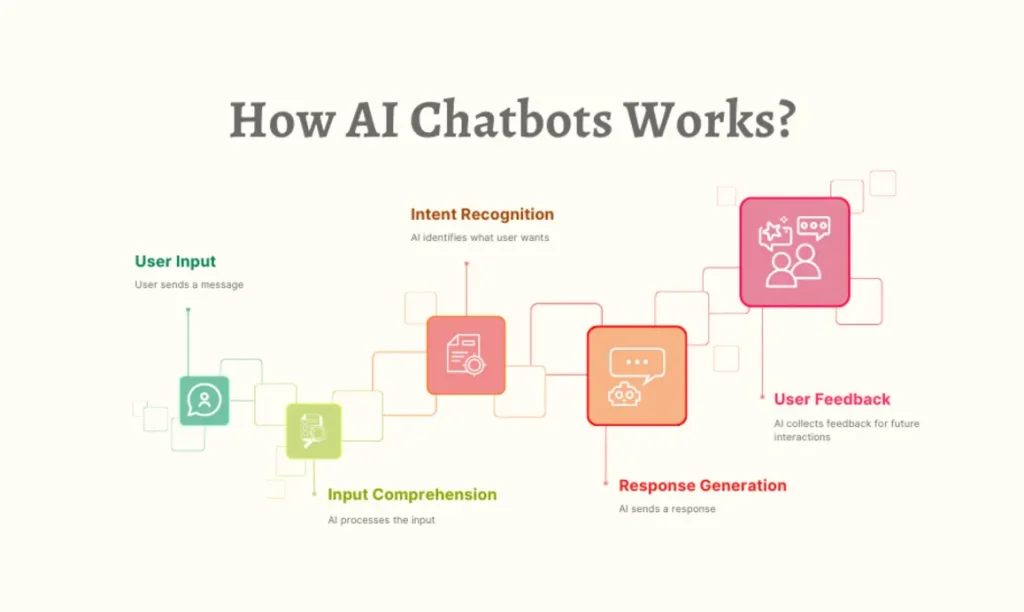
Your support team talks to more customers in a week than your sales team meets in a month — and most companies treat all of those conversations as a cost to minimize rather than a revenue channel to grow. Text exists to flip that assumption. Text is an AI-powered customer service platform that consolidates live chat, an autonomous AI Agent, help desk ticketing, and analytics into one tool, then uses real-time intent signals to turn ordinary support chats into sales. Built by the Wrocław-based company of the same name — the 20-year-old team behind LiveChat, ChatBot, and HelpDesk — Text serves 30,000+ paying customers across 150+ countries, has been profitable and publicly listed on the Warsaw Stock Exchange since 2014, and counts brands like PayPal, IKEA, Sephora, and Mercedes-Benz among its users. With plans starting at $19 per user per month and an AI Agent that the company says resolves the large majority of routine cases on its own, Text positions itself less as a ticket-deflection tool and more as a profit engine.
For ecommerce operators, marketers, small business owners, and digital-first teams whose website is the storefront, that revenue angle is the whole pitch. But premium positioning comes with premium pricing and a few real trade-offs worth understanding before you commit. This 2026 review walks through Text’s entire platform — the AI Agent and Copilot, every channel and core feature, full pricing and the resolution-based billing model, honest head-to-head comparisons with Intercom, Zendesk, and Gorgias, the genuine limitations, and exactly who should (and shouldn’t) buy in.
Text Review 2026: The AI Customer Service Platform That Turns Support Conversations Into Revenue
Overview and Background
Text is both a company and its flagship product. The company started in Wrocław, Poland, in 2002 as a simple live chat widget under the name LiveChat Software, built around a deceptively hard question: why is it still so difficult to talk to customers on a website? That single product grew into a suite — LiveChat, then ChatBot in 2017, HelpDesk in 2019, KnowledgeBase, and the free OpenWidget in 2022. In September 2023 the company rebranded from LiveChat Software to Text, re-listing on the Warsaw Stock Exchange under the ticker TXT to reflect a broader focus on AI-powered, text-based customer communication. The common thread across every product is text-based conversation, which is where the name comes from.
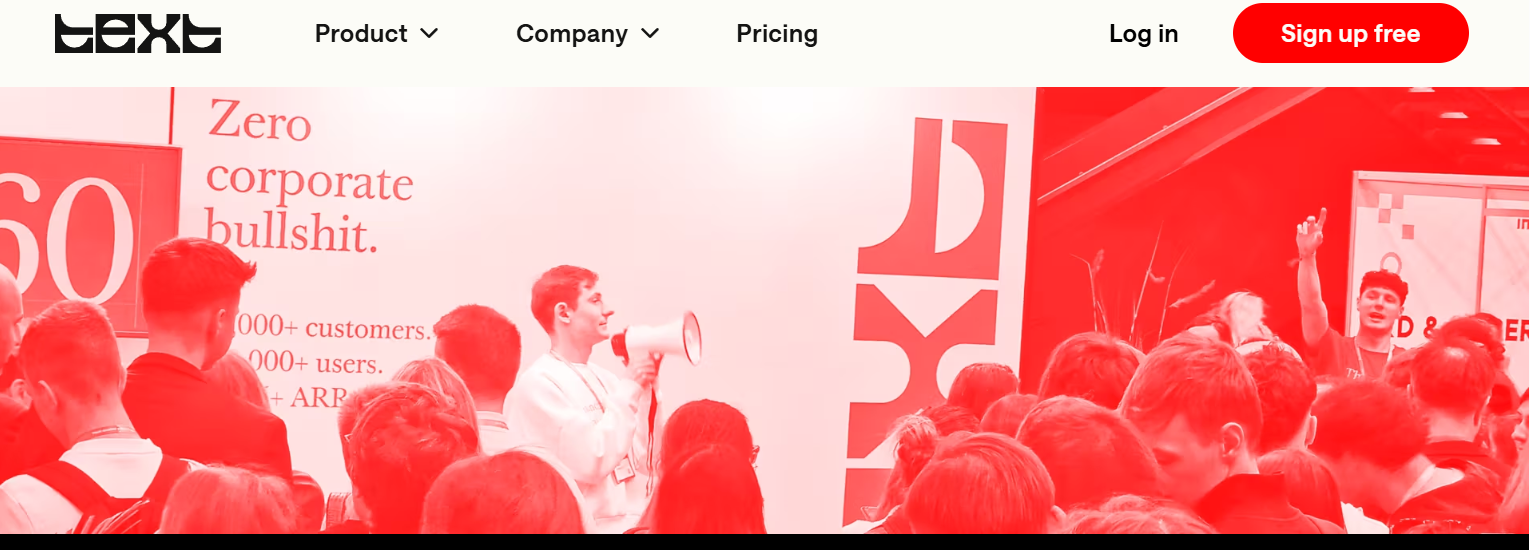
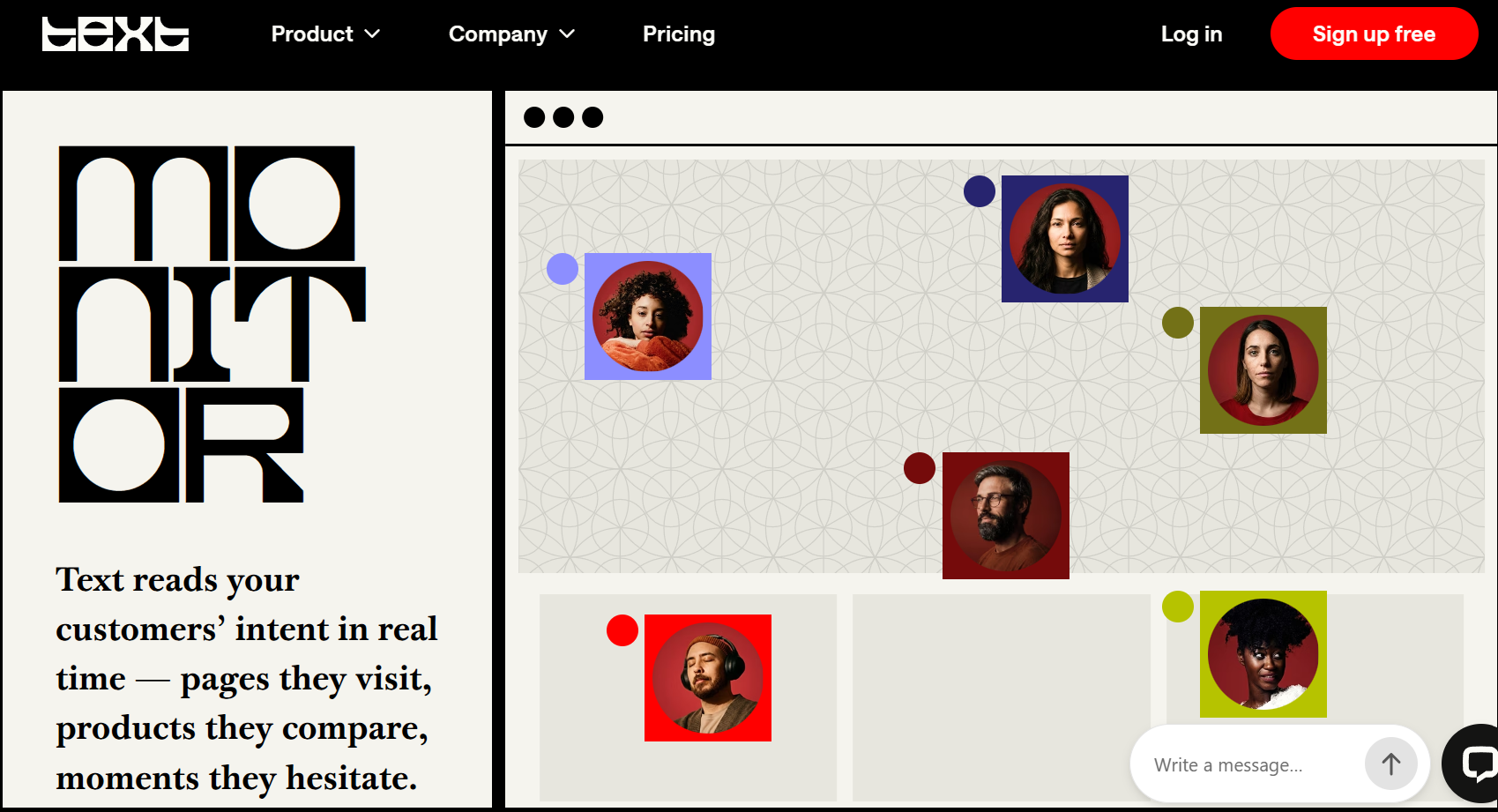
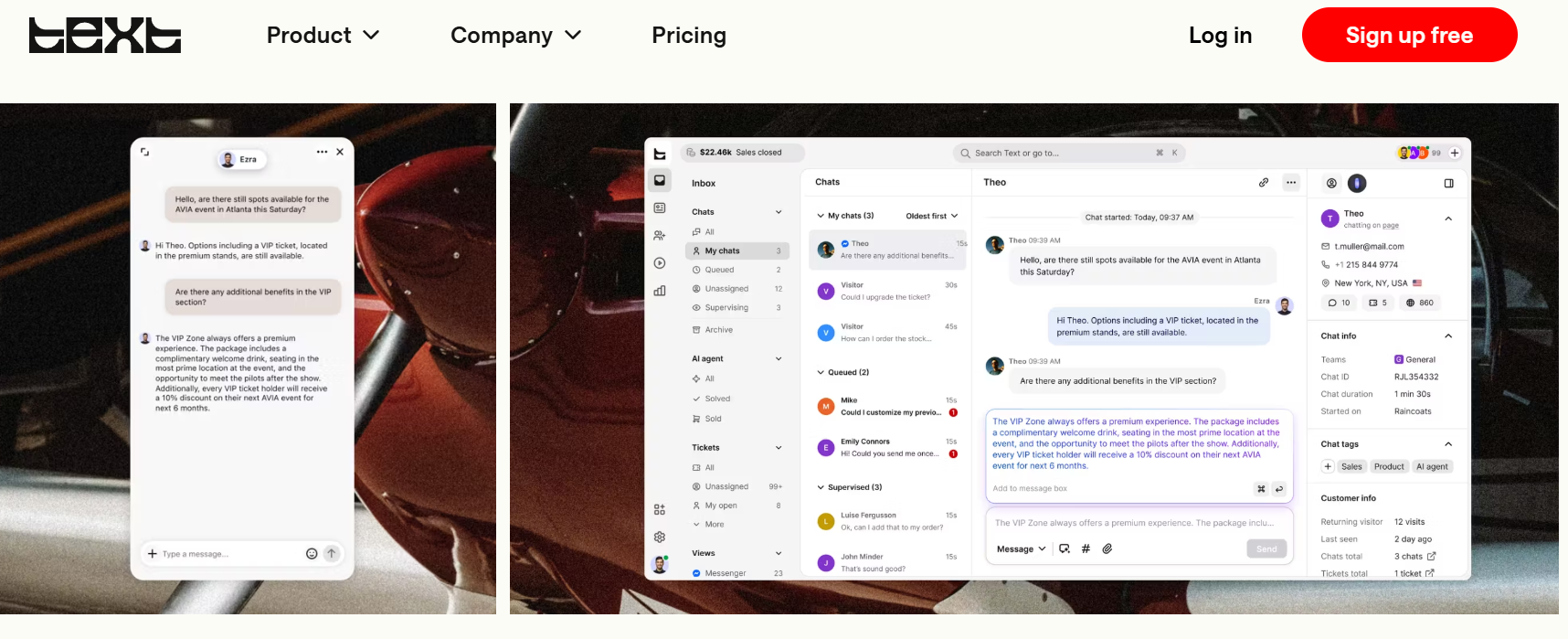
The newest chapter is the modern Text platform itself: a single tool that unifies live chat, an AI Agent, help desk ticketing, and analytics rather than asking you to stitch together separate apps. The core idea is that customer service shouldn’t just clear a queue — it should detect buying intent and convert it. Text reads what a visitor is doing in real time (pages viewed, products compared, moments of hesitation), then either prompts a human agent to step in at the right moment or lets the AI Agent open the conversation itself. The company describes the result as “selling through service,” and backs it with customer numbers like Sephora reporting a 25% lift in average order value and Wembley generating $1.5 million in chat-attributed revenue in six months.
Operationally, Text is a mature, financially disciplined business — profitable every year since its 2014 IPO, run from Wrocław with a US commercial office in Boston, and certified under SOC 2 Type 2, GDPR, CCPA, and PCI DSS. That track record matters in a category full of venture-funded newcomers: Text has been doing customer communication at scale for two decades, and the AI features are layered onto infrastructure that already handles enormous conversation volume.
Why Text Stands Out in 2026
Service designed to generate revenue, not just cut costs: This is Text’s central differentiator. While most of the industry races to deflect tickets and reduce headcount, Text is built to detect buying signals — a visitor lingering on a pricing page, comparing two products, or returning for the third time — and act on them. Reporting ties conversations to dollars, leads, and retained customers, so you see what your support actually generated, not just how many chats it handled. For a store owner, that reframes the support budget as a sales investment.
An AI Agent that works autonomously and trains on your own data: Text’s AI Agent connects to your website, help center, and product docs, builds a knowledge base from them, and then resolves common questions on its own — 24/7, across channels. Because it trains on your catalog, brand voice, and business rules, answers match your business rather than generic web data. The company reports high autonomous resolution rates (Stratco cites an 80% AI resolution rate) and conversion uplifts it puts as high as 266% on its AI Agent pages.
A genuine AI co-pilot for human agents: Beyond the autonomous agent, Text gives your human team a Copilot that drafts replies, surfaces product specs and return policies from the knowledge base the moment a chat opens, polishes grammar and tone before a message sends, and condenses long threads into a few lines for instant context. The effect is that every agent performs like a veteran from day one, and the company reports help desk efficiency gains around 40%.
One inbox across every channel: Website chat, email, SMS, Facebook Messenger, and WhatsApp all land in a single unified inbox where your team and your AI Agent share the same customer history and context, regardless of where the message came from. No jumping between tools, no lost thread when a conversation moves from chat to email.
Real-time visitor intelligence: Text shows every visitor on your site right now — pages viewed, time on site, location, device, referrer, and visit history. Combined with proactive campaigns, that lets your team (or the AI) be proactive instead of reactive, opening a conversation about the exact product a hesitating shopper is looking at before they leave.
Honest, outcome-based AI billing: Text charges per resolution — counted only when the AI Agent actually solves at least one customer question — with a single charge per conversation even if several questions get answered. Test chats, spam, irrelevant answers, and handoffs to a human don’t count. It’s a fairer model than per-conversation pricing, where you pay even when the AI fails.
Two decades of stability and a deep ecosystem: Text isn’t a startup experiment. It’s profitable, publicly listed, security-certified, and backed by a partner platform with 200+ apps and integrations (Shopify, HubSpot, Slack, and more). For a business making a multi-year tooling decision, that durability is itself a feature.
Key Features and Technology
Text’s strength is how cleanly its capabilities map to the way a modern support-and-sales team actually works. Here’s how the platform breaks down.
AI Agent — Autonomous Resolution and Selling
The AI Agent is the headline. You point it at your content — website URL, help center, product docs, or uploaded files — and it scans everything, builds a knowledge base, and starts answering customer questions in minutes, no code required. It keeps context throughout a conversation, recommends products, qualifies leads, recovers abandoned carts, and hands off to a human the moment something needs judgment. Crucially for ecommerce, it reads buying signals and can open a proactive conversation about the specific product a visitor is viewing, turning a support touchpoint into a sales one.
Live Chat and Inbox — Where Humans Close
When a conversation needs a person, your team picks up with the full picture already in front of them: name, browsing history, past chats, and last orders sitting in the sidebar before they type a word. The live chat layer is the modern evolution of the LiveChat product the company has refined for 20 years — fast, customizable to your brand, and proven to generate up to 5× more sales in the company’s reporting. AI Copilot features (reply suggestions, refine, chat summaries, and auto-tagging) run alongside agents in every conversation without taking control away from them.
Help Desk and Ticketing — For the Complicated Cases
For issues that can’t be resolved in a single chat, Text’s help desk turns the conversation into a ticket, with AI summaries, automatic routing, and workflow automation built in. Route chats, push leads to your CRM, and follow up after a poor rating — set it once, with no coding or manual steps. This is where the platform’s broader suite (HelpDesk, KnowledgeBase) shows its maturity: it’s not a chat tool with ticketing bolted on, but a genuine multi-channel service desk.
Knowledge Base, Widgets, and the Wider Suite
Supporting the platform are a self-service help center grounded in your own content (so answers stay accurate rather than generic), and OpenWidget — a free, no-code website widget offering contact forms, product cards, FAQs, and AI recommendations. Together with ChatBot’s drag-and-drop visual builder and one-click integrations across Messenger, Slack, WordPress and more, these give teams a clear path to start small and expand as needs grow.
Pricing, Plans, and Package Structure
Text uses a subscription model that combines a per-user seat fee with resolution-based AI usage — the AI Agent is included in every paid plan, and you pay per license per month plus a bundle of included AI resolutions. There’s a 14-day free trial on every plan with no credit card required, and yearly billing saves up to 24%. The one usage-driven cost to plan for is resolution overages: if you exceed your monthly allowance, a 50-resolution refill is automatically added for $49.50 ($0.99 per resolution) so the AI keeps working. Because pricing scales with both seats and AI volume, the table below is a guide to the published entry points — confirm the exact mix for your team size and conversation volume.
| Plan | Approx. Price | What You Get | Best For |
|---|---|---|---|
| Essential | $19 / user / mo | 1 AI Agent, 10 included resolutions, live chat, inbox, help center | Small teams testing AI-driven service on a single store |
| Growth | $79 / user / mo | 10 AI Agents, 200 included resolutions, fuller automation and channels | Scaling ecommerce/mid-market teams running real volume |
| Enterprise | Custom offer | 50 AI Agents, custom resolutions, SSO, audit logs, white-label widget, SLAs | Large teams needing security, compliance, and scale |
| Resolution refill | $49.50 / 50 | Auto-added 50-resolution pack when you exceed your allowance ($0.99 each) | Anyone whose AI volume spikes beyond the plan limit |
How Text Compares to Alternatives
| Factor | Text | Intercom | Zendesk | Gorgias |
|---|---|---|---|---|
| Pricing model | Per seat + per resolution | Per seat + per resolution | Per agent + AI resolution/add-on | Per ticket + AI per resolution |
| Entry price | $19 / user / mo | ~$29–39 / seat / mo | ~$19–55 / agent / mo | ~$10–360 / mo (ticket tiers) |
| AI resolution cost | Included, then $0.99 over limit | $0.99 / resolution | $1.50–$2.00 / resolution | $0.90–$1.00 (+ ticket fee) |
| Built for | Ecommerce, “selling through service” | SaaS / product-led teams | Enterprise ticketing at scale | Shopify / DTC ecommerce |
| Revenue / sales focus | Core design goal | Strong (engagement-led) | Support-first | Revenue attribution for stores |
| Track record | 20+ yrs, profitable, public | Mature, VC-backed | Industry incumbent | Ecommerce specialist |
vs. Intercom: Intercom is the closest philosophical rival — both pair a modern inbox with an autonomous AI agent (Intercom’s Fin) at the same $0.99-per-resolution rate, and both lean into engagement and revenue. Intercom’s seat pricing runs higher (roughly $29–$139/seat), and it’s tuned more for SaaS and product-led growth, while Text is unapologetically ecommerce-first with deeper buying-signal detection and real-time visitor intelligence aimed at closing sales. If your business lives in a product app, Intercom fits; if your business lives on a storefront, Text is the more natural match.
vs. Zendesk: Zendesk is the enterprise ticketing incumbent — unmatched for structured queues, SLA enforcement, and a vast 1,500+ integration ecosystem. But its AI is largely an assistance layer and its costs stack up: per-agent seats ($55–$169 on higher tiers), a $50/agent Advanced AI add-on, and $1.50–$2.00 per AI resolution. For a support org that needs heavyweight ticketing governance, Zendesk wins; for a leaner team that wants AI to actually resolve and sell rather than just suggest, Text is more focused and often cheaper to get value from.
vs. Gorgias: Gorgias is the Shopify/DTC specialist with strong native ecommerce integrations and revenue attribution. Its catch is a ticket-based model that can double-bill AI conversations — you pay both a per-ticket fee ($0.36–$0.40) and a per-resolution AI fee ($0.90–$1.00) — which gets expensive fast at volume. Text’s cleaner “one charge per resolved conversation” model and broader, more mature multi-channel platform make it the more predictable choice for stores that aren’t exclusively on Shopify or want a single tool to grow into.
Pros and Cons
What Teams Love
Support that pays for itself: The revenue angle is the standout. When the AI and your agents recommend products, recover carts, and nudge hesitant buyers, support stops being a pure cost line — customers like Wembley and Sephora report real, attributable revenue, which is rare praise for a service tool.
Fast, no-code AI setup: Pointing the AI Agent at your website and going live the same day is genuinely quick, and the drag-and-drop ChatBot builder means non-technical teams can ship something useful in an afternoon rather than a quarter.
Fair, transparent AI billing: Charging only for genuine resolutions — one per conversation, with spam and handoffs excluded — is a more honest model than per-conversation pricing, and the published rates are easy to find rather than buried behind a sales call.
A true single inbox: Chat, email, SMS, Messenger, and WhatsApp in one place, with AI and humans sharing the same context, eliminates the tool-hopping and lost-thread frustration that plagues stitched-together stacks.
Rock-solid maturity and security: Two decades of profitability, public-company transparency, and SOC 2 Type 2, GDPR, CCPA, and PCI DSS certification give risk-averse buyers confidence that this vendor will still be here — and compliant — in five years.
Limitations Worth Knowing
Costs scale with success: The per-resolution model means the better your AI performs, the more you pay — a known trade-off across this whole category. It’s value-aligned in principle, but at high volume the bill can climb faster than a flat-rate tool, so model your numbers before scaling.
Not the cheapest queue-clearer: Text itself says that if your only goal is to close tickets as cheaply as possible, other tools cost less. The platform’s value is in selling and engagement; if you don’t have a revenue use case, you may be paying for capabilities you won’t use.
Two pricing levers to manage: Combining per-seat and per-resolution billing makes forecasting harder than a single flat fee. Teams that don’t track both seats and AI usage can be surprised by a bill that moved on two axes at once.
AI quality depends on your content: The agent is only as good as the knowledge you give it. A thin or outdated help center produces weaker resolutions, so there’s real upfront work in curating sources to get the resolution rates the marketing promises.
Best fit is narrow by design: Text is sharply aimed at ecommerce and digital-first, mid-market-and-up teams. Tiny shops, non-commercial support desks, or businesses without an online storefront may find it more platform than they need.
Who Should Use Text
Mid-market ecommerce and DTC brands: If your website is your storefront and your support team talks to more prospects than your sales team does, Text is built precisely for you. Start on Essential to validate the buying-signal workflow, then move to Growth as AI resolutions and chat-attributed sales climb.
Marketers and growth teams: Anyone responsible for conversion will value the real-time visitor intelligence, proactive campaigns, and revenue reporting that tie conversations to dollars. The Growth plan’s fuller automation is the sweet spot here.
Lean support teams scaling fast: If conversation volume is outpacing headcount, the autonomous AI Agent absorbs the routine load so your people handle the judgment calls. Essential is enough to start; let the resolution data guide the upgrade.
Small business owners and freelancers running a store: Solo operators and small teams who can’t staff 24/7 support get round-the-clock coverage and product recommendations from day one. The 14-day free trial lets you prove the value before paying.
Compliance-sensitive and enterprise teams: Businesses that need SOC 2, SSO, audit logs, white-label widgets, and SLAs should talk to sales about the Enterprise tier, which is sized to large-volume, security-first operations.
Getting Started: Step by Step
- Start the free trial. Sign up for the 14-day trial — no credit card required — so you can experience the full platform before committing to a plan.
- Curate your knowledge sources first. Before training the AI, tidy up your help center, FAQs, and product docs. This single step has the biggest impact on resolution quality.
- Train the AI Agent. Connect your website URL, help center, product docs, or uploaded files; Text scans them, builds a knowledge base, and gets the agent answering in minutes.
- Customize and brand the widget. Shape the chat widget to your brand, set business rules for when the AI resolves, escalates, or hands off, and configure proactive campaigns for high-intent pages.
- Connect your channels and tools. Add email, SMS, Messenger, and WhatsApp to the unified inbox, and integrate Shopify, HubSpot, or your CRM so leads and orders flow automatically.
- Go live and watch the signals. Launch the same day, then monitor your first buying signals and resolutions to see what conversations actually generate.
- Tune against the data. Use the resolution and revenue reporting to refine your knowledge base, adjust handoff rules, and decide when to move up a plan.
Tips for Getting Maximum Value
Invest in your knowledge base before anything else — clean, current product docs and FAQs are the difference between a 30% and an 80% resolution rate, and they cost nothing but time. Choose annual billing once you’ve confirmed fit, since it saves up to 24% over monthly. Right-size your seats: only assign full licenses to people who genuinely need them, and lean on the AI Agent to cover after-hours and overflow rather than adding headcount. Model your resolution costs honestly — multiply expected conversation volume by your target resolution rate by $0.99 — and revisit it as the AI improves, because that’s exactly when usage charges climb. Start on Essential to prove the revenue case on real traffic, then upgrade to Growth deliberately once you’re consistently blowing past the included resolutions. And always check the live pricing page for the current annual discount before you commit, since promotional terms shift.
Future Outlook and Final Assessment
The tailwinds favor Text. The AI customer service market is projected to reach roughly $15 billion in 2026, ecommerce continues to push more of every business onto the website, and buyers increasingly expect instant, intelligent help at the moment of purchase. Text’s bet — that the real prize isn’t cheaper support but more profitable conversations — is well-timed and genuinely differentiated in a field racing toward the bottom on cost. Backed by 20+ years of profitable operation, strong security credentials, and a deep product suite, it’s one of the most credible long-term platforms in the category.
The honest caveats remain: the per-resolution model means costs rise as the AI succeeds, the dual seat-plus-usage billing takes effort to forecast, results depend on the quality of the content you feed it, and the platform is overkill for teams without a revenue use case. But within its intended lane — ecommerce and digital-first teams that want service to drive sales — Text delivers one of the most complete, mature, and outcome-focused offerings available in 2026.
Bottom line: For most growing stores, the $19/user Essential plan is the smart-value way to prove the “selling through service” model on your own traffic before scaling. If you’re running serious volume and want the full automation, channel coverage, and AI capacity, the Growth plan (or a custom Enterprise build for compliance-heavy teams) is the tier that unlocks it. Either way, Text turns your busiest, most underrated team into a revenue channel.
Conclusion
Text has built something rare: a customer service platform that treats every conversation as a chance to grow, not just a cost to contain. With an autonomous AI Agent that resolves and sells, a Copilot that levels up every human agent, a single inbox across every channel, and two decades of profitable, security-certified stability behind it, it’s a genuinely modern answer to a question every online business eventually faces — how do we help customers faster and earn more while doing it? Confirm it fits your revenue-driven, ecommerce-first use case, start with the free trial, choose the tier that matches your volume, and Text makes one of the most demanding parts of running a business feel modern again — turning support into sales and, in true AI Solutes fashion, making everything easy.
Ready to turn your support conversations into revenue?
Explore more honest reviews, tutorials and tool comparisons to find the right tech for the way you work and live — at AI Solutes, where we make everything easy.
👉 Open Free Account: https://ai-solutes.com/text
👉 Our Website: https://ai-solutes.com/
👉 Our YouTube Channel: youtube.com/@ai-solutes
👉 Our Facebook Fanpage: Facebook
👉 Our X (Twitter): @AISolutes
- Save Money and Maximize Refunds: FreeTaxUSA Free Federal Tax Filing Guide for 2026 with OBBBA Updates
- AppSumo Lifetime Deals vs Direct Subscriptions 2025: Save Thousands on SaaS
- Discover LitterRobot 5 for 2026: AI Self-Cleaning Litter Box Review, Pro Upgrades, and Best Multi-Cat Tips
- MagicSlides
- Finding Clarity in a Sea of Options: How Rank Prompts Simplify Complex Decisions