Outbound sales is frustratingly fragmented. You buy a contact database from one vendor, a sequencing tool from another, a dialer from a third, and then a CRM to tie it all together — and your reps lose hours every week switching tabs, exporting lists, re-entering data, and losing track of where each prospect sits in a sequence. Apollo.io was built to collapse that whole stack into one platform. It pairs a massive database of more than 270 million contacts and 30 million companies with email sequences, a built-in dialer, data enrichment, buying signals, and basic CRM features — so a rep can search for “VP of Sales at 50–200-employee SaaS companies in North America,” pull verified contacts, drop them into a multi-step sequence, and track replies without ever leaving the tool. And in 2026 Apollo went further, launching an agentic AI Assistant that can build and run outbound workflows from a plain-language prompt. Used by over 600,000 companies and rated around 4.7 out of 5 on G2, with a genuinely generous free plan and paid tiers starting near $49 per user per month, Apollo has become the default starting point for modern outbound teams.
For solo founders, SDR and BDR teams, growth marketers, agencies, and small-to-mid-size sales organizations, Apollo promises to consolidate the tech stack and cut both cost and busywork. This 2026 review walks through everything that matters: what Apollo.io actually is, its standout features, the new AI Assistant, the full plan-by-plan pricing breakdown (including the credit system that catches people out), how it compares to ZoomInfo, LinkedIn Sales Navigator, and Lusha, and the honest limitations worth knowing — including data accuracy and cancellation terms — so you can decide if it fits your workflow.
Apollo.io Review 2026: The All-in-One Sales Intelligence Platform for Finding Leads and Running Outreach
Overview and Background
Apollo.io is an all-in-one B2B sales intelligence and engagement platform. The core idea is simple: instead of paying for a separate lead database, a sequencer, a dialer, and a CRM, you get all of it under one login. It combines a contact database of over 270 million people and 30 million companies — searchable across more than 65 filters — with email sequencing, a phone dialer, data enrichment, buying signals, and pipeline tools. Teams use it to find leads, enrich them, automate outreach, and manage deals from a single platform, which is exactly the kind of consolidation a fragmented outbound process needs.
The platform serves more than 600,000 companies and skews heavily toward small businesses and mid-market teams, where its all-in-one approach delivers the most value — enterprises with the deepest data needs tend to use specialized tools. Apollo describes itself as “open by design,” meeting sellers inside the tools they already use, from Chrome and Salesforce to AI assistants like ChatGPT, Claude, and Perplexity, rather than forcing them to switch contexts. It carries a strong reputation, with a roughly 4.7-out-of-5 rating across nearly 9,500 G2 reviews.
In 2026, Apollo made its biggest moves yet on the AI front. In March it launched an AI Assistant positioned as an agentic go-to-market layer that executes workflows directly inside the platform from natural-language prompts, and it acquired Pocus to fold signal-based revenue intelligence into the product. Together these signal Apollo’s direction: from a database-and-sequencing tool toward an AI-driven system that helps decide who to contact and actually does some of the work.
Why Apollo.io Stands Out in 2026
A huge database with powerful filtering: Apollo’s database is its biggest selling point — over 270 million contacts and 30 million companies, searchable across 65-plus filters including job title, seniority, department, company size, revenue, industry, funding stage, technologies used, and signals like job changes and hiring activity. The list-building experience is genuinely smooth: you can save complex personas and pull targeted lists in minutes rather than hours, which is the single most praised thing about the platform.
It really is all-in-one: Rather than stitching five products together, you get a database, sequencer, dialer, enrichment, and CRM connector in one place. For teams that hate juggling tools and re-exporting data, that unified workflow — find a lead, enrich it, sequence it, call it, and track it without leaving the tab — is the whole pitch, and it’s a real time-saver for lean outbound teams.
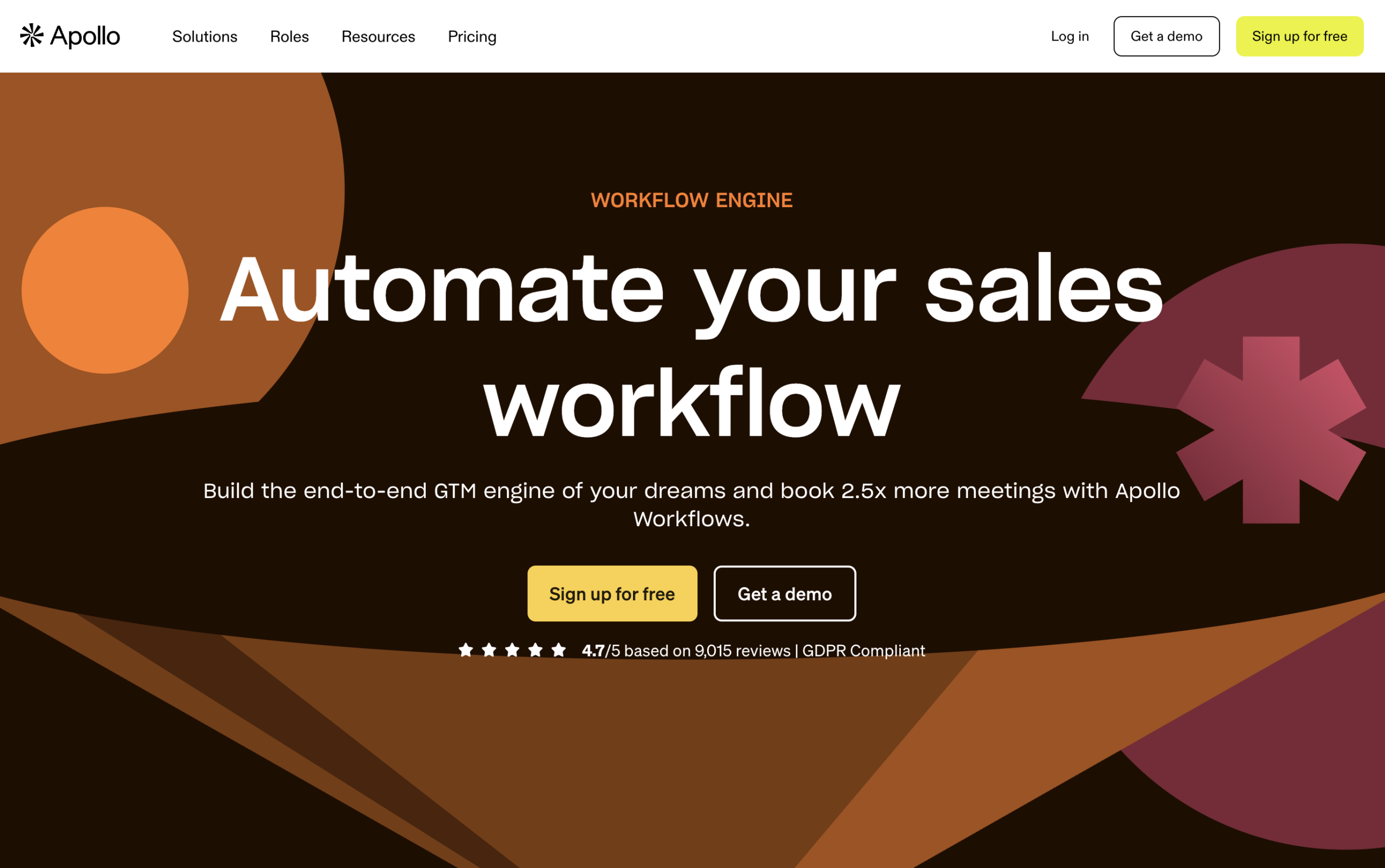
The new agentic AI Assistant: This is where Apollo made the most noise in 2026. Launched in March, the AI Assistant doesn’t just suggest — it executes workflows from natural language. You can say “find high-intent accounts in mid-market fintech and draft a 3-step email sequence for the VP of Sales,” and it builds it. Apollo reports that users who engage with the AI Assistant are 36% more likely to book meetings in their first two weeks, and it’s backed by AI lead scoring and next-step recommendations.
A generous free plan and fair entry pricing: Apollo’s free tier gives you access to the full contact database, the Chrome extension, and two active sequences — one of the more generous free offerings in the category. And paid plans starting around $49 per user per month make it dramatically cheaper than enterprise incumbents that can cost tens of thousands a year, putting serious prospecting within reach of startups and SMBs.
Email sequencing with A/B testing: The engagement engine lets you build multi-step automated email sequences, test variants against each other, and track replies, all tied back to your contact data. For running outbound campaigns at scale without a separate sequencing tool, it covers the essentials well and keeps everything in one system.
A built-in dialer and conversation intelligence: Higher plans include a cloud dialer with parallel dialing, call recording, and AI-generated call summaries that transcribe conversations, highlight key moments, and create follow-up tasks automatically. Reps spend less time on post-call admin, and managers can review calls without listening to entire recordings.
Open and well-integrated: Apollo offers bi-directional sync with major CRMs like Salesforce, HubSpot, and Pipedrive, connects to Gmail, Outlook, Zapier, and Make, and provides a Chrome extension for prospecting on LinkedIn and company sites. Because it’s designed to work inside the tools you already use, it fits into your existing workflow rather than forcing an overhaul.
Key Features and Technology
Apollo’s features map directly to the outbound workflow of finding, reaching, and tracking prospects. Here’s how the most important pieces break down.
The Contact Database and List Building
The database is the foundation. With 270-million-plus contacts and 30-million-plus companies and over 65 filters, you can build extremely specific target lists — slicing by role, seniority, company size, revenue, industry, location, tech stack, funding, and behavioral signals — and save those personas to rerun instantly. The Chrome extension extends this into LinkedIn and company websites, letting you pull contact details and add people to sequences as you browse. For most users, the speed and precision of list-building is the reason they adopt Apollo in the first place.
Email Sequences, Dialer, and Engagement
On the engagement side, Apollo runs multi-step email sequences with A/B testing and reply tracking, and higher tiers add a cloud-based dialer (US calling on Professional, international on Organization) with parallel dialing, call recording, and AI call summaries. One honest caveat: while Apollo markets multichannel outreach, LinkedIn steps are manual tasks rather than true automation, and some users find phone-number accuracy and call quality inconsistent — so it’s a capable engagement platform for email-led outreach, with calling that works well enough for moderate needs rather than heavy cold-calling operations.
Apollo AI: The Agentic Assistant
The 2026 AI Assistant is Apollo’s most ambitious feature. It executes outbound workflows from plain-language instructions — finding accounts, drafting sequences, scoring leads, and recommending next steps — and is supported by automated post-call follow-up drafting from conversation recordings, CRM field auto-population from call transcripts, expanded technographics drawn from analyzing millions of job postings, and pre-meeting AI prep notes. In honesty, these AI features are helpful rather than magical: they speed up repetitive research and admin meaningfully, but still need human oversight to keep quality and relevance high. Used well, they’re a real productivity boost; used blindly, they’ll produce generic output.
Enrichment, Intent Signals, and CRM Sync
Apollo enriches and cleans your CRM records with fresh contact data, syncs bi-directionally with Salesforce, HubSpot, and Pipedrive so updates flow both ways, and surfaces buying signals like job changes and hiring. Its intent data has historically been more basic and topic-level than what enterprise rivals offer, but the 2026 Pocus acquisition is folding deeper signal-based revenue intelligence into the platform, which should narrow that gap over time. The API is available on paid plans for custom workflows, though setting up integrations can be finicky around field mapping and duplicate management, so expect some configuration time.
Pricing, Plans, and Package Structure
Apollo offers four tiers — Free, Basic, Professional, and Organization — priced per user per month, with annual billing saving roughly 20% over monthly. The bigger differences between tiers come down to the feature set and the volume of credits included, and the Organization plan requires a minimum of three seats. The figures below are approximate and verified against Apollo’s pricing page in 2026, but pricing and credit allowances change, so confirm the live details before subscribing.
| Plan | Approx. Price (per user/mo, annual) | What You Get | Best For |
|---|---|---|---|
| Free | $0 (no card) | Full database access, Chrome extension, 2 active sequences, limited credits (~5 mobile, 10 export/mo) | Testing data quality and very light prospecting |
| Basic | ~$49 | Unlimited email sequences, CRM integrations (Salesforce/HubSpot), advanced filters, more credits | Small teams starting serious outbound |
| Professional (most popular) | ~$79 | Everything in Basic plus US dialer, parallel dialing, call recording, AI call summaries | SDR teams that cold-call and automate |
| Organization | ~$119 (min 3 seats) | International dialer, SSO, custom reporting, advanced API access | Larger teams needing admin and global calling |
How Apollo.io Compares to Alternatives
| Factor | Apollo.io | ZoomInfo | LinkedIn Sales Nav | Lusha |
|---|---|---|---|---|
| Database & filters | 270M+, 65+ filters | Deep, enterprise-grade | LinkedIn network | Smaller, focused |
| Built-in sequences & dialer | Yes (both) | Add-ons / engage | No | Limited |
| Intent data | Basic, expanding | Deep (proprietary) | Limited | Limited |
| Best for | SMB / mid-market outbound | Enterprise data needs | LinkedIn-led selling | Quick contact lookups |
| Price | Free; ~$49–119/user/mo | High (often $15K+/yr) | ~$99/mo | Free; from ~$49/user/mo |
vs. ZoomInfo: ZoomInfo is the enterprise incumbent, with deeper and more accurate data, richer org charts, and stronger proprietary intent signals — but it costs many times more, often $15,000 or more a year, and is overkill for smaller teams. For SMB and mid-market outbound, Apollo delivers comparable core functionality at a fraction of the price. The honest split: choose ZoomInfo if you’re an enterprise that needs the deepest data and compliance guarantees in global markets; choose Apollo if you want strong value and an all-in-one workflow without the enterprise price tag.
vs. LinkedIn Sales Navigator: Sales Navigator is the best tool for LinkedIn-native prospecting and relationship insights, but it doesn’t export contact emails, run automated sequences, or include a dialer. Apollo gives you exportable contact data, email automation, and calling that Sales Navigator lacks. In practice many reps use both — Sales Navigator for research and warm signals, Apollo for pulling contact data and running outreach — so this is often less either/or than complementary.
vs. Lusha and focused email finders: Tools like Lusha, Hunter, and other dedicated finders are simpler and sometimes more accurate per email at a lower cost, and Cognism is a strong compliance-first choice for European data. But they’re primarily data tools — no full sequencing, dialer, or engagement layer. If all you need is verified B2B emails, a focused finder is cheaper and avoids paying for a sequencer you won’t use; if you want the whole outbound workflow under one login, Apollo’s bundling is the advantage, provided you verify the data before sending.
Pros and Cons
What Users Love
A huge database and fast list-building: 270-million-plus contacts with 65-plus filters let you build highly targeted lead lists in minutes, which users consistently rate as Apollo’s best quality.
Genuine all-in-one consolidation: Database, sequencer, dialer, enrichment, and CRM connector in one login replace a stack of separate tools and save real time and money.
Strong value versus the incumbents: Apollo offers comparable core functionality to far pricier enterprise platforms at a small fraction of the cost, especially for startups and SMBs.
A capable new AI Assistant: The 2026 agentic assistant builds and runs outbound workflows from plain language and measurably helps users book more meetings early on.
A generous free plan and solid CRM sync: The free tier is a real way to evaluate data quality, and bi-directional CRM sync keeps your records consistent without manual exports.
Limitations Worth Knowing
Data accuracy is good, not perfect: Email accuracy is strong in the US but weaker for niche verticals and EU contacts, and data accuracy is the single most common user complaint — so verify before high-volume sends.
A confusing, expiring credit system: Credits reset each billing cycle with no rollover, phone numbers cost far more than emails, and these caps — not the seat price — are the real cost driver, which makes budgeting tricky.
Per-seat pricing multiplies: Costs rise with every team member, and the Organization tier requires a minimum of three seats, so larger teams should model the total carefully.
Intent data is relatively basic: Apollo’s buying-intent signals trail enterprise rivals like ZoomInfo and Cognism, though the 2026 Pocus acquisition is starting to deepen them.
LinkedIn is manual and calling is inconsistent: LinkedIn steps require manual execution rather than true automation, and some users report unreliable phone numbers and occasional call-quality issues.
Strict cancellation terms: Apollo requires written notice at least 60 days before renewal and auto-renews if you miss it, so it pays to track your renewal date closely.

Who Should Use Apollo.io
Solo founders and small startups: If you’re doing your own prospecting and outreach without a full sales team, Apollo lets you find leads and run campaigns affordably. Start on Free to test the data, then move to Basic once you’re sending real volume.
SDR teams and growth marketers: For building targeted lists and running automated sequences at scale, Apollo is purpose-built. The Professional plan adds the dialer and AI call summaries that calling-focused teams need.
SMB and mid-market sales teams: Teams looking to consolidate a fragmented stack and cut costs get the most from Apollo’s all-in-one approach. Professional or Organization fits depending on your need for global calling and admin controls.
Agencies and recruiters: Agencies running lead generation for clients and recruiters needing B2B contact data both benefit from the database and sequencing. Basic or Professional covers most of this work well.
Who should look elsewhere: In fairness, large enterprises needing the deepest data, org charts, compliance, and intent should consider ZoomInfo or Cognism; LinkedIn-only sellers may prefer Sales Navigator; and if you only need verified emails, a focused email finder is cheaper than a full platform.
Getting Started: Step by Step
- Create a free account and install the Chrome extension. Sign up with no credit card and add the extension so you can prospect on LinkedIn and company sites right away.
- Build a targeted list. Use the filters to define your ideal customer profile — role, company size, industry, tech stack, and signals — and save it as a reusable persona.
- Enrich and export contacts. Pull and enrich the contacts you need, keeping an eye on your mobile and export credits since they’re limited and expire each cycle.
- Verify, then build a sequence. Run your emails through a verification tool, then create a multi-step email sequence with A/B variants to test your messaging.
- Connect your CRM and dialer. Sync Salesforce, HubSpot, or Pipedrive, and on Professional set up the dialer for calling and AI call summaries.
- Try the AI Assistant and choose a plan. Have the AI Assistant draft a workflow for you, review its output, and pick the plan that matches your volume — tracking your renewal date for the 60-day cancellation window.
Tips for Getting Maximum Value
Start on the free plan and judge data quality for your own target market before paying. The most important discipline is treating credits as your real budget — phone and export credits are scarce, pricier, and expire each cycle, so plan usage carefully rather than letting reps burn them on marginal leads. Always run exported emails through a verification tool before any high-volume send, since even good accuracy means some bounces that can hurt your domain reputation. Basic (around $49) is the genuine entry point that unlocks unlimited sequences and CRM sync, while Professional (around $79) is the value tier if you cold-call. Save personas so you can rebuild lists in seconds, use the AI Assistant to draft sequences and then review them rather than sending blind, and budget configuration time for CRM field mapping and deduplication. Remember that LinkedIn steps are manual, lean on the AI call summaries to cut post-call admin, and — importantly — set a calendar reminder for your 60-day cancellation window so you never auto-renew by accident. If outbound is core to your business, Apollo’s affiliate program can also help offset the cost.
Future Outlook and Final Assessment
Apollo is well-positioned for where outbound is heading. The market is consolidating around AI-driven go-to-market platforms that unify data, intelligence, and execution, and Apollo is leaning hard into exactly that — its 2026 agentic AI Assistant and its Pocus acquisition for signal-based intelligence show a company investing to stay ahead. Combined with one of the largest databases in the category and pricing that undercuts the enterprise incumbents, that keeps Apollo the default choice for the huge population of SMB and mid-market teams building outbound motions.
The honest caveats are real: data accuracy isn’t flawless, the expiring-credit system creates budgeting friction, intent data trails enterprise rivals, and the per-seat model plus strict cancellation terms reward careful planning. But for teams that want to replace a fragmented stack with one affordable, capable platform — and that build verification and credit discipline into their workflow — Apollo.io remains one of the best-value sales intelligence platforms available in 2026, and the free plan makes it easy to find out if it fits.
Conclusion
Apollo.io set out to fix the fragmentation of outbound sales, and for small and mid-size teams it largely succeeds — putting a vast contact database, email sequencing, a dialer, enrichment, and now an agentic AI Assistant under a single, affordable login. It asks you to manage its credit system carefully, verify its data before you send, and mind its cancellation terms, but get those right and it replaces an expensive, scattered tech stack with one coherent platform. Whether you’re a solo founder sending your first cold sequence, an SDR team scaling outreach, or an agency generating leads for clients, Apollo helps you find the right people and reach them efficiently — making everything easy, from your first targeted list to a booked meeting.
Ready to find better leads and run smarter outreach?
Explore more honest reviews, tutorials and tool comparisons to find the right tech for the way you work and live — at AI Solutes, where we make everything easy.
👉 Open Free Account: https://www.apollo.io/
👉 Our YouTube Channel: youtube.com/@ai-solutes
👉 Our Facebook Fanpage: Facebook
👉 Our X (Twitter): @AISolutes
- FreeTaxUSA: The Ultimate Guide to Free Federal Tax Filing in 2026
- Asksia AI
- Ditch the Ransomware Anxiety: How Veeam Quietly Ensures Unstoppable Business Continuity
- From Natural Language to Live Software in Minutes: How Emergent Quietly Eliminates Technical Barriers
- Will Printify Streamline Your Digital Storefront? Evaluating Their Automated Order Routing Features